China is effectively weaponizing its regulatory framework to secure strategic chokepoints, linking new restrictive trade rules to its geopolitical interests in the Middle East and the Americas. By tightening oversight on maritime logistics and export licenses, Beijing isn't just protecting its domestic market; it is creating a pressure cooker for Western interests in the Panama Canal and the Strait of Hormuz. This shift moves trade policy from a defensive shield to an offensive blade, forcing international shipping giants to choose between compliance with Chinese mandates or losing access to the world’s most vital manufacturing hub.
The Panama Pivot
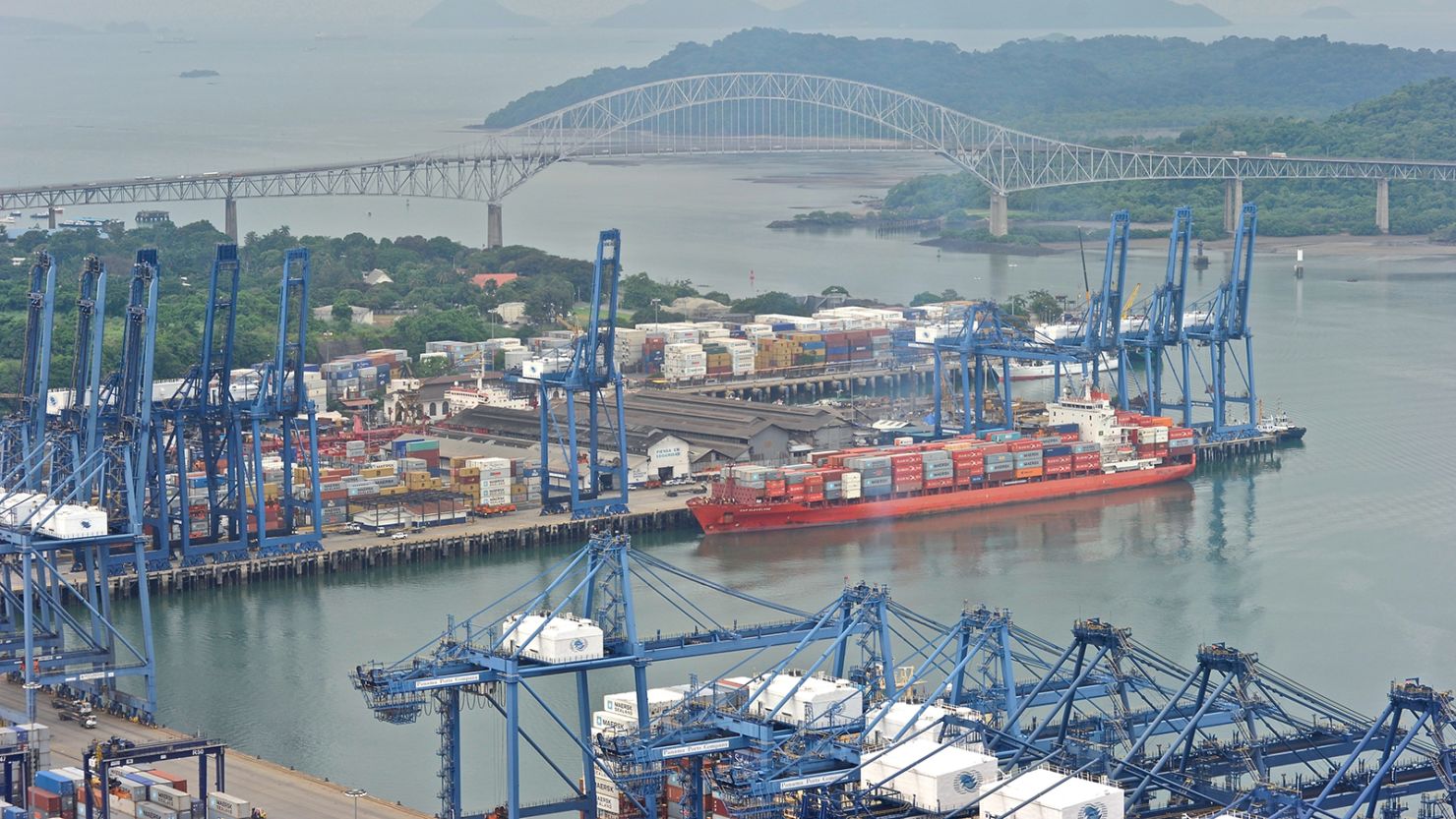
Control over the Panama Canal has long been a crown jewel of American foreign policy. That era is ending. China has spent the last decade embedding itself into the physical infrastructure of the canal through massive investments in ports like Margarita Island and the Port of Balboa. Now, Beijing is moving from owning the hardware to controlling the software of trade.
New trade rules targeting "logistics transparency" require any vessel docking at Chinese-controlled terminals in Panama to share granular data with Chinese state entities. This isn't about safety. It’s about mapping the movement of Western goods and military-adjacent supplies in real-time. If a shipping line refuses to comply with these "standardized reporting requirements," they find their berths in Shanghai or Ningbo suddenly unavailable due to "technical audits."
The leverage is absolute. By threatening to slow down the flow of goods through the Panama Canal via administrative friction, China can dictate terms to any nation dependent on that transit point. It is a slow-motion blockade, enforced not by destroyers, but by bureaucrats with clipboards.
The Iranian Connection and the Energy Trap
While Panama represents the gateway to the West, the Middle East provides the fuel for the East. Beijing’s relationship with Tehran has evolved from a marriage of convenience into a strategic bulwark against Western sanctions. The recent tightening of trade rules specifically targets the "transshipment of sensitive energy components," a move that sounds like environmental regulation but functions as a diplomatic shield for Iran.
By creating a unique legal category for "Strategic Energy Partners," China allows Iranian oil to bypass traditional banking hurdles while simultaneously imposing "strict quality inspections" on energy imports from nations aligned with US interests. This creates a dual-track trade system. Friends of the Belt and Road Initiative get the fast lane. Everyone else gets stuck in the inspection bay.
The risk of war in the Middle East only increases this leverage. If conflict breaks out, China’s new rules provide the legal groundwork to declare "logistics emergencies," allowing them to prioritize their own state-owned vessels while stalling the transport of energy to Europe or North America. They have built a legal kill-switch for global energy markets.
Data as the New Embargo
The most dangerous aspect of these new rules lies in the "Digital Silk Road" provisions. Under the guise of preventing fraud and ensuring supply chain integrity, Beijing now mandates that any company involved in "Critical Trade Paths" must store their operational data on servers accessible to Chinese regulators.
This includes pricing structures, client lists, and proprietary logistics algorithms. For a company like Maersk or Hapag-Lloyd, this is a nightmare scenario. They are being asked to hand over their trade secrets as the price of admission to the Chinese market.
Most analysts miss the subtle math here. China doesn't need to ban a product to kill a competitor. They only need to know exactly how that competitor operates, where their margins are thinnest, and which ports they rely on most. Once that data is harvested, Chinese state-owned enterprises can underbid them with surgical precision, backed by government subsidies that Western firms cannot match.
Fragmenting the Global Commons
The world is witnessing the death of the unified global trade system. For thirty years, the assumption was that trade rules would slowly harmonize under the World Trade Organization. Beijing has shattered that illusion. They are building a proprietary trade ecosystem where the rules are flexible, opaque, and entirely dependent on political loyalty.
This creates a massive compliance burden for global corporations. A ship leaving a US port for Asia now has to navigate two entirely different legal realities. In the West, they follow transparent, if cumbersome, regulations. In the East, they face a shifting set of "administrative guidelines" that can change overnight based on a diplomatic spat or a military exercise in the South China Sea.
The cost of this uncertainty is passed down to the consumer. Inflation isn't just about money supply; it's about the friction added to the movement of goods. Every time Beijing adds a new layer of "quality control" or "data verification" to a port in Panama or a refinery in the Middle East, the price of a container goes up.
The Illusion of Neutrality
Western companies often believe they can remain neutral in this brewing economic conflict. They can't. The new rules specifically include "anti-circumvention" clauses. If a company complies with a US sanction that China deems "interference in domestic affairs," that company can be blacklisted under the Chinese rules.
This puts global CEOs in an impossible position. They are caught between the legal requirements of their home countries and the operational requirements of their largest manufacturing base. There is no middle ground left. You either feed the Chinese data machine or you find yourself locked out of the Pacific.
Securing the Chokepoints
To understand the long game, look at the geography. China is not just building ports; they are building a global net. From the Piraeus Port in Greece to the terminals in Panama, and down to the Darwin Port in Australia, the pattern is identical.
- Phase One: Heavy investment in failing infrastructure.
- Phase Two: Integration of Chinese management and technology.
- Phase Three: Implementation of "local" trade rules that mirror Beijing’s mandates.
- Phase Four: Leveraging that control to influence national policy.
Panama is currently in Phase Three. The local government is heavily indebted to Chinese banks, and the port workers are increasingly reliant on Chinese-backed logistics platforms. When Beijing asks for "enhanced data sharing," Panama is in no position to say no.
The Iranian link serves as the enforcement mechanism. By securing energy flows through the Strait of Hormuz, China ensures that even if the West tries to push back in Panama, they can't do so without risking a total energy collapse. It is a pincer movement on a global scale.
The Failure of Western Response
The response from Washington and Brussels has been reactive and disjointed. While the US focuses on military presence, China focuses on the plumbing of global commerce. You don't need a carrier group to stop a trade deal if you own the port, the cranes, and the software running the manifest.
The West continues to argue about tariffs while China rewires the entire system of international law. By the time a formal complaint is filed at the WTO, the trade rules on the ground have already shifted, the data has been harvested, and the competitor has been bankrupted.
Strategic Decoupling or Slow Surrender
Companies are now forced to consider "China Plus One" strategies, moving manufacturing to Vietnam, India, or Mexico. But even this is a partial solution. Many of the raw materials and intermediate components still flow through Chinese-controlled nodes. Moving a factory to Mexico doesn't help if the shipping line is still forced to use Chinese data standards to move the goods through the Panama Canal.
True independence requires building an entirely separate logistics and data infrastructure. This is an expensive, decade-long project that most shareholders aren't willing to fund. The path of least resistance is to comply, hand over the data, and hope that Beijing doesn't turn the screw too hard this year.
The "tough new trade rules" are not a response to market conditions. They are a declaration of sovereignty over the global supply chain. Beijing is betting that the world’s hunger for cheap goods will outweigh its desire for a free and open trade system. So far, they are winning.
The only way to counter this is to treat trade infrastructure as a matter of national security, not just private profit. This means direct government intervention in port ownership and the creation of sovereign data corridors that are off-limits to foreign intelligence services. Without a unified, aggressive stance on maritime and digital sovereignty, the West will find itself paying rent to a landlord that has no interest in their prosperity.
Stop looking at these rules as a trade dispute. Start looking at them as a territorial claim over the movement of everything on Earth.