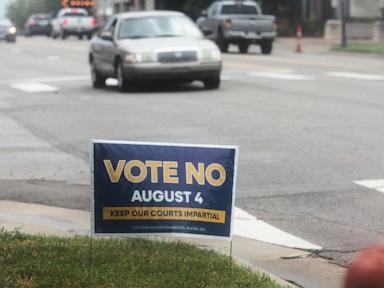
Paper rustles in a quiet Topeka courtroom. The sound is dry, like autumn leaves dragged across concrete. To most people, this room is invisible. It is a place of heavy wood, low whispers, and the steady, ticking clock of routine bureaucracy. But beneath the polished oak and the solemn architecture, a quiet fracture is spreading across Kansas.
For decades, the guardians of the state's highest court have arrived through a system designed to insulate them from the raw, screaming electricity of partisan politics. Lawyers and citizens sit together on a nominating commission, filtering candidates through a lens of professional merit rather than party loyalty. The governor makes a final pick from a shortlist. The system was built by architects who feared the mob as much as they feared the crown. They wanted judges who looked at the law, not the wind.
Now, a faction wants to tear that insulation away.
Republicans in the legislature are pushing to alter how Kansas Supreme Court justices take their seats, steering the state toward a model where voters directly elect them in partisan or nonpartisan contests, shifting the ideological balance of the bench to the right. To understand why this matters, you have to look past the political calculus and into the kitchen tables of ordinary families who have never set foot inside a courthouse.
Consider Maya. She is a fictional small-business owner in Wichita, representing the countless citizens who rely on predictable rules to keep their dreams afloat. Maya does not care about legal philosophy until a corporate giant tries to squeeze her out of a municipal contract using a dubious loophole. She takes her grievance to court. She expects the referee to be neutral. She expects the rules to apply equally to the corner store and the conglomerate.
When courts become political battlegrounds, the referee changes uniform.
The push to elect Kansas Supreme Court justices is not an accident of timing. It is the culmination of a multi-decade chess match. For years, conservative lawmakers have watched rulings protecting abortion access, tax fairness, and public school funding emerge from a court they view as insulated and hostile to their platform. To them, the current nonpartisan selection process is an elite shield protecting an unaccountable judiciary. They argue that true democracy demands a ballot box for every powerful seat in the state. Let the people choose. It sounds populist. It sounds clean.
Yet, judicial elections are a very specific kind of theater. They require money. Millions of dollars. Television ads. Super PAC mailers.
Imagine turning on your local evening news in a few years. Instead of car commercials and local grocer updates, your screen flashes with dark, ominous tones. An announcer’s voice booms through your speakers, warning you that a sitting Supreme Court justice is soft on crime or dangerous to your way of life. The names on the ballot, once obscure scholars of tort law and appellate procedure, become targets of national dark-money campaigns.
When judges must raise campaign funds, the nature of justice mutates. Who writes the checks? Often, the very lawyers, corporations, and political interest groups who will one day stand before that same judge seeking a favorable ruling. It is a quiet corruption of incentives. No one has to cross an ethical line in secret; the system itself invites the compromise in broad daylight.
Kansas has been here before. The tension between popular will and judicial independence is as old as the republic. But the state's current system, established in 1958 via a constitutional amendment, was explicitly crafted to escape the corrupting machine politics of an earlier era. Kansas voters chose stability. They chose a merit-based plan that became a national model, often called the Missouri Plan.
Critics of the current setup claim it gives too much power to trial lawyers and insiders. They argue that ordinary citizens are locked out of deciding who wears the black robe. But notice the sleight of hand. Voting for a judge is fundamentally different from voting for a legislator or a governor. A politician represents constituents; they make promises about tax rates, roads, and policies. A judge represents the law; they make promises to follow the constitution, even when the crowd is howling for blood.
If you turn a court into an elected legislature in robes, you destroy the one place where popularity does not dictate survival.
The political math in Topeka favors change. Supermajorities in the legislature hold the pen, and they are inching closer to putting a constitutional amendment directly in front of the electorate. They believe voters, weary of progressive rulings on contentious social issues, are ready to seize the wheel. They believe the promise of direct democracy will outweigh the risks of judicial politicization.
And they might be right. Voters are tired. They feel disconnected from institutions that seem distant and indifferent. When people feel powerless, the promise of a vote is a potent sedative.
Listen closely to the arguments echoing through the statehouse halls. Proponents speak of accountability. They speak of the voice of the people ringing out from Elkhart to Atchison. They paint a picture of a revitalized civic life where every corner of government answers directly to the public pulse.
They leave out the cost.
The cost is predictability. The cost is the quiet security of knowing that if your rights are trampled by a powerful neighbor or a sprawling corporation, the person sitting on the bench does not have to worry about running an anti-retribution ad next October.
Justice is supposed to be blind. That is the old cliché, carved into stone facades across the country. But blindness requires darkness. It requires a space shielded from the flashing lights of campaign trails and the angry chants of partisan rallies.
As the debate intensifies, the future of the Kansas Supreme Court hangs on a knife-edge. The legislature holds the votes. The voters may soon hold the ballot. And the quiet courtroom in Topeka waits to see whether its walls will remain a sanctuary for the law, or become just another stop on the campaign trail.