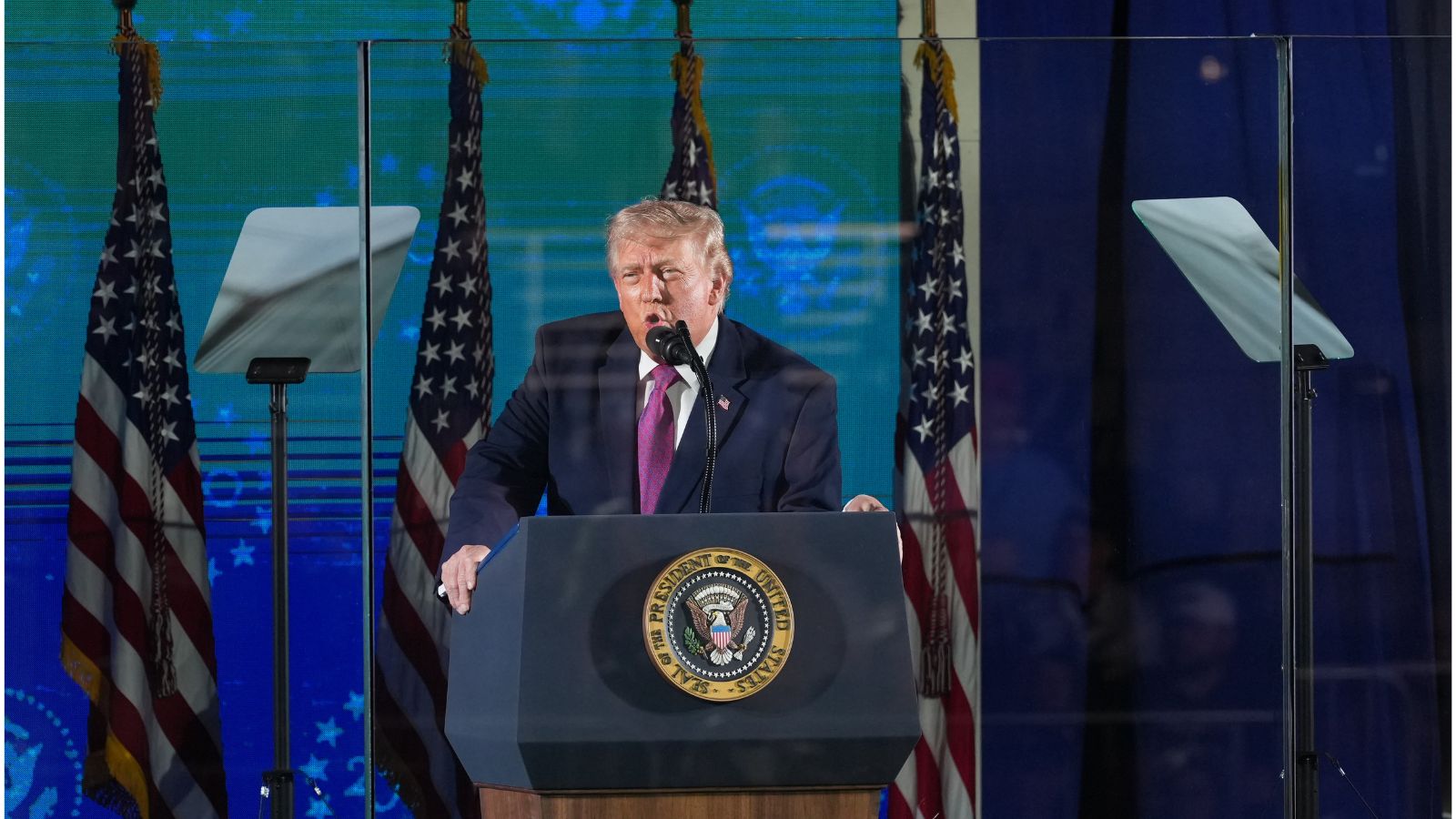
The country hit its 250th birthday this weekend, but nobody is agreeing on what we are actually celebrating. On the eve of Independence Day, President Donald Trump stood at the base of Mount Rushmore in South Dakota to kick off the semiquincentennial celebrations. He looked up at the granite faces of George Washington, Thomas Jefferson, Theodore Roosevelt, and Abraham Lincoln. Then he laid out his vision for what he calls the beginning of the golden age of America.
It wasn't your standard, bipartisan birthday toast. Instead of focusing solely on unity, Trump used the historic milestone to draw a sharp line in the sand, warning the crowd about what he termed a resurgence of the communist menace within the country.
People tuning into live updates wanted to know how the US would mark two and a half centuries of independence. What they got was a highly polarized opening salvo in a fight over the very definition of American identity. The event made one thing clear. This anniversary isn't just a look back at 1776. It is a full-blown battle for the political future of the country.
The Fight Under the Faces of Mount Rushmore
Mount Rushmore has always been a lightning rod for political symbolism. Trump loves the venue. He visited in 2020, and his allies have spent years trying to figure out how to carve his own face into the granite. White House spokeswoman Taylor Rogers even stated before the visit that there would be no better addition to the monument than Trump.
The stage on Friday night featured actors reciting quotes from the four carved presidents, setting a deeply traditionalist tone before Trump took the microphone. Jets roared overhead, the crowd chanted, and the president delivered a half-hour speech that framed American history as a battle between true patriots and radical extremists.
He didn't pull any punches. Trump argued that the threat of communism today is on par with the dangers the US faced during both world wars and the 9/11 terror attacks. He told the crowd that you can be a communist or a patriot, but you cannot be both. He tied this ideology directly to current immigration debates, claiming that newcomers to the country are bringing ideas completely opposed to the American way of life.
For the people sitting at home watching the live stream, the speech offered a stark choice. It made it clear that the administration views the 250th anniversary as an opportunity to reclaim a specific, culture-driven version of American exceptionalism.
A Nation Celebrating in Direct Opposition
While Trump was speaking in South Dakota, a very different version of America was being presented elsewhere. In New York City, local officials like Mayor Zohran Mamdani held naturalization ceremonies, framing the country as a work in progress defined by its contradictions and its immigrant roots. Mamdani argued that righteous dissent is the real form of patriotism when facing the shortcomings of the nation.
This split screen highlights how deeply fractured the country remains during its milestone year. The organizing committee for the national celebration, Freedom 250, faced heavy criticism from Democrats who accused the administration of hijacking a milestone that should have been organized by a bipartisan congressional commission.
The actual events on the ground reflected this tension. While the administration planned massive spectacles, everyday realities kept getting in the way.
- Extreme Heat: A brutal heatwave across the Midwest and East Coast muted the holiday mood.
- Cancellations: The official Independence Day Parade in downtown Washington DC had to be canceled because temperatures soared into the high 30s Celsius.
- Empty Pavilions: The Great American State Fair on the National Mall saw low attendance as people stayed inside to avoid the dangerous air.
Even the massive fireworks shows drew fire. Environmental groups openly opposed the fireworks display in the Black Hills of South Dakota, citing severe drought conditions and the immediate risk of wildfires in the dry forest around Mount Rushmore.
What This Means for the Next Century
The celebrations don't stop in South Dakota. Trump is scheduled to deliver another long speech on the National Mall in Washington, followed by a massive fireworks show featuring 850,000 shells launched from the Potomac River and the Reflecting Pool.
But behind the smoke and the pageantry, the political objective is explicit. During his Mount Rushmore address, Trump actively pressured Congress to dismantle the filibuster and pass the SAVE America Act, a bill that requires proof of citizenship to register to vote. He openly told the audience that passing this law would guarantee his party wouldn't lose an election for a hundred years.
This isn't just a holiday weekend. It is the launchpad for the upcoming midterm elections. The administration is using the weight of 250 years of history to validate its current policy goals, from strict immigration crackdowns to sweeping changes in voting laws.
If you want to understand where the country is heading, don't look at the corporate unity ads or the standard holiday greeting cards. Look at the stark contrast between the speeches at Mount Rushmore and the empty, heat-exhausted streets of the capital. The semiquincentennial isn't bringing people together under a single banner. It is magnifying the exact issues that divide them.
To see how this plays out in your local area, check the scheduling for regional America 250 events, as many cities are pivoting to evening activities and drone shows to avoid the ongoing heatwave while navigating local political demonstrations.