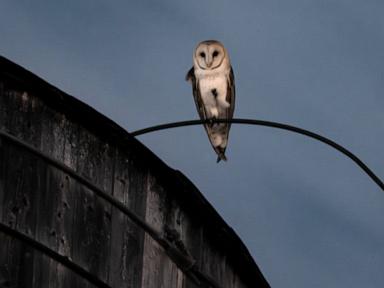
A family of barn owls showing up on Manhattan's Upper West Side sounds like a feel-good quirk of city life. People gather with binoculars, snap blurry phone photos, and swap stories about nature reclaiming the concrete jungle.
Honestly, though, treating this as just another charming wildlife sighting misses the point. Barn owls aren't typical park-bench birds. Seeing a family of them settle into one of the densest urban neighborhoods in North America raises real questions about habitat cavities, rodent control, light pollution, and how wild raptors actually survive when sirens, scaffolding, and glass towers surround them.
When urban birders and wildlife watchers hear about barn owls in a dense borough like Manhattan, the first instinct is to celebrate. Who wouldn't want a heart-shaped white face peering out from a quiet corner near Riverside Park or Central Park? Still, celebrating a sighting and understanding what makes that sighting sustainable are two very different things.
What Draws Barn Owls to the Upper West Side
People assume raptors show up in cities by accident, blown off course or wandering blindly into neighborhoods they don't belong in. That's rarely the whole story.
A barn owl (Tyto alba) doesn't need acres of untouched forest to survive. It needs three basic things: a sheltered, dark cavity for roosting or nesting, open or semi-open hunting edges where prey moves at night, and enough small rodents to keep adults and owlets fed. Pre-war apartment buildings, stone facades, church steeples, park edges, and dense tree cover along Manhattan's west side can offer pockets of shelter and hunting space if conditions line up just right.
City wildlife also follows food. New York has no shortage of rats and mice, and while barn owls take plenty of small rodents in rural fields and marshes, urban hunting comes with a catch. Rats can be large and feisty, traffic never really stops, and streetlamps change how prey behaves in the dark. A bird that hunts by sound as much as sight has to read a noisy, brightly lit city differently than a quiet meadow.
Look at how clean and wide that wing profile is in flight. That heart-shaped facial disc isn't just for looks—it acts like a satellite dish, funneling faint rustling sounds toward the owl's asymmetrical ears so it can strike prey in near-total darkness. In a city full of background hum, that acute hearing is both an advantage and a potential source of stress.
Why Sightings Spark Both Wonder and Worry
Every time a rare bird appears in Manhattan, excitement and anxiety show up side by side. Birders want a look, neighborhood groups want to protect the birds, and wildlife advocates worry about what happens when dozens of people crowd a roost tree or an exterior ledge.
The Crowd Effect Around Urban Roosts
Let's be real: when word spreads about owls in a neighborhood, curiosity turns into a crowd fast. Even well-meaning onlookers with big lenses can push a roosting bird past its comfort zone.
If a barn owl flushes repeatedly during the day, it burns precious energy when it should be resting. Worse, daylight movement draws unwanted attention from crows, jays, and hawks that love to mob owls. Quiet observation from a respectful distance isn't a buzzkill—it's basic survival etiquette for urban wildlife.
Rodenticides and Other Hidden Hazards
Here's the part of urban raptor stories that makes experienced wildlife rehabilitators wince. Rodent control across big cities relies heavily on anticoagulant rodenticides.
A mouse or rat eats poison bait, slows down, and becomes an easy meal for an owl. The owl doesn't eat the poison pellet directly, yet secondary poisoning builds up inside its body. Even when poison doesn't kill a bird outright, it can cause internal bleeding, weaken its response to injury, or make a minor bump fatal.
Add window collisions, unscreened vents or chimneys where birds get trapped, and constant artificial light, and urban life gets tough in a hurry. According to the Cornell Lab of Ornithology, barn owls face broad conservation pressures across parts of their range, making every healthy family group worth paying attention to rather than treating as a novelty.
What Urban Birding Gets Wrong About Barn Owls
Walk around any major city during migration or winter, and you'll hear plenty of myths repeated as gospel. Barn owls attract more than their share of misconceptions.
- Myth: Barn owls hoot like classic cartoon owls. They don't. Instead of a deep "who-hoo," barn owls are famous for eerie shrieks, raspy hisses, and snoring or clicking calls—especially when young birds are begging for food.
- Myth: Seeing one means the neighborhood's rat problem is solved. Owls help keep small mammal numbers in check locally, sure, but one family can't erase systemic urban sanitation or structural entry points in buildings.
- Myth: If an owl sits still for hours, it must be sick. Daytime roosting is normal behavior for a nocturnal hunter. Resting tucked against a branch or cavity wall is what it's supposed to do when the sun is up.
- Myth: Moving closer helps you see it better. Getting tighter usually just gets you a tail feather or a flushed bird. Good binoculars beat walking closer every single time.
How to Watch Respectfully and Help Urban Wildlife
If you ever stumble across barn owls in the city—or follow local reports from the Upper West Side—you don't need to be a biologist to do the right thing. Small choices make a noticeable difference.
- Keep your distance and keep the location quiet. Don't blast exact roost spots across social media if a crowd hasn't already gathered, and stay far enough back that the birds show zero signs of alertness or stress.
- Skip camera flashes and loud playbacks. Never play recorded owl calls to lure a bird closer. That wastes energy and disrupts territorial or family behavior.
- Push for snap-trap and exclusion methods over poison. If you're involved in co-op boards, building maintenance, or community gardens, advocate for sealing gaps and using non-toxic controls rather than second-generation rodenticides that harm owls and hawks.
- Report injured or grounded birds to licensed experts. If you spot a bird on the ground that can't fly, looks dazed, or seems tangled or trapped, contact a licensed wildlife rehabilitator or local animal control rather than trying to handle sharp talons yourself. Organizations like NYC Audubon and local rehabilitation centers provide current guidance on urban bird safety and reporting.
Cities aren't going to stop being loud or crowded anytime soon. Still, when wild birds manage to raise a family amid brick, steel, and streetlights, the best way to celebrate them is to give them room to breathe.