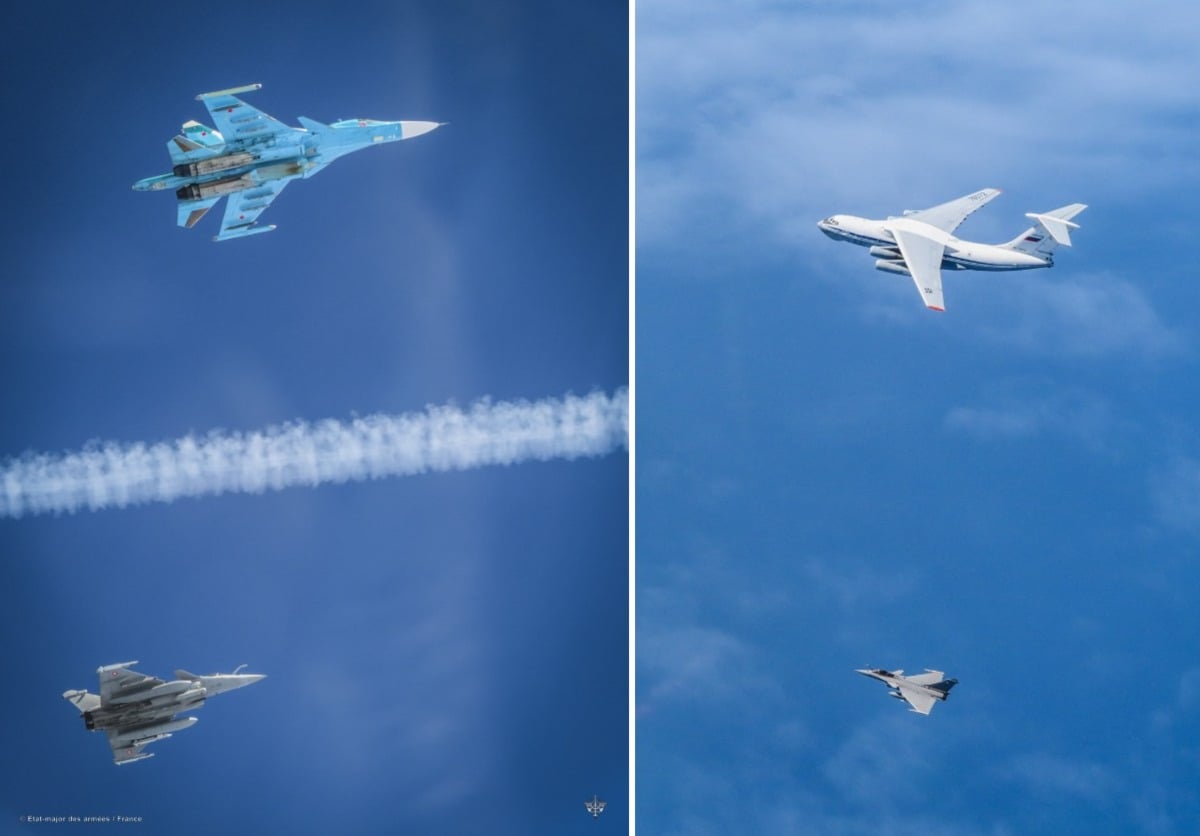
The Calculated Theater of the Baltic Skies
Six Russian military aircraft intercepted over the Baltic Sea in a single day. The headlines scream about escalating tensions, imminent conflict, and a region on the brink of war. Western media outlets treat these encounters as unprecedented provocations, signaling a dramatic shift in Kremlin aggression.
They are wrong. They are misreading the entire theater. For a deeper dive into this area, we suggest: this related article.
What the mainstream narrative sells as a terrifying escalation is actually something far more mundane: a highly choreographed, mutually understood Cold War ritual that has been playing out for decades. These intercepts are not a prelude to World War III. They are the geopolitical equivalent of two rival street gangs staring each other down across a property line. Both sides know exactly where the line is, both sides know the rules of engagement, and neither side has any intention of actually crossing into a hot conflict.
To understand why the panic over Baltic intercepts is entirely overblown, you have to look past the sensationalized headlines and examine the hard operational realities of modern airspace management. For broader context on the matter, comprehensive analysis can also be found at NBC News.
The Geography of the Provocation Trap
The Baltic Sea is a crowded bathtub surrounded by NATO members, with a tiny, heavily militarized Russian exclave—Kaliningrad—nestled right in the middle.
[NATO Airspace (Baltics/Poland)] <---> [International Airspace Corridor] <---> [Kaliningrad Exclave]
                                                ^
                                     (Russian Transit Route)
Russia has a legitimate, legal need to transit its military assets between mainland Russia and Kaliningrad. Because of geography, those transit routes run directly through international airspace corridors that sit mere miles from NATO borders.
When Russian fighters, bombers, or transport planes fly through these corridors, they frequently do so without filing flight plans, without communicating with civilian air traffic control, and with their transponders turned off.
Mainstream analysts point to this transponder silence as proof of hostile intent. It is not. It is standard operational security for a military power operating near rival territory. NATO aircraft do the exact same thing when operating near Russian borders.
When a Russian aircraft flies with its transponder off, NATO air defense radars pick up the track as an unidentified radar blip. NATO protocol then dictates that quick reaction alert (QRA) jets must scramble to visually identify the aircraft and escort it through international airspace.
This is not a combat engagement. It is an aerial traffic stop.
The pilots involved know the drill. Russian pilots routinely fly close enough to NATO jets to make eye contact, snap photos, and sometimes flash hand signals. It is a calculated dance where both sides demonstrate capability without ever pulling a trigger.
The Illusion of Escalation: Breaking Down the Numbers
Let us look at the actual data rather than the emotional rhetoric.
The North Atlantic Treaty Organization scrambles its jets hundreds of times every single year to intercept Russian aircraft over the Baltic region. The occurrence of six intercepts in a single day is a statistical spike, not a strategic shift. Air operations fluctuate based on training cycles, weather conditions, and political messaging. A sudden cluster of flights usually means Russia is rotating personnel out of Kaliningrad or conducting a scheduled readiness exercise, not launching a surprise invasion.
Furthermore, these intercepts take place exclusively in international airspace. Russia is not violating the sovereign airspace of Estonia, Latvia, or Lithuania during these specific encounters. They are flying in the global commons.
If a Russian fighter jet actually crossed into NATO sovereign airspace with hostile intent, it would be met with ground-based air defense systems and immediate lethal force. The fact that these encounters end peacefully, with the Russian planes eventually turning back or landing in Kaliningrad, proves that Moscow is acutely aware of the boundaries and respects them.
Why Both Sides Need the Drama
If these intercepts are so routine, why does the media cover them with such apocalyptic fervor? Because the narrative of constant, imminent threat serves the political agendas of both Moscow and Brussels.
The Russian Perspective: Projecting Power on a Budget
For the Kremlin, these flights are a cheap and highly effective way to project power and signal domestic strength. Russia wants to remind NATO that it still possesses a formidable air arm capable of operating right on the alliance's doorstep. It is a show of defiance designed to mask deeper structural vulnerabilities within the Russian military. By forcing NATO to scramble expensive fighter jets every time an old Russian transport plane flies toward Kaliningrad, Moscow forces the West to expend resources and maintain a high state of alert, achieving a psychological victory without firing a shot.
The NATO Perspective: Justifying the Defense Budget
For NATO, these intercepts are the perfect marketing tool. They offer tangible, photographic evidence of a persistent threat, which is incredibly useful when military commanders go to member state parliaments to secure defense funding. Pointing to six Russian jets intercepted in 24 hours makes the case for expanding air policing missions and purchasing next-generation fighter aircraft far easier to sell to a skeptical public.
The Real Risk Is Professional Complacency, Not Political Intent
The danger in the Baltic is not that Vladimir Putin will suddenly order a fighter pilot to shoot down a NATO jet to start a war. The real danger is human error.
When you have heavily armed, high-performance aircraft flying at supersonic speeds within yards of each other, the margin for error is razor-thin. A mechanical failure, a sudden patch of turbulence, or a single pilot losing situational awareness for a split second could result in a mid-air collision.
We have seen this happen before. In 2023, a Russian Su-27 fighter collided with an American MQ-9 Reaper drone over the Black Sea, causing the drone to crash. While the incident caused a brief diplomatic firestorm, it did not trigger a war because both Washington and Moscow recognized it as a tactical mishap rather than a strategic attack.
The professional pilots flying these missions are highly trained to manage this risk. They are not hotheads looking for a fight; they are professionals executing a dangerous, tedious job. The constant media hype surrounding these events actually increases the risk by creating a hyper-politicized environment where a genuine accident could be misinterpreted by panicked politicians as an act of war.
Stop Looking at the Sky, Watch the Ground Instead
If you want to know when Russia is actually planning an aggressive military move against NATO, stop looking at routine fighter scrambles over the Baltic Sea. Airborne posturing is cheap, fast, and ultimately empty.
Instead, look at the ground logistical networks.
A real military offensive requires months of visible preparation:
- Massive stockpiling of ammunition near the border
- Movement of field hospitals and blood supplies
- Forward deployment of heavy armor and artillery units
- Mobilization of hundreds of thousands of infantry troops
You cannot hide an invasion force in the modern era of satellite surveillance. A half-dozen fighter jets flying without transponders is a media circus. An army assembling on a border is a threat.
The next time a headline pops up claiming that NATO jets intercepted a swarm of Russian aircraft over the Baltic, do not panic. Turn off the news, understand that the system is working exactly as intended, and recognize that the pilots in the air are simply performing a decades-old choreography that keeps the cold peace intact.


