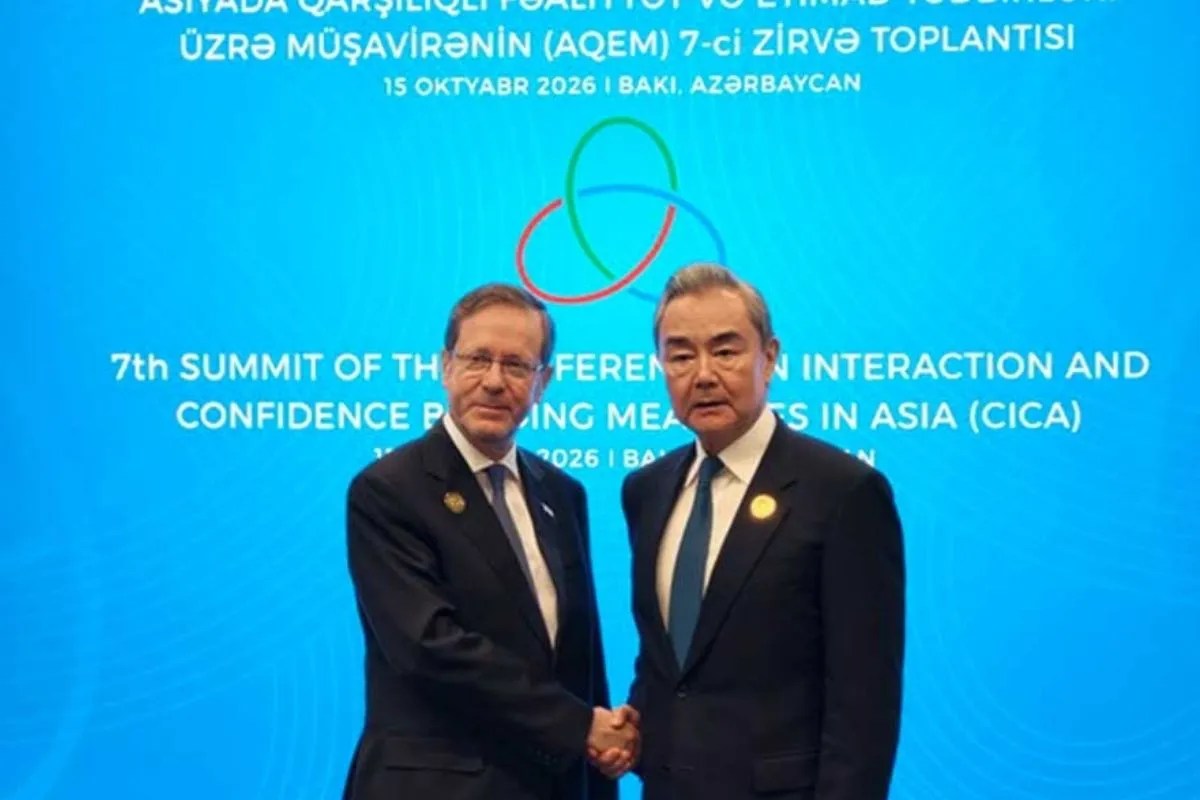
Diplomatic statements delivered in Baku urging Israel to reopen the Gaza Strip and halt settlement expansion in the West Bank operate as high-leverage signaling mechanisms rather than binding policy mandates. Headlines framed around blunt ultimatum-style demands often compress complex multilateral negotiations into a single binary confrontation, masking the underlying incentives driving Beijing, Jerusalem, and regional hosts like Azerbaijan. To understand what such interventions actually achieve, analysts must separate public diplomatic posture from operational leverage, map the structural constraints facing each actor, and evaluate how access and territorial control interact inside wider regional security and trade calculations.
This analysis provides a structured framework for reading public diplomatic interventions on Gaza access and West Bank settlements. It begins by defining the core variables at stake, maps the incentive structures of the primary actors, traces second-order causal chains that standard news summaries overlook, and outlines operational scenarios and analytical limitations. For a different view, consider: this related article.
Structural Anatomy of the Diplomatic Demand
A headline asserting a blunt demand from Beijing to Jerusalem in Baku points to two concrete operational shifts: border and humanitarian access into the Gaza Strip, and territorial and demographic consolidation in the West Bank. Treating both demands as equivalent obscures how differently each functions in international diplomacy and domestic Israeli politics.
Opening or expanding access into Gaza involves immediate administrative, security, and logistical variables. Crossing points, inspection regimes, aid routing, and civil governance arrangements determine whether goods, fuel, construction materials, and personnel move continuously or intermittently. Because these mechanisms are tied to active security operations and ceasefire arrangements, access parameters can shift rapidly under military or political pressure. Similar coverage on this matter has been provided by The Guardian.
Halting settlement construction in the West Bank addresses a longer-horizon structural question: administrative control, land allocation, infrastructure routing, and demographic presence across Areas A, B, and C. Unlike a crossing reopening that can be tested within days or weeks, settlement policy is embedded in coalition politics, bureaucratic permitting, and long-term territorial strategy. Conflating the two under a single headline makes both look like symmetrical bargaining chips when their implementation timelines and domestic costs differ sharply.
Fact Versus Hypothesis in Diplomatic Reporting
Rigorous analysis requires separating observable diplomatic mechanics from unverified claims about private exchanges or guaranteed outcomes:
- Observable public posture: Official remarks, bilateral readouts, and multilateral forum statements are verifiable records of how a state chooses to position itself before international and regional audiences.
- Institutional venue selection: Holding or participating in diplomatic engagements in a third capital such as Baku reflects broader connectivity and regional outreach, where states balance bilateral ties across competing powers.
- Educated hypothesis on leverage: Analysts infer that public pressure aims to shape diplomatic isolation costs, court Middle Eastern partners, or position a mediating identity, but exact private concessions cannot be verified from public rhetoric alone.
- Unconfirmed operational impact: A public call to reopen Gaza or freeze settlements does not by itself alter border inspections, military rules of engagement, or municipal and ministerial permitting decisions.
Actor Incentive Matrix and Constraint Sets
Standard coverage often treats foreign policy statements as simple expressions of sympathy or hostility. A more durable model examines incentive alignment, retaliatory exposure, and domestic political constraints for each relevant party.
Beijing's Positioning Calculus
China's diplomatic posture on the Israeli-Palestinian conflict reflects a balancing act between regional credibility and bilateral pragmatism. Publicly backing Palestinian statehood, humanitarian relief, and an end to settlement expansion aligns Beijing with broad Global South consensus and reinforces its standing among Arab states and Iran, where energy trade, infrastructure participation, and regional influence carry substantial weight.
At the same time, Beijing faces structural limits on how far it can push Jerusalem without incurring friction in technology, trade, or regional intelligence channels. Because China is not the primary security guarantor in the Levant and lacks direct operational control over border crossings or West Bank administration, its primary instrument in forums like Baku is diplomatic framing and coalition signaling rather than direct enforcement.
Jerusalem's Security and Coalition Constraints
For Israeli decision-makers, Gaza access and West Bank policy are governed by a two-level game involving external diplomatic pressure and internal coalition survival. Any adjustment to Gaza crossings is weighed against force protection, hostage or security considerations, smuggling prevention, and international legitimacy needed to sustain military and economic lifelines.
West Bank settlement policy carries an even steeper domestic price for any governing coalition dependent on pro-settlement factions. Freezing construction or outposts is not merely a foreign policy concession; it directly tests coalition cohesion and touches core ideological commitments within the ruling bloc. Consequently, public foreign demands on settlements often trigger pushback emphasizing sovereignty claims, security buffers, or bilateral friction rather than immediate policy reversal.
The Role of Third-Party Venues Like Baku
Diplomatic activity situated in Baku highlights a broader feature of contemporary statecraft: multi-alignment. Azerbaijan has cultivated working relationships across major powers and regional actors while positioning itself as a transit and diplomatic hub between Europe, Central Asia, and the Middle East. When major powers articulate positions in such settings, the audience extends beyond the immediate bilateral counterpart to regional observers watching how external actors calibrate their influence.
Second-Order Causal Chains Missed by Headline Summaries
Surface-level reporting typically follows a linear chain: State A makes a strong demand to State B, creating tension or pressure. In practice, diplomatic interventions of this type trigger second- and third-order effects across diplomatic alignment, humanitarian logistics, and negotiation dynamics.
First, reputational signaling alters how third parties view the sender's reliability and priorities. When Beijing presses on Gaza access and West Bank settlements, Arab capitals and broader developing-world partners register consistency with longstanding positions, even if the immediate ground impact in Gaza or the West Bank remains constrained. Conversely, states closely aligned with Washington or sensitive to Western security framing view such interventions through the lens of broader geopolitical competition.
Second, access and governance friction creates a gap between diplomatic language and field execution. Even where political leaders agree in principle on increasing humanitarian throughput or easing restrictions, operational execution depends on inspection protocols, security guarantees, distribution security inside Gaza, and coordination among international agencies, neighboring states, and local authorities. Rhetoric alone does not solve last-mile bottlenecks.
Third, hardening of bargaining positions can occur when demands are framed publicly in maximalist or blunt terms. If a target government perceives a public demand as a domestic political trap or an attempt to dictate sovereign policy, leaders may dig in publicly to avoid looking compliant under external pressure, shifting real compromise—if any occurs—behind quieter channels.
Analytical Pitfalls and Operational Blind Spots
Even sophisticated observers misread diplomatic clashes when they rely on incomplete models. Several recurring analytical errors distort assessments of statements on Gaza and the West Bank:
- Equating rhetorical sharpness with coercive power: A firm public message does not automatically translate into sanctions, trade embargoes, or physical leverage over crossings and checkpoints.
- Treating Gaza and the West Bank as a single operational lever: Gaza involves acute humanitarian access, ceasefire mechanics, and post-conflict governance, whereas the West Bank involves contested jurisdiction, security coordination, and settlement expansion.
- Ignoring domestic veto players: External analysts sometimes treat a government as a unitary actor, overlooking how coalition arithmetic, security establishments, and public opinion constrain rapid shifts on settlements or border regimes.
- Over-interpreting venue symbolism: The location of a diplomatic statement adds context about regional connectivity, but venue alone does not create a formal mediation mechanism unless backed by sustained diplomatic bandwidth and mutual trust among belligerents.
Strategic Play for Analysts and Decision-Makers
To extract actionable intelligence from future diplomatic statements on Gaza access and West Bank settlements, analysts and strategists should track operational indicators rather than headline adjectives. Instead of measuring impact by how blunt the rhetoric sounds, monitor four concrete signals over the following 30 to 90 days: truck and commercial cargo throughput trends alongside inspection delays at Gaza crossings; formal ministerial or cabinet decisions affecting West Bank land planning and permitting; official reciprocity or rebuttal language from Israeli and regional ministries; and any follow-on diplomatic coordination in multilateral forums or regional capitals.
Pairing this indicator discipline with a clear separation between public signaling and ground-level mechanisms prevents overreaction to dramatic headlines while keeping focus on where real policy movement can—or cannot—occur.