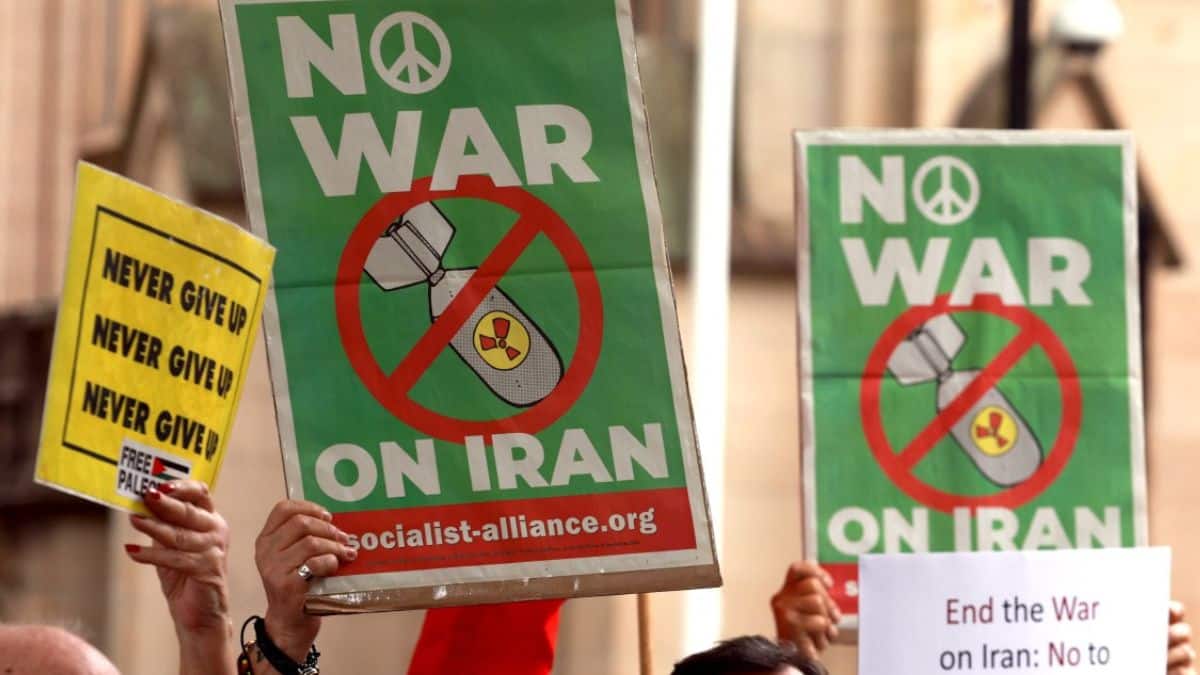
The western press loves a good visual of a burning tire and a crowd shouting near a concrete wall. It’s easy. It’s cinematic. It fits the tired narrative of a region perpetually on the brink of total collapse. When news broke of Ayatollah Ali Khamenei’s passing, the predictable script flipped to "unrest in Baghdad" and "threats to the Green Zone." It’s a lazy, surface-level reading of Iraqi power dynamics that ignores the cold, hard reality of how influence actually functions in 2026.
If you think a crowd marching toward the US-linked international zone signals the start of a revolution or a tectonic shift in regional power, you haven't been paying attention to the last decade of Iraqi politics. Most of these "unrests" aren't organic explosions of popular will; they are choreographed theater pieces staged by political actors who know exactly where the cameras are.
Stop looking at the crowds. Start looking at the bank accounts and the backroom deals.
The Myth of the Iranian Vacuum
The most common misconception floating around right now is that the death of the Supreme Leader creates a "power vacuum" that will lead to the immediate disintegration of Iran's influence in Iraq. This is fundamentally wrong. Iran does not govern its proxies through a single point of failure.
Over the last twenty years, the Quds Force and the broader security apparatus have built a decentralized, modular system of influence. It is a franchise model, not a monolithic empire. The "Special Groups" and the Popular Mobilization Forces (PMF) in Iraq do not need a daily phone call from Tehran to know their objectives. Their interests are now domestic. They own the real estate, they control the border crossings, and they have seats in the parliament.
Khamenei’s death is a psychological blow, certainly. But it is not a functional one. To suggest that his passing suddenly makes the Green Zone vulnerable to a genuine takeover is to misunderstand the symbiotic relationship between the Iraqi elite and the international community.
The Green Zone is a Useful Boogeyman
Why do the crowds always "push toward" the Green Zone but rarely actually seize it? Because the people leading those crowds don't actually want to destroy the system—they want a bigger piece of it.
The Green Zone serves as a convenient physical manifestation of "foreign interference" that local leaders can point to whenever they need to distract from their own failure to provide electricity, water, or jobs. It is a pressure valve. When the heat gets too high on the domestic front, the rhetoric shifts to the "US-linked" enclave.
I’ve sat in the tea houses in Karrada and watched as young men were paid $20 and a meal to go stand near a checkpoint and throw stones for an hour. This isn't a revolutionary fervor; it's a gig economy for the disenfranchised. The "unrest" is a negotiation tactic by proxy.
The Misunderstood Role of the PMF
The media portrays the PMF as a wild card, a collection of militias ready to go rogue now that their spiritual guiding light is gone. The reality is far more corporate.
The PMF is an official branch of the Iraqi state. They receive billions in budget allocations. They have pension plans. They have public relations departments. They are not going to burn down the house they currently live in just because there is a leadership transition in Tehran.
The real struggle isn't between "pro-Iran" and "pro-US" forces. That’s a 2005 framework that has no business being used in 2026. The real struggle is between the established elite (who happen to use Iranian support) and a rising generation of Iraqis who are tired of being used as pawns in a geopolitical chess match that never ends.
Why the "Chaos" Narrative Fails
Whenever you see a headline about "growing unrest," ask yourself: who benefits from the perception of chaos?
- The Iraqi Government: If the country looks unstable, they can justify emergency measures, crack down on genuine dissent, and delay necessary reforms.
- The Militias: Chaos allows them to assert their role as "protectors" of the people and the state.
- Global Energy Markets: Uncertainty in the Middle East keeps oil prices volatile, which serves specific economic interests.
The "chaos" is often a managed state of being. It is the status quo.
The Zero-Sum Fallacy
The western obsession with "winning or losing" Iraq is a relic of the past. There is no winning. There is only management.
If you analyze the movements toward the Green Zone as a military threat, you’ve already lost the plot. It is a communications exercise. The US-linked entities inside that zone are well aware that the groups outside are the same ones they have to coordinate with to keep the airport running or the oil flowing.
The death of Khamenei doesn't change the math of survival for the Iraqi political class. They are masters of hedging. They will mourn in public, negotiate in private, and ensure that the "unrest" never actually reaches the point of no return.
The Real Danger No One is Talking About
While everyone is staring at the gates of the Green Zone, the actual threat to Iraqi stability is much more boring: the collapse of the rentier state.
Iraq is 90% dependent on oil revenue. The population is exploding. The climate is making parts of the south uninhabitable. These are the stressors that will actually break the country. A mob at a concrete wall is a distraction from the fact that the Tigris and Euphrates are drying up.
Khamenei’s death is a footnote in the history of the 21st-century Middle East compared to the looming environmental and economic catastrophe facing the Mesopotamian plain.
A Lesson in Counter-Intuition
If you want to understand what’s actually happening in Baghdad, stop watching the live streams of the protests. Start watching the central bank auctions. Watch the flow of goods through the Port of Umm Qasr.
When the money stops moving, then you can worry about unrest. As long as the checks are clearing and the patronage networks are intact, the "march on the Green Zone" is just another Tuesday in Baghdad.
The crowd isn't there to tear down the walls. They’re there to be seen by the people who have the keys.
Stop falling for the theater. The status quo is far more resilient, and far more cynical, than the headlines suggest. The transition in Iran will be managed, the Iraqi proxies will consolidate their local power, and the Green Zone will remain exactly what it has always been: a fortress of convenience for all parties involved.
Ignore the smoke. Follow the ledger.