The sudden hush over the Lebanon-Israel border is not the result of a formal treaty or a sudden outbreak of regional goodwill. Instead, it is the direct consequence of a high-stakes, off-the-books demand from Mar-a-Lago that has effectively frozen Israeli military operations in the north. This "low-key" order from Donald Trump to Benjamin Netanyahu has achieved in hours what months of state department shuttle diplomacy could not. By signaling that the incoming administration will not tolerate a messy, inherited quagmire by January, Trump has forced Netanyahu into a strategic pause. This shift moves the conflict from a kinetic war of attrition into a volatile period of forced restraint, where the silence is as loud as the explosions that preceded it.
The Art of the Informal Ultimatum
Washington functions on formal cables and vetted talking points. Trump, however, operates on the currency of personal loyalty and transactional pressure. The directive to "wrap it up" was not delivered through a diplomatic pouch; it was a clear signal that the political capital available to the Likud government is not infinite. Netanyahu understands that his survival depends on the backing of the United States, and more specifically, the personal favor of its future leader.
For the Israeli Defense Forces (IDF), this means a sudden pivot. Units that were preparing for a deeper push into the Litani River basin are now holding their positions. This isn't a retreat, but a massive tactical brake. The objective has shifted from total degradation of Hezbollah infrastructure to maintaining a status quo that doesn't embarrass the incoming American president.
The mechanism here is simple. Trump has made it clear that he wants a "clean" desk upon his return to the Oval Office. A raging war in Lebanon, with the attendant risk of direct Iranian involvement, creates a geopolitical headache that interferes with his domestic agenda. Netanyahu, sensing the change in the wind, has chosen to bank his gains and wait.
Reading the Lebanese Silence
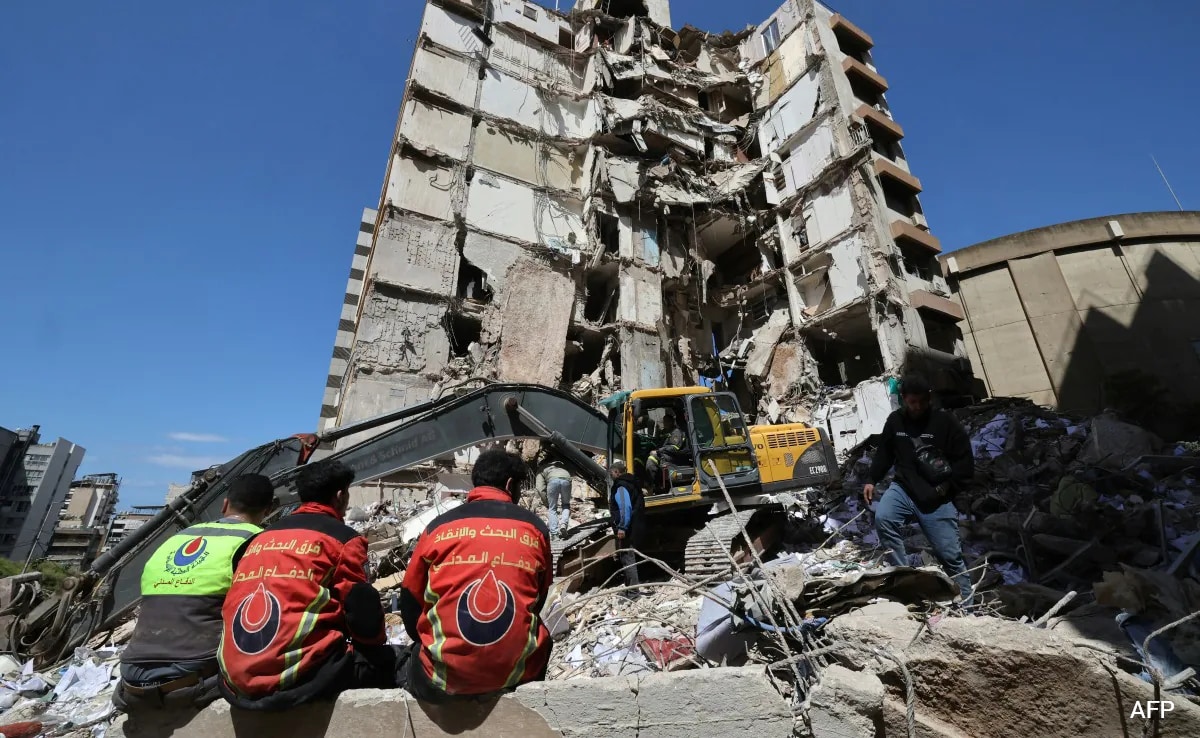
On the ground in Beirut and southern Lebanon, the pause is palpable. The constant hum of drones hasn't disappeared, but the frequency of precision strikes on the Dahiya neighborhood and eastern strongholds has plummeted. This isn't because Hezbollah has been defeated. Far from it. The group remains a potent, if bruised, fighting force with thousands of rockets still in its arsenal.
The danger of this quiet period is the illusion of stability. While the bombs aren't falling, the underlying tensions remain. Hezbollah's leadership is currently reassessing their position, likely wondering if this pause is a genuine window for a ceasefire or merely a tactical breather for an Israeli military that has been fighting on multiple fronts for over a year.
Hezbollah’s patrons in Tehran are also watching. For Iran, a pause in Lebanon is a double-edged sword. It preserves their most valuable proxy from total destruction, but it also signals that Netanyahu is now dancing to a different tune—one that might be even more unpredictable than the Biden administration’s approach.
The Logistics of a Frozen Conflict
Military operations of this scale cannot be turned off like a light switch. There are thousands of reservists deployed, supply lines stretched into foreign territory, and intelligence assets focused on active targeting. Maintaining a "pause" is actually more logistically taxing than continuing a slow-burn war.
- Troop Morale: Soldiers told to hold their fire while in enemy territory often face a decline in alertness.
- Intelligence Decay: Targets move. When the strikes stop, the data on where leadership is hiding or where launchers are buried begins to go stale.
- Political Overstretch: Netanyahu faces intense pressure from the right wing of his cabinet, specifically figures like Itamar Ben-Gvir and Bezalel Smotrich, who view any pause as a betrayal of the mission to "neutralize" the northern threat.
Netanyahu is currently walking a tightrope between a demanding American ally and a domestic coalition that feeds on escalation. He is betting that the promise of a friction-free relationship with the Trump administration outweighs the immediate risk of a cabinet revolt. It is a gamble that assumes Trump will deliver more than just orders; it assumes Trump will deliver a permanent solution that favors Israeli security interests without requiring further American boots or billions.
The Regional Ripple Effect
The "order" from Trump has sent shockwaves through the Gulf capitals. For months, Riyadh and Abu Dhabi have been calling for de-escalation, fearing that a total collapse of Lebanon would spill over into a regional sectarian fire. Seeing Netanyahu respond so quickly to a private nudge from Trump confirms their suspicion: the formal institutions of the U.S. government are no longer the primary drivers of Middle East policy.
This creates a new reality for regional diplomacy. If the "low-key" order is the new standard, then the era of the nuclear deal or the structured Abraham Accords may be replaced by a series of ad-hoc, leader-to-leader agreements. It is a return to a more primitive, personalized form of geopolitics.
Jordan and Egypt, both of whom share borders and peace treaties with Israel, are now recalibrating. They see that the "red lines" are no longer written in international law but in the personal preferences of a single man in Florida. This makes the region more stable in the short term, as everyone is afraid to trigger a response, but far more unstable in the long term because the rules can change with a single phone call.
The Hezbollah Calculus
Hezbollah is not a passive observer in this drama. They are an organization built on the concept of "resistance," and a quiet border is often seen as a sign of weakness among their core supporters. If the IDF stops striking, Hezbollah faces a choice: do they use the time to rearm and regroup, or do they take the win and claim they forced a stalemate?
History suggests the former. The 2006 war ended in a similar state of ambiguity, which Hezbollah used to transform itself from a guerrilla outfit into a mini-army with a state-level arsenal. By pausing now without a formal, enforceable disarmament agreement in southern Lebanon, the current administration—and the next one—may be setting the stage for a much larger conflict five years down the line.
The absence of explosions doesn't mean the war is over. It means the war has moved into the shadows of logistics and re-supply. Every day the IAF (Israeli Air Force) stays on the ground is a day that trucks can move through the Syrian border crossings, replenishing the stocks of guided missiles that were destroyed in the opening weeks of the campaign.
The Domestic Price for Netanyahu
Netanyahu’s base of power is built on the image of "Mr. Security." For years, he has promised that only he can handle the Americans and only he can keep Israel safe. By bowing to an American demand to stop an active military campaign before the mission is "complete," he risks shattering that image.
The families of the displaced citizens from northern Israel are not interested in Trump’s transition plans. They want to go home. If the pause doesn't lead to a total removal of Hezbollah forces from the border region, Netanyahu will face a political firestorm that no amount of American support can extinguish.
He is effectively trading his domestic credibility for international breathing room. This is a classic Netanyahu move, but the stakes have never been higher. He is banking on the idea that once Trump is officially in power, the "order" will shift from "stop" to "finish them," allowing him to resume the campaign with full American backing. But Trump is notoriously fickle. If a resumed war interferes with a different deal—perhaps one involving Saudi Arabia or a new push against Iran—Netanyahu might find himself permanently sidelined.
The Illusion of Control
There is a certain hubris in believing a conflict as old and deep as the Lebanon-Israel rivalry can be managed via backchannel orders. The situation is governed by thousands of moving parts: a rogue commander on the ground, a stray rocket from a splinter group, or a miscalculated move by Iranian intelligence.
The pause is a fragile glass structure. It looks impressive from a distance, but it can be shattered by a single stone. By forcing this pause, Trump has taken ownership of the conflict. If it holds, he looks like a master negotiator before he even takes the oath of office. If it fails, he is tied to a mess that he cannot easily walk away from.
The intelligence community is currently monitoring "high-activity" signatures in the Bekaa Valley. This suggests that while the front lines are quiet, the "tail" of the war is moving faster than ever. Hezbollah is moving assets. Israel is repositioning sensors. The silence is a busy one.
The Looming Deadline
January 20th is the real date everyone is watching. Between now and then, we are in a twilight zone of governance. The Biden administration is still technically in charge, but the world has moved on to the next reality. This period of "anticipatory compliance" by Netanyahu is a fascinating study in how power actually works when the formal structures are in transition.
The "low-key" order wasn't just about Lebanon. It was a test of the chain of command. Trump wanted to see if Netanyahu would listen. Netanyahu, in turn, wanted to see if his compliance would be rewarded with silence on other fronts, such as the ongoing operations in Gaza or the expansion of settlements in the West Bank.
It is a dark trade. A pause in the north gives Israel the freedom to double down in the south. By quieting the international headlines coming out of Beirut, Netanyahu can focus on more contentious domestic goals without the constant pressure of a "regional war" narrative.
The Human Element in the Buffer Zone
While the politicians and analysts discuss "orders" and "strategic pauses," the people living in the border villages are caught in a state of suspended animation. For the Lebanese civilians who fled their homes, the pause is not enough. They cannot return to a village that is still a potential battlefield. For the Israelis in Kiryat Shmona, the silence is terrifying because it feels like the calm before a much larger storm.
The pause has no legal framework. There are no UN observers monitoring this specific "Trump-Netanyahu" agreement. There is no hotline to call if a shell is fired. It is a peace of convenience, maintained only as long as both leaders feel it serves their immediate political needs.
The moment those needs change—whether due to a poll shift in the U.S. or a security breach in Israel—the bombs will start falling again. And they will fall with a ferocity that reflects the frustration of a stalled campaign.
The Reality of Backchannel Diplomacy
We are entering an era where the traditional State Department "process" is being bypassed in favor of direct, often verbal, agreements between strongmen. This "low-key" order is the blueprint for the next four years. It is fast, it is effective in the short term, and it is entirely dependent on the personal relationship between two men.
The danger is that this type of diplomacy lacks "institutional memory." If a deal is made over a private dinner or a secure phone line, there are no records to hold parties accountable. There are no treaty obligations to fall back on when things go wrong.
In the Middle East, things always go wrong. The region is a graveyard of "low-key" orders and "handshake" deals. Netanyahu knows this. Trump likely knows it too. But for now, the silence in Lebanon serves them both. It allows one to claim he is a peacemaker and the other to pretend he is in control of his own borders.
The silence is not peace. It is a strategic commodity being traded at the highest levels of power, and like any commodity, its value will eventually drop, leading to a frantic sell-off that the world will hear in the form of renewed artillery fire.
The war hasn't ended; it has simply been told to wait in the wings. For a veteran of these cycles, the quiet isn't a relief. It is a warning. You don't pause a war of survival for a political favor unless you have a much larger, much more dangerous plan for when the clock starts ticking again.
The real story isn't the order itself, but what Netanyahu was promised in exchange for his obedience. If the price of a quiet Lebanon is a free hand elsewhere, the region hasn't moved closer to peace. It has simply reorganized its chaos to suit the schedule of an incoming president.
The trucks are moving in the dark, the launchers are being repositioned, and the political alliances are being rewritten in ink that only the players can see. This is the new state of play.
Watch the border, but listen to the silence. It tells you everything you need to know about who is actually in charge.
The fuse is still there. It’s just burning in a room where we aren't allowed to see the smoke.