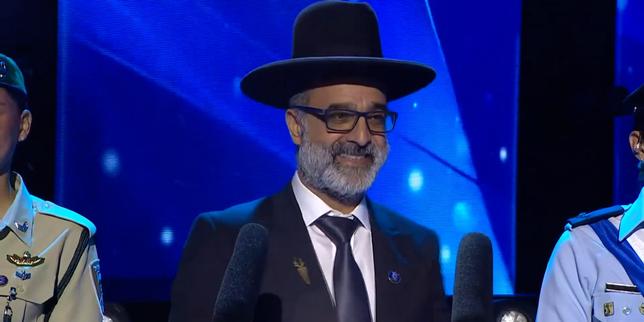
Honoring soldiers during national celebrations isn't usually a source of international friction, but the case of Avraham Zarbiv changed that script during Israel’s 76th Independence Day. When the Israeli Defense Forces (IDF) selected Zarbiv to light a torch—a massive symbolic honor in Israeli culture—it didn't just spark a local debate. It ignited a firestorm of criticism across global media and human rights circles. You've probably seen the footage or the headlines. Zarbiv became the face of the Gaza destruction for many, specifically because of a video that went viral long before the ceremony took place.
The optics were, frankly, jarring. On one hand, you have the traditional, solemn celebration of statehood. On the other, you have a soldier who had previously filmed himself celebrating the demolition of civilian infrastructure in Gaza. It raises a messy question about what modern states choose to valorize during wartime. This isn't just about one man. It’s about the message a military sends when it puts a specific kind of conduct on a pedestal.
The video that defined a soldier
Avraham Zarbiv wasn't a household name until he picked up his phone in Gaza. The footage shows him in front of a building rigged with explosives. He’s smiling. He’s counting down. When the building disappears in a cloud of dust and debris, he cheers. For his supporters, this was a display of morale and the "necessary work" of dismantling militant infrastructure. For the rest of the world, it looked like the gleeful destruction of a neighborhood.
The video didn't disappear. It stayed in the digital ecosystem, waiting for a moment of high visibility. That moment arrived when the IDF announced Zarbiv would be one of the torch-lighters. This ceremony is meant to represent the "best of Israel." By choosing him, the authorities essentially linked the state’s highest honor to the very actions caught in that viral clip. You can't separate the man from the digital record he created.
Why the timing of the honor mattered
Independence Day in Israel is always an emotional rollercoaster, shifting from the grief of Memorial Day to the high energy of celebration. In 2024, that shift felt impossible for many. The conflict in Gaza was—and is—the most intense in decades. The international community, including bodies like the International Court of Justice (ICJ), has been scrutinizing every move the IDF makes.
Choosing a soldier associated with "destruction videos" during this window was a bold, if not provocative, move. It signaled that the IDF leadership wasn't backing down from the controversial behavior of its troops. Instead, they doubled down. They saw Zarbiv as a hero of the Reservists, a group that has carried a massive burden since October 7th. To the military, he represented the sacrifice of the common citizen-soldier. To critics, he represented a lack of accountability for the humanitarian cost in Gaza.
The breakdown of military discipline and social media
We’ve entered a weird era of "TikTok warfare." In previous conflicts, you had embedded journalists providing the lens. Now, every soldier has a high-definition camera in their pocket. Zarbiv is just one of hundreds who have posted similar content. The problem is that these videos often bypass the official military censors and the PR wing of the government.
The impact of "trophy" videos
- They provide direct evidence for international legal teams.
- They complicate diplomatic efforts by making the military look undisciplined.
- They dehumanize the conflict for viewers on both sides.
- They create "heroes" out of individuals who might actually be violating standing orders.
Military leaders often claim these videos don't represent their values. Yet, when you give the guy in the video a torch and a televised platform, that "rogue actor" defense falls apart. It’s a contradiction that’s hard to ignore. If the behavior is wrong, you discipline it. If you honor it, you own it.
Internal Israeli reactions vs global perception
It's a mistake to think all of Israel was united on this. The country is a pressure cooker of opinions. While right-wing factions saw Zarbiv’s inclusion as a win against "woke" criticism, liberal Israelis and families of hostages felt the tone was off. Some felt that the focus should have been exclusively on those who saved lives on October 7th, rather than those filmed destroying buildings later.
Globally, the reaction was far more lopsided. News outlets in France, the UK, and across the Arab world used Zarbiv as a symbol of what they describe as "gratuitous destruction." The contrast was sharp. In Jerusalem, he was a symbol of resilience. In the Hague or New York, he was a symbol of potential war crimes. This gap in perception is where the real diplomatic damage happens.
The role of the Reservist in Israeli society
To understand why Zarbiv was picked, you have to understand the cult of the Reservist. These aren't professional, career soldiers in the traditional sense. They are teachers, lawyers, and mechanics who dropped everything to fight. Zarbiv, a father and a civilian, fits the archetype of the "Everyman" defender.
The IDF wanted to honor the Reservists as a class. By picking Zarbiv, they were trying to say, "We see the guys in the mud, doing the hard work." But they picked an Everyman with a very specific, very public digital footprint. It shows a massive blind spot in how military institutions understand modern media. You can’t just look at a soldier’s service record anymore. You have to look at their Instagram feed.
What this means for the future of military honors
The fallout from the Zarbiv ceremony will likely change how these selections happen. Expect more vetting. Expect "social media audits" for anyone being considered for a public-facing honor. The IDF learned the hard way that a single 30-second clip can overshadow a lifetime of service.
It also highlights the shift in how "victory" is defined. In 1948 or 1967, victory was about territory and survival. In 2024, victory is also about the narrative. If your "visage of destruction" is the one the world sees, you're losing the narrative war even if you're winning on the ground.
Accountability and the digital trail
Zarbiv’s torch-lighting wasn't just a moment of celebration; it was a data point for those documenting the war. Human rights organizations like B'Tselem or Amnesty International don't need to dig for leaks when soldiers provide the footage themselves. The irony is that the same video that made him a hero to his peers is the one that will likely be used in legal briefs for years to come.
Military discipline in the age of the smartphone is basically an oxymoron. Officers tell soldiers to keep their phones off, but the desire for "clout" or to document one's experience is too strong. Zarbiv’s case is a warning to every military on earth. Your soldiers are your primary PR agents, whether you like it or not.
If you're following these developments, look past the ceremony itself. Watch how the IDF handles social media posts from the front lines in the coming months. They've already started tightening the screws on what can be filmed and shared. The "Zarbiv effect" is real, and it has made the high command realize that a soldier's camera is sometimes more dangerous than his rifle. Pay attention to the vetting processes for the next round of national awards—it’ll tell you exactly how much the government cares about fixing its international image.