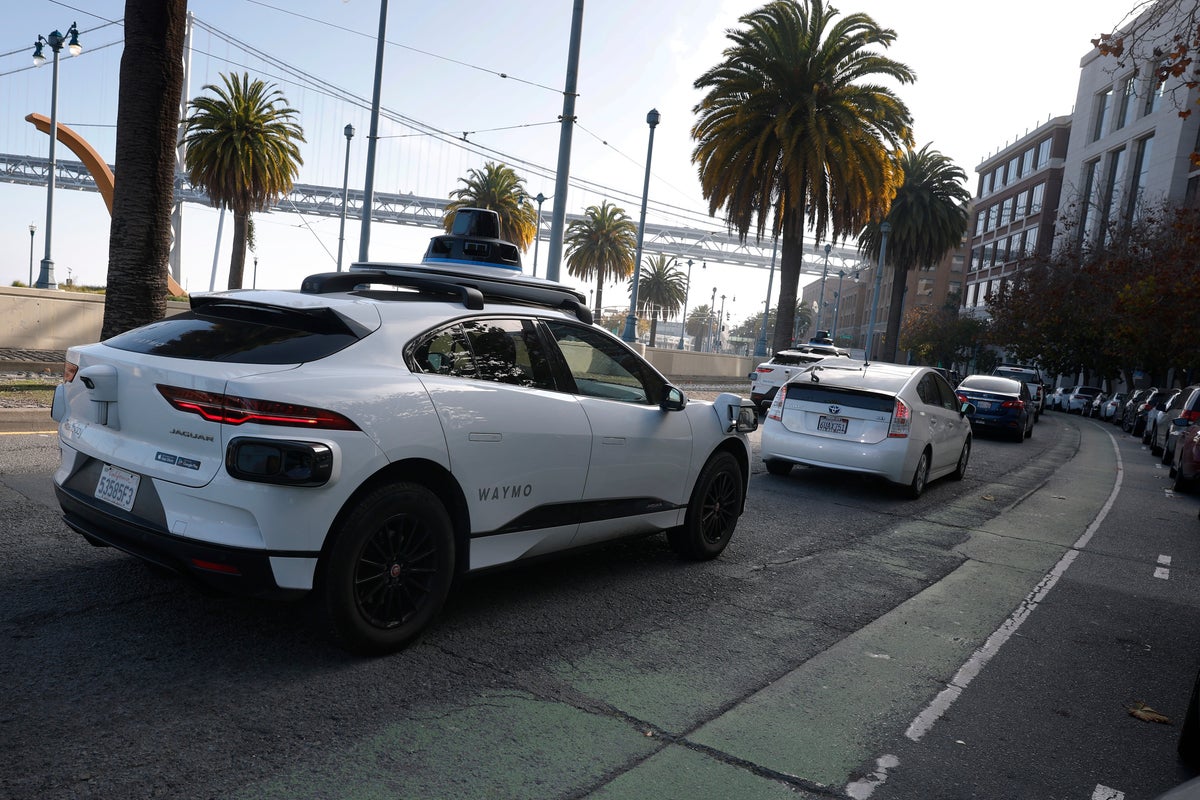
The friction between municipal infrastructure and autonomous vehicle (AV) deployment is not a localized nuisance; it is a predictable systemic failure occurring at the intersection of edge-case density and rigid algorithmic routing. When the San Francisco mayor demanded tighter self-driving cab regulations following the Fourth of July disruptions, the political narrative focused on public safety and corporate accountability. However, an objective operational diagnosis reveals a deeper structural bottleneck: the mismatch between a city's dynamic, unpredictable event topology and the deterministic risk-aversion models of AV fleets.
To understand why autonomous fleets paralyze urban corridors during major holidays, we must dissect the operational mechanics of the vehicles, the structural limitations of current cellular networks, and the failure modes of remote human-teleoperation fallback systems.
The Tri-Factor Failure Architecture of Holiday Gridlock
The disruption witnessed during the holiday weekend was not triggered by a single software bug. Instead, it was the result of three distinct operational pressures converging simultaneously, pushing the AV routing and safety systems past their operational design domains (ODDs).
1. Spatial-Temporal Edge Case Density
Autonomous vehicle software relies heavily on predictable patterns of human behavior and clear environmental markers. During large public celebrations, two variables spike exponentially:
- Pedestrian Unpredictability: Jaywalking, sudden crowds spilling into traffic lanes, and individuals lingering in intersections invalidate standard kinematic trajectory predictions. The AV's perception system cannot confidently assign a vector to individuals, forcing the vehicle's planner to default to extreme defensive posturing (stopping completely).
- Visual and Acoustic Noise: Pyrotechnics, illegal fireworks, and flashing emergency lights degrade the signal-to-noise ratio of LiDAR, radar, and camera suites. The perception system flags these as unclassified anomalies or ghost obstacles, triggering emergency braking sequences.
2. Telemetry and Teleoperation Latency Spikes
When an AV encounters a scenario it cannot resolve autonomously, it generates a "minimum risk maneuver" (MRM) and requests human intervention via a remote assistance link. This fallback architecture depends entirely on commercial cellular infrastructure.
- Cellular Congestion: During major public gatherings, local cell towers experience severe bandwidth throttling due to thousands of concurrent users uploading media and streaming data.
- The Latency Bottleneck: Remote teleoperation or path-approval requires low-latency, high-throughput video streams. When network latency exceeds the maximum threshold required for safe remote operation (typically around 50–100 milliseconds), the vehicle cannot receive human guidance. Deprived of both autonomous confidence and remote instructions, the vehicle executes its default safety protocol: it brings itself to a complete halt, turning a localized software hesitation into a physical roadblock.
3. Cascading Routing Deadlocks
A single stalled vehicle on a narrow urban street creates a localized delay. Three stalled vehicles in a grid system create a cascading network failure.
- Algorithmic Herd Behavior: Fleet routing algorithms optimize for the fastest path based on historical and real-time data. If an AV blocks Lane A, following AVs from the same fleet may lack the defensive driving capabilities required to cross a double-yellow line or negotiate around the obstacle using non-standard maneuvers. Instead, they line up behind the failed vehicle, compounding the blockage.
- Emergency Vehicle Obstruction: Because the vehicles default to stopping in place rather than pulling to the curb—a maneuver that requires high confidence in edge-case environments—they frequently block high-priority transit corridors, delaying fire trucks and ambulances.
The Asymmetry of Municipal Authority and Corporate Liability
The regulatory tug-of-war following the Fourth of July incident highlights a profound structural misalignment between city managers and AV operators. Currently, state-level entities (such as public utilities commissions and motor vehicle departments) hold the authority to grant operational permits, leaving municipal governments to manage the physical consequences of deployment without direct legislative leverage.
[State Regulators: Grant Permits & Speed Approvals]
       │
       ▼
[AV Operators: Optimize Fleet Throughput]
       │
       ▼ (Physical World Impact)
[Municipal Infrastructure: Bears Externalities / Gridlock & First Responder Delays]
This structural division creates an economic externality. AV operators externalize the costs of systemic software failures onto city infrastructure, emergency services, and the public workforce. The mayor’s call for tighter regulations is an attempt to rebalance this equation by demanding localized oversight mechanisms.
The core challenge for municipalities is establishing quantitative thresholds for what constitutes an acceptable level of urban disruption. Standard metrics like "Miles per Disengagement" are flawed; they measure how often a human safety driver takes over during testing, not how effectively an uncrewed fleet interacts with a chaotic city environment during a crisis.
Quantifying the Urban Friction Index
To move past reactive political rhetoric, city planners and AV companies must align on an objective framework to measure fleet performance during high-stress anomalies. We can conceptualize this through an Urban Friction Index (UFI), which balances fleet utility against civic disruption:
$$UFI = \frac{\sum (D_t \times C_s) + E_m}{V_a}$$
Where:
- $D_t$ represents the total duration of vehicle immobility in active traffic lanes.
- $C_s$ represents the criticality coefficient of the blocked street (e.g., residential alley vs. primary emergency evacuation route).
- $E_m$ represents the count of emergency vehicle mission impediments.
- $V_a$ represents the total active autonomous vehicle miles traveled within the zone during the designated timeframe.
Under normal operating conditions, the UFI remains near zero. During events like the Fourth of July, exponential increases in $D_t$ and $E_m$ cause the index to spike, signaling an immediate need for operational intervention before systemic gridlock occurs.
Tactical Mitigations for Municipal Fleet Integration
Resolving these systemic failures requires shifting away from broad bans and moving toward dynamic, data-driven operational boundaries. Operators cannot simply write better code overnight; they must design system redundancies that account for human and infrastructure limitations.
Dynamic Geofencing and Event-Based Throttle Rates
Cities must establish real-time digital communication channels with AV fleet dispatch systems. During major civic events, designated zones must automatically trigger updated ODD constraints:
- Automated Fleet Throttling: Reducing the total volume of active AVs allowed within a high-density radius by 50–75% to lower the probability of cascading blockages.
- Forced Boundary Drop-Offs: Configuring routing engines to prevent passenger pickups or drop-offs within a perimeter surrounding the event, forcing vehicles to remain on wider, high-capacity peripheral roads.
Dedicated Mesh Infrastructure for Teleoperation
Relying on commercial 5G networks for safety-critical remote assistance is a fundamental design flaw. AV operators must deploy private, localized mesh networks or secure priority cellular bands (such as FirstNet or dedicated network slices) in high-density urban centers to ensure telemetry links remain functional when commercial networks collapse.
Physical Bypass Protocols
When an AV enters an unresolvable state and loses connectivity, it must possess a mechanism for rapid physical clearance.
- First Responder Override: Equipping local police and fire personnel with standardized physical or digital keys that allow them to manually drive or clear the vehicle from the roadway within seconds, without waiting for a corporate field technician to arrive through gridlocked traffic.
- Low-Speed Blind Creep: Upgrading software architectures to allow the vehicle, when disconnected from remote help, to safely "creep" at 1–2 mph toward a curb or less critical space using ultra-conservative proximity sensors, rather than freezing in the center of an active lane.
The strategic play for municipal leaders is not to halt technological progress through endless litigation, but to mandate open data integration and enforceable performance baselines. AV operators who fail to maintain low Urban Friction scores during peak demand windows must face escalating financial penalties or automatic caps on their active fleet sizes. Only by tying corporate operational capacity directly to public infrastructure fluidity can cities prevent systemic paralysis during their most critical moments.