Australia just voted in favor of a historic United Nations resolution that aims to hold big polluters legally accountable for destroying the planet. The UN General Assembly endorsed the landmark International Court of Justice (ICJ) advisory opinion, which explicitly states that failing to curb fossil fuel production is an "internationally wrongful act."
It sounds like a massive win for our Pacific neighbors. It sounds like Canberra is finally stepping up.
But if you look closer, the reality is a lot messier. Australia voted "yes" along with 140 other nations, but we refused to co-sponsor the resolution. We sat on our hands while 69 other countries put their names directly on the draft. It’s a classic case of wanting the good PR without doing the heavy lifting, and it leaves Australia in a deeply hypocritical position. We're telling the world we care about climate justice while continuing to approve massive coal and gas exports right here at home.
The resolution passed 141 to 8, with 28 abstentions. The opposition included the usual suspects: the United States, Russia, Saudi Arabia, and Iran. While it’s great we didn't sit in the corner with the petrostates, our reluctance to fully back the Pacific's diplomatic push shows exactly where the federal government's loyalties still lie.
The Pacific Victory Australia Tried to Shadowbox
This whole movement didn't start in the halls of New York or Geneva. It started with a group of passionate law students from the Pacific Islands Students Fighting Climate Change. They pushed Vanuatu to take the issue straight to the world's highest court.
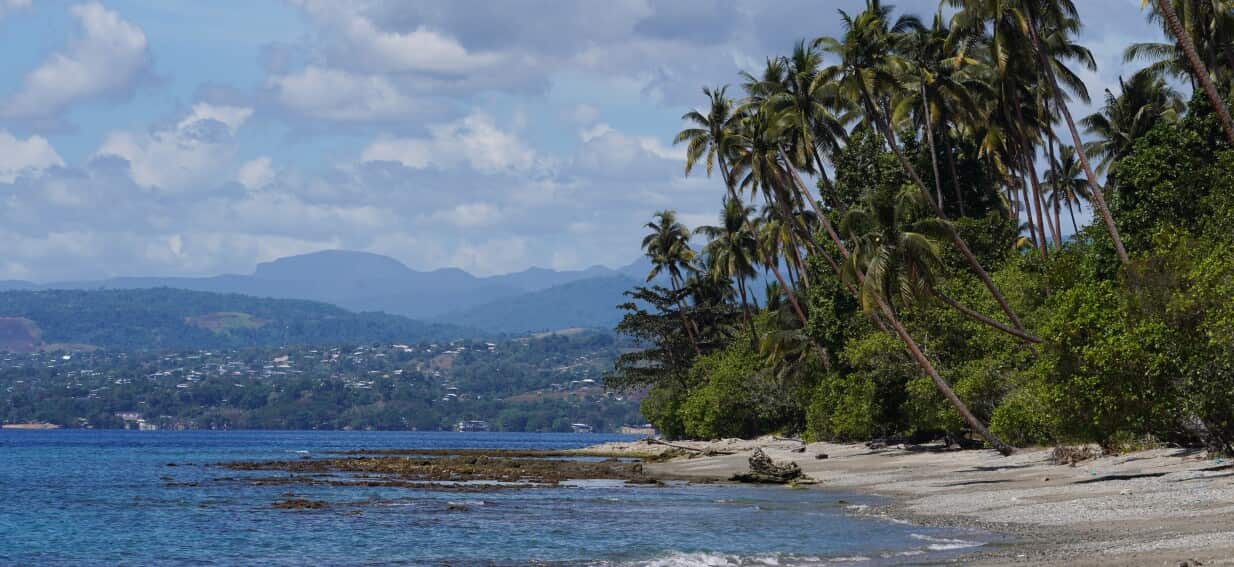
Vanuatu, an island nation physically washing away due to rising sea levels, championed the cause. They fought for years to get the ICJ to hand down its July 2025 advisory opinion. That ruling didn't mince words. It declared that protecting the climate is a legal obligation under international law, not a political choice.
The UN resolution formally operationalizes that court ruling. It demands that governments align their national domestic policies with the 1.5°C warming limit. It forces countries to regulate fossil fuel companies and provides a legal framework for nations to pay reparations for climate damage.
For low-lying states like Tuvalu, which is projected to lose 90% of its land to the ocean by the end of the century, this isn't an academic debate. It’s survival. Yet, when it came time to co-sponsor the resolution, Australia and New Zealand were the only Pacific nations missing from the list.
The Massive Elephant in the Export Room
The Albanese government loves talking about our internal transition to renewable energy. We have ambitious domestic targets, and we're rolling out wind and solar at a decent pace. But domestic emissions are only half the story.
Australia remains one of the largest exporters of coal and gas on earth.
Amanda McKenzie, the chief executive of the Climate Council, pointed out that this UN vote exposes the fundamental contradiction in Australian foreign and domestic policy. We wave through new fossil fuel projects with one hand and sign international accountability resolutions with the other. Under this new UN framework, continuing to approve major fossil fuel export infrastructure could be viewed as a direct violation of international law.
We can't keep playing both sides. You can't be a climate leader when your economy relies on shipping millions of tons of carbon overseas to be burned by someone else.
What This Means for Climate Litigation
Let's be clear about one thing: UN General Assembly resolutions aren't legally binding treaties. The UN isn't going to send a police force to Canberra to shut down a coal mine.
But it gives activists, community groups, and lawyers a massive sledgehammer in court.
Domestic judges across the globe are already using the 2025 ICJ advisory opinion to decide local climate cases. This new resolution adds immense political and legal weight to those arguments. It creates a clear roadmap for compliance. If a community group sues the Australian government over a new gas project, they can now point to this resolution and argue that the state is committing an internationally wrongful act.
The resolution also forces the UN Secretary-General to submit a formal report in 2027 tracking how well member states are complying with these legal obligations. The scrutiny isn't going away. It’s going to intensify.
The Diplomacy Problem Ahead of COP31
This cautious "yes" vote is going to make things incredibly awkward for Australia on the international stage soon. We are currently bidding to host the COP31 climate summit in partnership with the Pacific.
If we want to stand on stage next to leaders from Fiji, Vanuatu, and Tuvalu, we have to stop treating their existential crisis like a diplomatic game. Our Pacific neighbors noticed that we refused to co-sponsor their resolution. They noticed that we are trying to protect our mining export revenue while they watch their freshwater lenses turn into salt water.
If Australia wants the prestige of hosting a global climate summit, the federal government needs to start acting like a true ally.
Next Steps for Australia
Instead of patting ourselves on the back for voting the right way at the UN, we need to see actual policy changes at home. If you want to know what real climate accountability looks like, watch for these three shifts:
- Revising the Environment Protection and Biodiversity Conservation Act: We need federal laws that explicitly allow the environment minister to reject projects based on their total climate and emissions impact, including export emissions.
- Ending Fossil Fuel Subsidies: Taxpayer money shouldn't be fueling the expansion of gas basins like the Beetaloo or offshore projects.
- Increasing Pacific Climate Finance: Funding adaptation measures in the Pacific shouldn't be viewed as charity. Based on this resolution, it's a legal obligation to remediate damage caused by historical emissions.
The time for safe diplomacy is over. Voting with the global majority is the bare minimum. Now we have to actually stop digging up the coal.