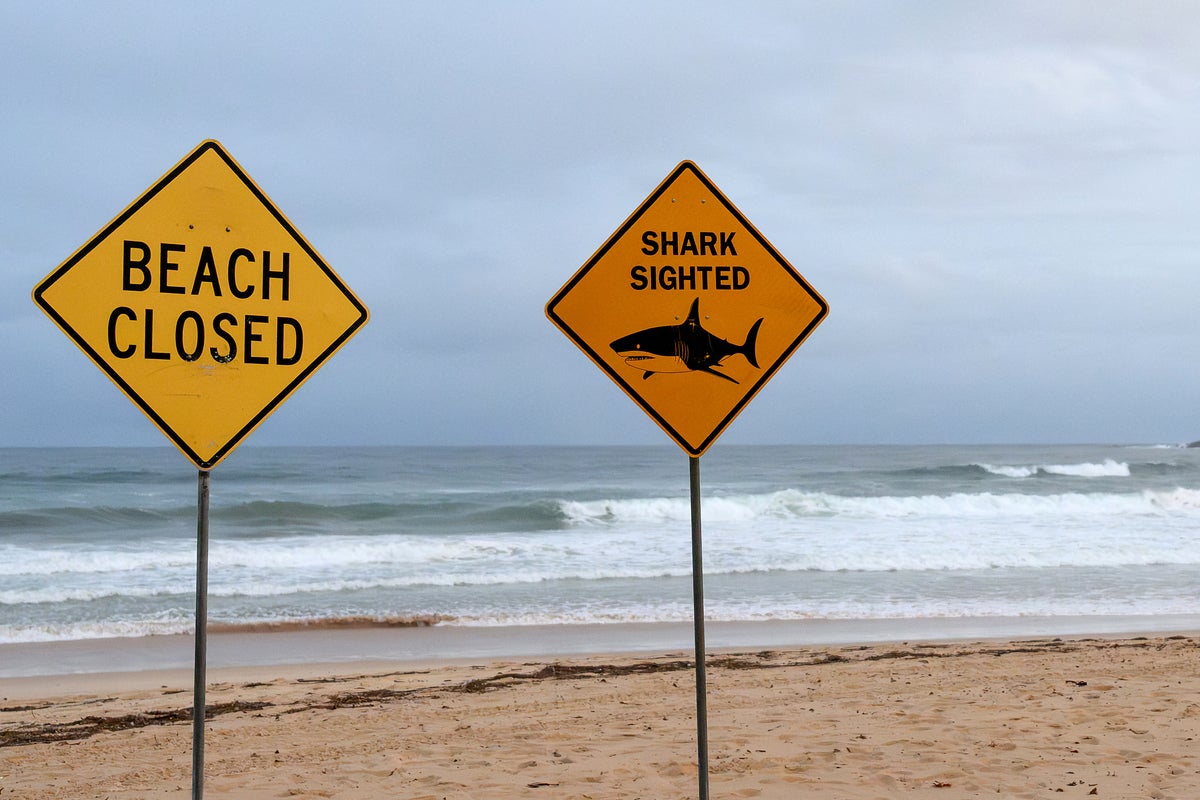
Three fatalities in three weeks.
The headlines write themselves. They scream about "unprecedented spikes," "rogue killers," and "coastal crises." The public panics, tourism boards scramble, and politicians immediately demand drum lines and culls. It is a predictable, reactionary cycle that happens every single time a cluster of marine tragedies occurs.
But the media is feeding you a mathematical lie.
The media treats shark encounters as a linear narrative. They imply that three attacks in twenty-one days means the ocean has suddenly become a biological war zone. This is a fundamental misunderstanding of probability, oceanography, and human behavior.
I have spent years analyzing marine data and tracking coastal policy. I can tell you that the "lazy consensus" driving this panic completely ignores how nature—and numbers—actually function. The ocean is not getting angrier. Humans are just exceptionally bad at math.
The Myth of the Cluster
When multiple rare events happen close together, the human brain desperately looks for a pattern. We want to believe there is a cause. A rogue predator. A change in shark psychology. A failure of local government.
In statistics, this is known as data clustering, or the Texas Sharpshooter Fallacy. If you fire a gun randomly at a barn door and then draw a bullseye around the tightest cluster of bullet holes, you make yourself look like a marksman.
[Random Events Over Time]  -->  *  *    ***    *  *  *
                                      ^
                               Media Hyper-Focuses Here
Shark attacks are classic "Poisson processes"—events that occur independently and at a low constant average rate. In any truly random system, events do not spread out evenly like clockwork. They cluster. You can have years of near-zero activity followed by three events in a month, completely by chance.
Marine scientists at organizations like the Taronga Conservation Society maintain the Australian Shark Incident Database. The long-term data shows a remarkably flat line when adjusted for population. Three attacks in three weeks is a tragedy, but it is not a trend. It is just the wheel of probability spinning a bad number.
We Are Counting the Wrong Species
If you want to understand why shark encounters happen, stop looking at shark populations. Look at human populations.
Australia’s coastal population has boomed. More importantly, our behavior has shifted. Decades ago, surfers wore thick, clumsy rubber, and casual swimmers stayed between the flags for a few months a year. Today, high-tech wetsuits, hydrofoils, and ocean jet-skis mean more people are staying in deeper water, for longer hours, across all seasons.
We have fundamentally altered the density of humans in the apex predator’s dining room.
The Real Baseline Shift
Consider the sheer volume of data:
- The Exposure Factor: If the number of people entering the water doubles, and the number of sharks stays identical, encounters will mathematically rise.
- The Spatial Overlap: Humans are entering remote, high-energy surf zones that were previously left to wildlife.
- The Myth of Abundance: A cluster of sightings does not mean a population explosion. Sharks are highly migratory. A single school of baitfish moving close to shore can bring twenty sharks to a beach for forty-eight hours. That is a temporary traffic jam, not an invasion.
When you analyze the risk per hour spent in the water, the danger of a shark encounter has actually plummeted over the last century. The media just forgets to divide the attacks by the millions of hours humans now spend floating in the ocean.
The Fatal Flaw of Traditional Mitigation
The immediate reaction to a cluster is always a demand for violence. Smart drums, gill nets, and culls.
These measures do not protect swimmers. They protect politicians.
I have watched coastal councils throw millions of dollars at netting programs that give a completely false sense of security. Here is the reality of shark nets that the industry rarely admits: they do not form an impenetrable wall. They are simply suspended segments of mesh. Sharks can swim over them, under them, and around them. In fact, a shocking percentage of sharks caught in nets are found on the beaches-side, having already swum past the barrier.
[The Illusion of Net Security]
Surface  ====================================
               |  Net Segment  |
               |               |
Bottom   ____________________________________  <-- Sharks swim around
Furthermore, these traditional methods rely on an outdated strategy: killing the apex predator to engineer safety. This approach causes severe ecological damage without actually reducing risk. When you kill large sharks, you disrupt the trophic cascade, allowing mid-sized predators to overpopulate, which completely upends local fisheries.
The Downside of Truth
Admitting that culls do not work requires accepting an uncomfortable truth: the ocean is a wild environment.
This is the hardest pill for the public to swallow. If we abandon the illusion of control—the idea that we can net and kill our way to safety—we have to take personal responsibility for entering a wilderness.
Dismantling the Panic Economy
Let us answer the questions people actually ask when these clusters happen, stripped of the emotional hysteria.
Are sharks targeting humans?
No. If sharks actively hunted humans, nobody could swim at Bondi or Byron Bay without being eaten. Sharks have incredibly sophisticated sensory systems. They can detect microscopic drops of blood and minute electrical impulses. If they wanted to eat swimmers, the casualty numbers would be in the thousands daily. Encounters are almost universally cases of mistaken identity or investigative biting in low-visibility water.
Should we close beaches permanently after a cluster?
Closing a beach for twenty-four hours after a sighting makes sense to let a bait school pass. Closing it for weeks because of a "spike" is anti-science. It punishes coastal economies based on a fundamental misunderstanding of migratory behavior. A shark that was at a beach on Tuesday is often fifty kilometers away by Thursday.
Do electronic deterrents actually work?
Some do, most do not. Independent testing by university researchers shows that personal electrical deterrents emitting specific electromagnetic fields can deter white sharks. However, the cheap acoustic or magnetic bands sold in surf shops are largely useless. The market is flooded with snake oil designed to cash in on media-driven panic.
The Actionable Framework for Oceanic Risk
Stop relying on the government to sanitize the Pacific Ocean. If you want to surf or swim safely during periods of high environmental activity, you must evaluate the real variables that dictate your safety.
- Track the Biomass, Not the Sharks: Do not swim near river mouths after heavy rain. Do not swim near commercial fishing activity or large schools of baitfish. If birds are diving, get out. You are sitting in the middle of a grocery aisle.
- Acknowledge the Light: White sharks are ambush predators that utilize low-light conditions to surprise prey. Surfing at dawn, dusk, or in highly turbid, overcast water drastically skews the odds against you.
- Accept the Contract: When you step off the sand, you are entering a space where you are no longer at the top of the food chain.
The media will continue to report every cluster as a sign of an impending ecological apocalypse. They need the clicks. But the ocean is operating exactly as it has for millions of years. Three tragic events do not change the laws of mathematics. Stop reading the headlines, look at the data, and understand the environment before you step into it.