The smoke rising from the Isfahan research facility has barely cleared, yet the rhetoric from Tehran has already crystallized into a familiar, jagged defiance. After two rounds of joint U.S.-Israeli strikes in as many years, the Iranian leadership is not backing down. They are digging in. Foreign Minister Abbas Araghchi’s recent declaration that enrichment is no longer on the table for negotiation is not just a diplomatic pivot; it is a survival strategy born of the realization that their conventional defenses are shattered.
Tehran has calculated that with its regional "Axis of Resistance" weakened and its air defenses exposed by the February 2026 strikes, the nuclear program is the only leverage left that keeps Washington and Jerusalem from a full-scale ground intervention. For the Iranian regime, enrichment is not a bargaining chip to be traded for sanctions relief anymore. It is the final wall of a fortress that has lost its moat.
The Nuclear Fortress in the Mountain
To understand why Iran is hardening its stance, one must look at what remains beneath the earth. The strikes in June 2025 and February 2026 were precision-engineered to "obliterate" the enrichment infrastructure. They targeted the cooling systems at Natanz and the power grids at Fordow. However, Western intelligence and the IAEA both confirm that significant stockpiles of 60% enriched uranium-235 remain.
Starting from a 60% purity level, the technical leap to 90% "weapons-grade" material is trivial. It requires less than 1% of the total effort already expended in the enrichment process. Iran is effectively sitting on the threshold.
The hardening of their position is rooted in a simple, brutal logic: if they agree to dilute these stockpiles now, they lose their only remaining deterrent against a U.S. administration that has openly discussed regime change. The Iranian leadership watched the fall of Bashar al-Assad in Syria and the degradation of Hezbollah in Lebanon. They see a landscape where conventional proxies have failed them. In their eyes, the nuclear program is no longer a luxury of national pride; it is a prerequisite for the regime's continued existence.
The Price of Defiance
The domestic situation in Iran adds a layer of desperation to this geopolitical standoff. The economy is in a tailspin, with inflation pushing toward 60% and the rial essentially worthless on the international market. Protests that began in late 2025 over crumbling infrastructure and economic mismanagement have spread to 31 provinces.
Typically, such internal pressure might force a government to the negotiating table to seek sanctions relief. But the IRGC and the hardliners in the Majlis have drawn the opposite conclusion. They believe that any sign of weakness—such as pausing enrichment—would embolden the protesters and signal to the U.S. and Israel that the regime is ready to collapse.
By taking enrichment off the table, Tehran is attempting to force the West into a binary choice: accept a nuclear-capable Iran or commit to a full-scale war. They are betting that despite the harsh rhetoric coming from the White House, the U.S. is not prepared for the catastrophic oil price spikes and regional chaos that a total invasion would trigger.
The Failed Diplomacy of Force
The current stalemate is a direct result of the breakdown in indirect talks held in Geneva earlier this year. U.S. negotiators, led by Steve Witkoff and Jared Kushner, reportedly demanded the total dismantling of the Fordow, Natanz, and Esfahan facilities, along with the transfer of all enriched material to U.S. custody.
From an American perspective, these demands were the "maximum pressure" doctrine taken to its logical conclusion. From the Iranian perspective, they were a demand for unconditional surrender.
The Missing Middle Ground
- The U.S. Demand: Zero enrichment, permanent inspections, and an end to the ballistic missile program.
- The Iranian Counter: Recognition of their right to enrich, immediate lifting of all sanctions, and reparations for the damage caused by the 2025 and 2026 strikes.
- The Reality: There is no overlap in these positions.
The IAEA remains the only window into this black box, but even that window is fogging over. Director-General Rafael Grossi has warned that the agency is losing the "continuity of knowledge" as Iran restricts access to certain sites, citing security concerns following the recent strikes. Without reliable verification, the risk of a "breakout"—where Iran moves the remaining 60% material to a secret location to reach 90%—becomes an hourly concern for Israeli planners.
The Strait of Hormuz Gambit
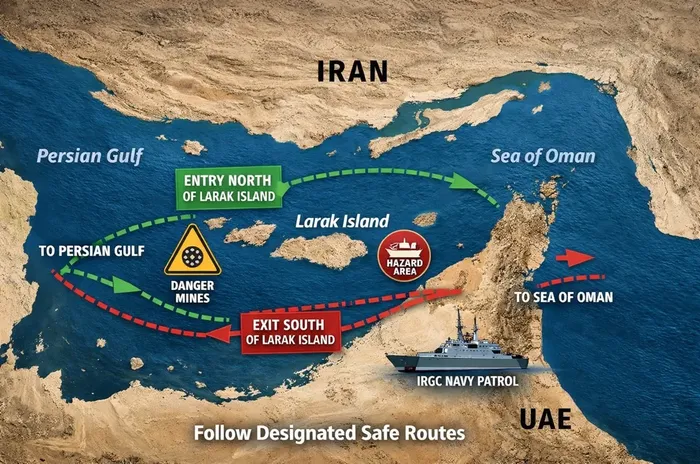
Tehran knows that enrichment alone might not be enough to stop the next wave of B-2 bombers. They have begun pairing their nuclear defiance with threats to the global energy supply. The demand for "fees" from ships transiting the Strait of Hormuz is a direct challenge to the principle of freedom of navigation.
If Iran cannot sell its oil due to sanctions, it is increasingly willing to ensure that no one else can move oil through the Persian Gulf without paying a price. This is the "war of attrition" that Iranian-backed militias in Iraq have been preparing for. It is a multi-front strategy designed to make the status quo as painful for the West as it is for the Islamic Republic.
The international community is now facing a reality where the old diplomatic playbooks are obsolete. The JCPOA is dead, not just legally but structurally, as the physical infrastructure it was designed to monitor has been repeatedly bombed. Yet, the knowledge and the material persist.
The Iranian leadership has calculated that they can survive the rubble. They believe that as long as they hold the 60% stockpile, they are never truly defeated. By hardening their position and refusing to negotiate on enrichment, they are telling the world that the "red line" has been moved. The question is no longer whether Iran will have the capacity to build a bomb, but whether the West is willing to burn the entire region down to stop the final 1% of the process.
The clocks in the subterranean halls of Fordow are still ticking. Every hour they remain hidden, the leverage shifts. Washington is demanding a total exit from the nuclear age, while Tehran is busy fortifying its foundations. In this contest of wills, the side that has the least to lose usually holds the strongest hand. Right now, looking at the protests in the streets and the craters in their facilities, the Iranian regime feels it has already lost everything except the atom. They aren't going to give it up for a promise of better days that they no longer believe in.