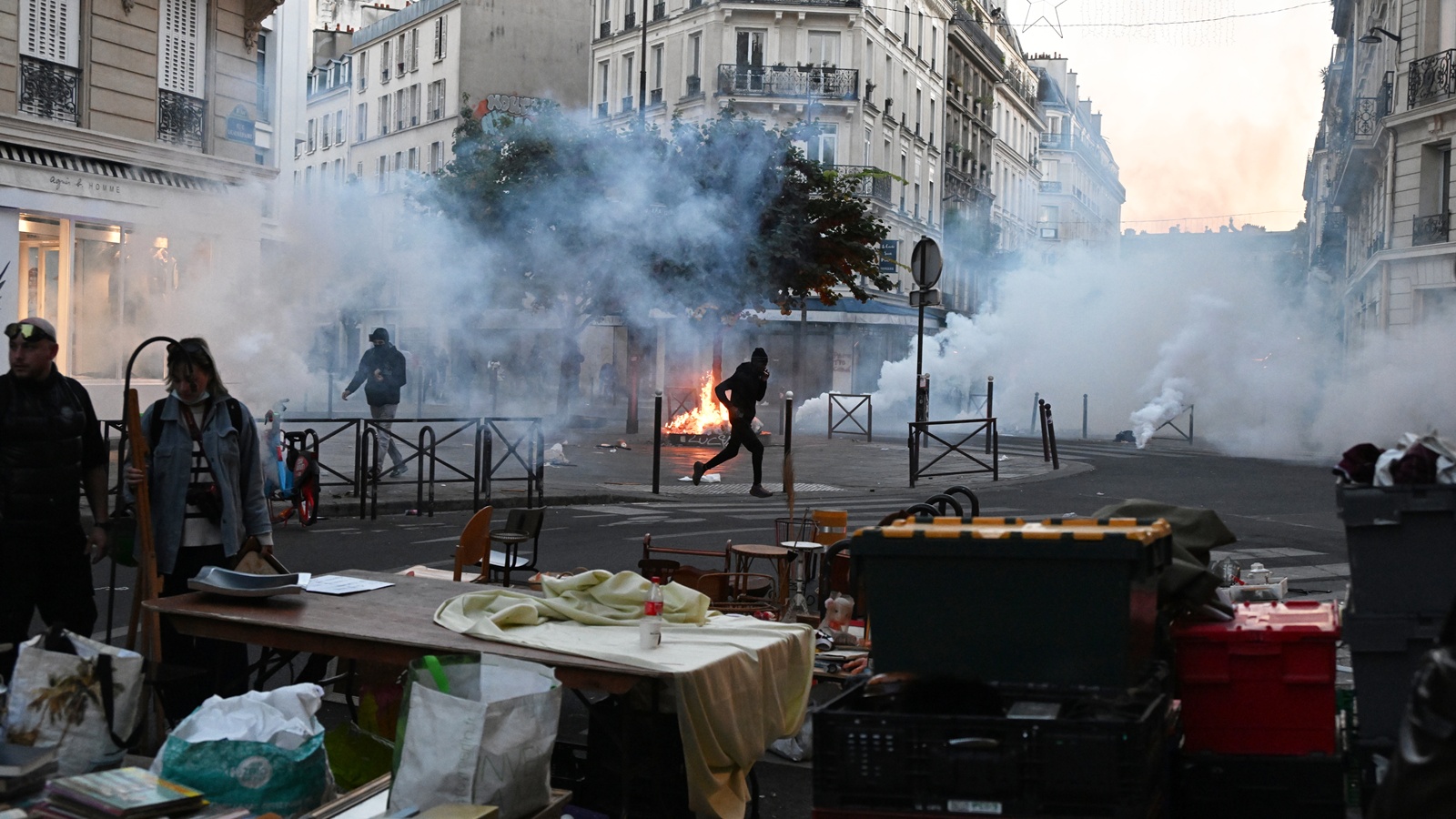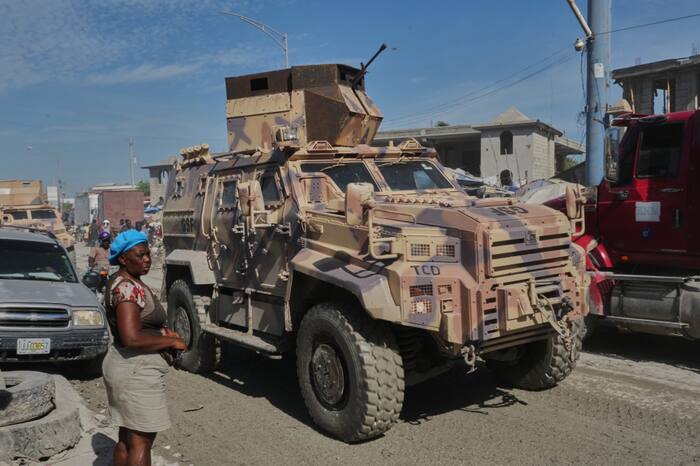
Conventional headline coverage of an escalation against foreign troops in Haiti frames the clash as a simple test of firepower between a newly deployed security force and entrenched gangs. That framing misses the structural mechanics of the conflict: armed coalitions in Port-au-Prince and surrounding corridors operate as decentralized, cash-and-ammunition networks that treat state and multinational forces as high-value signaling targets rather than territorial rivals they must defeat in open battle. To understand why a major attack on foreign troops occurs after a new force begins operations—and why kinetic responses alone rarely break these networks—we need to dissect the incentive structures of armed groups, the operational constraints of multinational deployments, the political economy sustaining the conflict, and the tactical trade-offs confronting commanders on the ground.
A note on evidentiary boundaries: where exact casualty counts, ammunition inventories, or internal gang communications are not publicly verified, the analysis below separates established operational realities from analytical hypotheses about actor behavior. Where granular figures are absent, the focus shifts to the structural mechanisms governing force ratios, logistics, and escalation dynamics.
Mapping the Flaws in Standard Conflict Reporting
Standard news reporting on major clashes in Haiti typically relies on three recurring analytical shortcuts that obscure how the security environment actually functions.
- The Territorial Control Fallacy: Headlines often imply that gangs "hold" neighborhoods the way a conventional army holds a ridge or a city block. In practice, armed groups rely on mobile checkpoints, extortion nodes, and rapid concentration of rifle and crew-served fire rather than static fortifications. Dispersing when outgunned and re-converging once pressure eases allows them to preserve manpower while imposing continuous friction.
- The Force-Size Equational Error: Analysts and commentators frequently judge a new deployment by its headline troop ceiling or initial arrival tranche. A deployment's real-world effect depends far less on nominal headcount than on usable combat power—the share of personnel trained for dense urban stability operations, equipped with night optics, armored mobility, and medical evacuation, and legally authorized to engage.
- The Isolated Incident Bias: Treating a single large attack against foreign troops as a standalone spike treats a symptom as the whole disease. High-profile strikes typically follow shifts in patrol patterns, supply chokepoints, or political bargaining leverage, functioning as deliberate communications to local populations, rival factions, and external capitals.
Replacing these shortcuts requires examining how an armed coalition actually behaves when a foreign force enters the theater.
The Four Pillars of Armed Coalition Resilience
Armed groups in Haiti are frequently described as chaotic or purely predatory, yet their longevity points to resilient organizational mechanisms. Rather than a single monolithic command, the environment consists of overlapping armed factions and alliances that coordinate selectively when shared interests align.
1. Cost Asymmetry and Low Overhead
An irregular urban fighter incurs minimal fixed overhead compared to a foreign security contingent. Housing, transport, and sustainment for a multinational force require airlift or sealift logistics, fuel chains, base security, intelligence support, and diplomatic backing. A local armed group operates on hyper-local supply lines, intimate street-level terrain knowledge, and low daily burn rates. Even when a foreign force inflicts heavy tactical losses, the attacker's replacement cost in money and bureaucratic approval is a fraction of the intervener's political and financial cost.
2. Signaling Value Over Decisive Victory
Armed coalitions do not need to defeat a foreign force militarily to achieve strategic gains. Attacking a newly active contingent serves immediate objectives: testing rules of engagement, exposing intelligence blind spots, intimidating local informants or state personnel who might cooperate with the new force, and demonstrating to residents that no external actor guarantees immediate safety. A single high-profile clash can alter risk calculations in capitals thousands of miles away long before a campaign reaches its operational milestones.
3. Revenue Diversification and Extortion Loops
Sustained armed activity depends on cash flow and munitions access. When gangs control arterial roads, ports, fuel distribution points, or commercial districts, they extract rents through kidnapping-for-ransom, tolling, protection rackets, and contraband movement. These revenue streams fund weapons and ammunition procurement, which in turn enforces extortion power—a self-reinforcing loop that outlasts short-term security sweeps unless the financial and logistics nodes are disrupted simultaneously.
4. Information Dominance at Street Level
In dense urban terrain with narrow alleys, concrete compounds, and fluid civilian movement, local actors hold a structural information advantage. Spotters, lookouts, and community ties allow armed groups to track patrols, anticipate entry routes, and blend into civilian surroundings faster than external units can build reliable human intelligence networks. Without deep local integration and vetted partner units, foreign troops risk operating with incomplete situational awareness.
Why Attacks Spike After a New Force Begins Operations
A major attack shortly after a new foreign force starts operations often surprises casual observers, yet the timing reflects predictable friction points rather than pure randomness.
The first mechanism is the transition gap. When a new mission begins operations, units are often still calibrating command-and-control links, communications protocols, logistics hubs, and coordination with local police. Armed groups probe these seams precisely because coordination is hardest during early deployment phases.
The second mechanism is threat perception and pre-emption. From the perspective of an armed leader, an active foreign force threatens lucrative extortion corridors, smuggling routes, and neighborhood dominance. Launching a bold strike early tests the new force's resolve and attempts to deter aggressive pushes into core strongholds before the mission establishes permanent footholds.
The third mechanism is domestic and coalition leverage. Violence alters political bargaining both inside Haiti and among troop-contributing states. Demonstrating that security remains precarious can pressure political actors domestically or strain the political tolerance of governments funding and staffing the mission—especially when casualties occur or expectations of rapid calm collide with ground realities.
This is an analytical hypothesis rather than a proven intent in every clash, yet the pattern repeats across asymmetric interventions: early kinetic friction is frequently a bid to shape the political cost of staying the course.
The Intervention Cost Function and Operational Bottlenecks
To see why foreign interventions stall, it helps to view the mission through an operational cost function. Every patrol, raid, or corridor-clearing operation consumes scarce resources while generating political and strategic consequences.
| Operational Variable | What It Constrains | Typical Bottleneck in Practice |
|---|---|---|
| Usable Troop Ratio | Simultaneous area coverage and reserve depth | Guarding bases, logistics, and key sites trims mobile patrol numbers |
| Rules of Engagement & Mandate | Speed and scale of force application | Legal, political, and force-protection limits restrict aggressive maneuvers |
| Intelligence & Local Integration | Precision of targeting and civilian harm avoidance | Language barriers, vetting delays, and distrust slow actionable leads |
| Logistics & Medical Evacuation | Tempo and reach in contested zones | Fuel, parts, ammo resupply, and casualty evacuation dictate patrol radius |
| Political & Financial Backing | Mission duration and reinforcement capacity | Domestic pushback or funding shortfalls can cap ambition mid-stream |
Notice the core trade-off built into this table. A force that relies on heavy firepower in dense neighborhoods risks civilian casualties, which alienates residents and feeds armed group recruitment—yet a force that stays overly cautious cedes initiative and allows armed groups to regroup. Clearing a corridor or compound produces temporary breathing room only if local security institutions, judicial follow-through, and basic governance can hold the ground afterward. Without that follow-on capacity, clearing operations become a treadmill: troops push in, gangs withdraw or disperse, pressure eases, and armed actors return.
How Analysts and Planners Should Evaluate Developments
When a major clash occurs against foreign troops in Haiti, observers and decision-makers need a disciplined way to separate noise from structural shift. Instead of reacting to dramatic headlines alone, track five concrete indicators over the weeks that follow.
- Sustained Tempo vs. One-Off Escalation: Check whether the foreign force maintains or expands operational tempo after the attack, or pulls back to defensive postures and perimeter security. A temporary contraction signals deterrence pressure; sustained, methodical pressure signals resilience.
- Corridor and Node Continuity: Look at whether critical transit routes, ports, hospitals, and commercial hubs remain contested or open. Control over movement and supply arteries matters far more than symbolic clashes.
- Host-Nation Force Coordination: Observe how local police and security units operate alongside foreign troops during and after the incident. Durable security gains depend on local institutional capability rather than foreign substitution.
- Arms and Munitions Friction: Watch for disruptions to illicit weapons flows, fuel bottlenecks, or extortion networks. Depriving armed groups of ammunition and cash erodes their staying power more reliably than sporadic skirmishes.
- Political Cohesion Around the Mandate: Monitor whether contributing states and local stakeholders reaffirm commitments, supply promised enablers, or begin signaling exit conditions. Political will is often the most fragile link in multinational operations.
Limitations of External Security Interventions
Even a well-resourced, well-led foreign force faces hard structural limits in an environment like Haiti's. No military or police deployment—no matter how disciplined—can by itself resolve deep-seated governance deficits, economic desperation, illicit cross-border flows, or entrenched political-criminal patronage.
Over-relying on external kinetic force carries clear risks. If a foreign contingent becomes the primary shield of a fragile state without parallel progress on accountability, local policing, and economic opportunity, the mission risks becoming a permanent crutch that breeds resentment while leaving root drivers intact. Conversely, under-resourcing a mission while expecting rapid stabilization sets troops up for preventable casualties and reputational failure. Realism requires treating security operations as a necessary enabler for political and institutional stabilization, never a substitute for them.
Strategic Play for Mission Planners and Policymakers
Anchor operations on intelligence-led corridor denial and local force integration rather than broad, uncoordinated sweeps—prioritizing vetted joint operations along vital supply arteries, protecting high-impact infrastructure, and pairing every security push with concrete local policing and cash-flow disruption so gains do not evaporate the moment patrols rotate out.