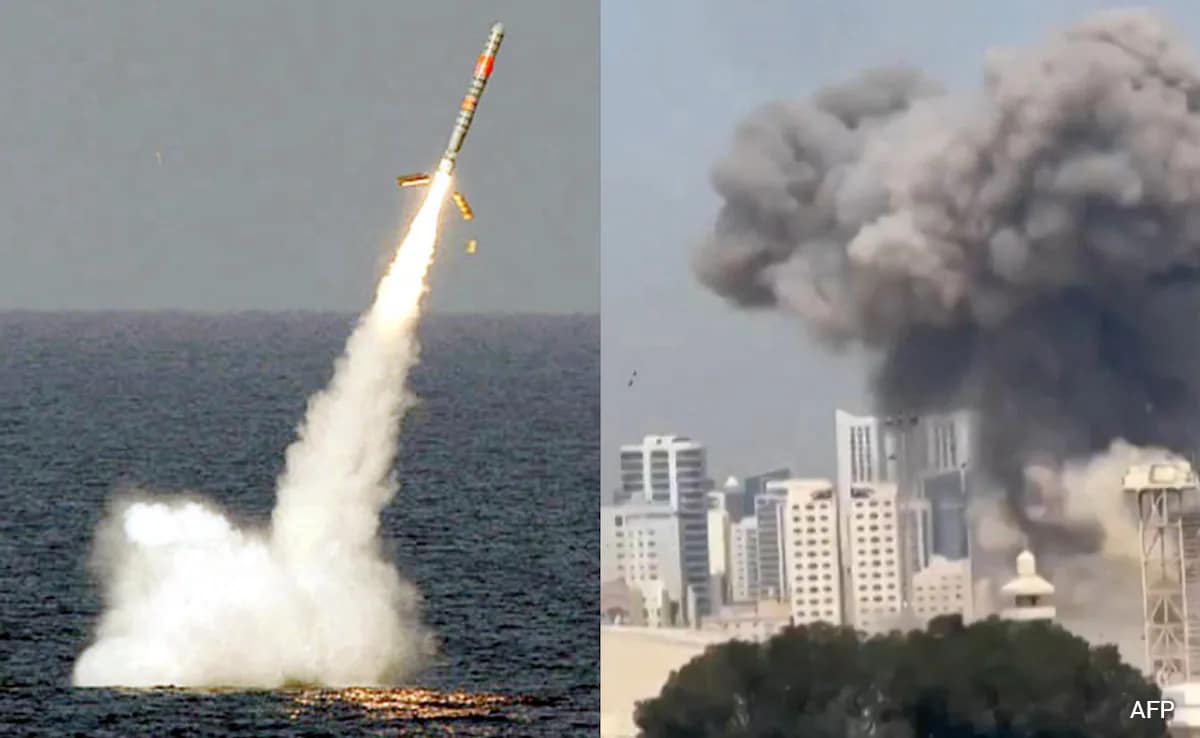
The deployment of a Shahed-series one-way attack (OWA) unmanned aerial vehicle (UAV) against a United States naval base radar installation represents a calculated shift from psychological harassment to a functional degradation of maritime domain awareness. This engagement is not merely a tactical strike; it is an empirical test of the cost-exchange ratio in modern integrated air defense systems (IADS). When a low-cost loitering munition targets a high-value electromagnetic emitter, the primary objective is the forced depletion of expensive interceptor inventories or the permanent blindness of a specific geographic sector.
The Physics of the Target: Why Radar is the Critical Node
Naval radar systems, specifically those tied to Aegis or terrestrial ballistic missile defense (BMD) arrays, are the most vulnerable and valuable components of a defensive posture. Unlike armored command centers, radar arrays must be exposed to function.
- Electromagnetic Signature: A radar is a beacon. By its nature, it broadcasts its precise location to any platform equipped with basic electronic support measures (ESM). For a drone like the Shahed, which can be programmed with GPS coordinates or equipped with basic anti-radiation seekers, the radar is the easiest target on the base to find and fix.
- Structural Fragility: While the base itself may be hardened against kinetic impact, the phased array panels of a radar are precision instruments. A small payload—even the 30-50kg warhead found on a Shahed-136—is sufficient to induce catastrophic "mission kill" damage. Even if the entire structure is not leveled, the destruction of a significant percentage of the Transmit/Receive (T/R) modules renders the system ineffective.
- Repair Latency: Unlike a runway that can be patched with quick-drying concrete, a high-end radar array has a supply chain measured in months or years. The destruction of a single face of an AN/SPY-class radar creates a multi-million dollar "blind spot" that cannot be bypassed or easily repaired in a contested environment.
The Shahed Logic: Saturation and Economic Warfare
The Shahed drone functions as a "poverty-tier" cruise missile. It utilizes a civilian-grade internal combustion engine and off-the-shelf electronics to achieve long-range flight. The strategic value of this platform is found in its attrition mathematics.
- The Interceptor Paradox: A Shahed drone costs approximately $20,000 to $50,000 to produce. The interceptors typically used to defend a U.S. naval base—such as the SM-2, SM-6, or even the shorter-range RIM-116 Rolling Airframe Missile (RAM)—cost between $1 million and $4 million per unit.
- Probability of Kill ($P_k$): Standard doctrine requires firing two interceptors per incoming threat to ensure a high $P_k$. This creates a financial disparity of nearly 200:1. In a sustained conflict, the defender runs out of money and, more importantly, physical magazine depth long before the attacker runs out of airframes.
- The Velocity Mismatch: Shahed drones fly at relatively low speeds (under 200 km/h). This makes them difficult for some high-end Doppler radars to distinguish from "clutter" (birds, clouds, or waves) if they are flying a low-altitude profile.
Mechanics of the Strike: The Kill Chain Breakdown
The successful targeting of a radar installation involves a three-phase operational cycle that Iran and its proxies have refined through repeated iterations in the Middle East theater.
Phase I: Electronic Mapping
Before the launch, the attacker uses signals intelligence (SIGINT) to map the radar's "uptime." They identify when the radar is active, its frequency hopping patterns, and its coverage gaps. If the radar is part of a permanent installation, its coordinates are static and already logged.
Phase II: The Saturation Vector
A single drone is rarely the intended strike package. Attackers utilize a "swarm-lite" approach, launching multiple drones from different vectors. This forces the radar's fire control system to prioritize targets. If the system is overwhelmed by sheer numbers, the "leaker"—the drone that gets through—is the only one that matters.
Phase III: Kinetic Impact and Post-Strike Assessment
The Shahed uses a combination of GNSS (Global Navigation Satellite System) and inertial navigation. Because the radar array is a fixed target, the drone does not need sophisticated terminal guidance. It simply flies to the coordinate and dives. The goal is a high-obliquity impact on the array face to maximize the destruction of the gallium nitride (GaN) or gallium arsenide (GaAs) semiconductors within the panel.
Defending the Emitter: The Limitations of Hard Kill Measures
The current reliance on "Hard Kill" (physically destroying the drone) is failing due to the economic realities mentioned above. A transition to more sustainable defensive frameworks is required, yet each comes with significant technical trade-offs.
- Directed Energy Weapons (DEW): High-energy lasers offer a "pennies per shot" solution. However, they are hampered by atmospheric conditions (fog, dust, or rain) and require a "dwell time" where the beam must stay on a single point of the drone to melt the skin or fry the electronics. Against a swarm, the dwell time becomes a bottleneck.
- Electronic Warfare (Soft Kill): Jamming the GPS signal of a Shahed is a common tactic. However, modern iterations of these drones have been observed using basic inertial navigation systems that allow them to maintain a heading even when the GNSS signal is lost. Furthermore, high-powered jamming can interfere with the very friendly radar systems the base is trying to protect.
- Kinetic Point Defense (C-RAM): Systems like the Phalanx CIWS (Close-In Weapon System) use 20mm cannon fire to shred incoming targets. These are effective but have a very short range (under 2km). Relying on CIWS means the drone is already at the "front door," leaving zero margin for error.
The Strategic Shift: From Defense to Resilience
The targeting of U.S. naval radars indicates that adversaries have moved past the "demonstration" phase of drone warfare. They are now engaging in functional suppression. By targeting the eyes of the fleet, they create "sanctuaries" where their own missiles and fast-attack craft can operate without being detected by the long-range Aegis umbrella.
The immediate tactical requirement is the decoupling of the radar sensor from the command center. If a radar is destroyed, it should be a modular, "plug-and-play" component rather than a bespoke, integrated part of the base's infrastructure. Moving toward distributed sensor networks—where dozens of small, cheap radars provide a composite picture—reduces the impact of any single Shahed strike. Until the U.S. can invert the cost-exchange ratio, fixed radar installations remain the most lucrative targets for asymmetric actors.
The military-industrial response must focus on the rapid procurement of "low-exquisite" interceptors—small, cheap, kinetic interceptors or "interceptor drones"—designed specifically to kill $20,000 threats without wasting a $2 million missile. Failure to adjust this procurement logic results in a strategic "checkmate by accounting," where the defender is bankrupt before the first major naval engagement even begins.
Would you like me to conduct a technical deep-dive into the specific gallium nitride (GaN) vulnerabilities in phased-array radars to quantify the exact force required for a mission kill?