The map tells you Route 66 is a ribbon of concrete connecting Chicago to Santa Monica, a nostalgia trip paved with neon signs and roadside dinosaur statues. But maps lie about the edges. They don't show you what happens when you drift off the historic highway into the gnarled folds of the Missouri Ozarks, where the pavement turns the color of wet slate and the hollows swallow the sound of the outside world.
Drive deep enough into these hills, past the rusted skeletons of old general stores and mailboxes shot full of holes, and you find a different kind of America. Here, the election cycle isn't a spectacle on a glowing screen. It is a slow-burning anxiety. Recently making waves lately: Why Giorgia Meloni and Brothers of Italy Actually Lasted.
To understand what people in places like rural Missouri were feeling on the eve of the midterms, you have to leave the highway behind. You have to park where the gravel ends and the tree line begins.
The air smells of woodsmoke and damp earth. Autumn comes early to the Ozarks, stripping the oak trees bare and leaving the ridges looking like jagged teeth against a pale sky. In these isolated pockets, life is measured by seasons, not political polls. Yet, a heavy frost had settled over the community long before the first leaves fell. Additional insights into this topic are explored by The New York Times.
People here are not prone to dramatic declarations. Talk to a man leaning against the bed of a battered Ford truck outside a shuttered diner, and you won't get fiery partisan rhetoric. You get silence first. Then, a slow shake of the head.
The mood isn't angry, exactly. It is tired. It is the exhaustion of watching grocery bills creep higher while the price for timber or cattle stays stubbornly flat. It is the quiet realization that the modern economy roared right past these hills, leaving behind hollowed-out towns where the only growth industry is despair.
Consider the arithmetic of isolation. When the nearest hospital is forty miles away down a winding two-lane road, healthcare isn't a policy debate on cable news. It is a desperate calculation made in the middle of the night when a chest tightens. When the local school operates on a four-day week because the district can't afford fuel for the buses five days a week, education stops being an abstract talking point. It is a daily logistical puzzle for parents working two jobs just to keep the lights on.
On the front porches and in the dimly lit kitchens across the Ozarks, the upcoming midterms felt less like a chance to steer the country and more like a thermometer stuck in the mouth of a sick patient. Everyone knew the reading would be bad. No one expected the doctor to offer a cure.
There is a distinct psychology to being forgotten. It breeds a fierce independence, but it also breeds a bitter resignation. You learn to fix your own truck, patch your own roof, and expect nothing from the folks up in Washington, regardless of which party's flag flies over the capital.
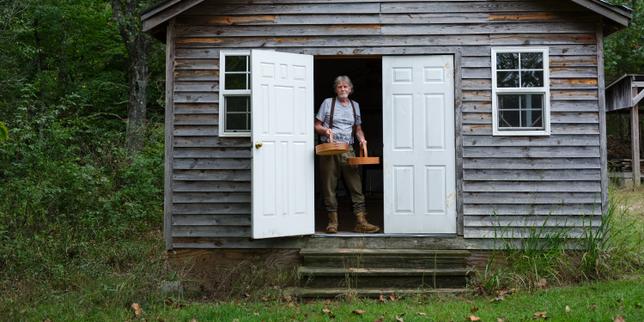
A retired machinist named Earl, sitting on a porch cluttered with old engine parts, put it simply without looking up from the carburetor he was cleaning. He had lived in the same hollow for seventy years.
"Politicians come through here every few years like traveling salesmen," Earl said, his hands stained dark with grease. "They look at the trees, they shake your hand, they tell you they understand your struggles. Then they get in their clean cars and drive back to the city. By the time they hit the interstate, they've already forgotten our name."
That sentiment is the bedrock of the political climate in the rural interior. It is not necessarily a rejection of democracy; it is a profound detachment from it. When the machinery of government feels as distant and incomprehensible as the weather, participation becomes an act of defiance rather than hope.
Yet, to paint the Ozarks as entirely cynical is to miss the fierce loyalty these communities hold for one another. Down the road from Earl's place, a volunteer fire department was holding a bake sale to keep its truck running through the winter. The parking lot was packed. People with very little to spare were handing over twenty-dollar bills for a loaf of homemade bread.
They rely on each other because they know the safety net woven by federal programs has holes big enough to drop a tractor through. That self-reliance is beautiful, but it is also heavy. It is a burden passed down from generation to generation, heavier than any tax load.
As the sun dips below the jagged ridge, shadows stretch long across the hollow. The neon glow of Route 66 feels a million miles away, a relic of a glossy American myth that never quite reached the people living in the shadows of the hills.
The midterms would come and go. Ballots would be cast in school gymnasiums and VFW halls. Numbers would tick upward on election night screens thousands of miles away. But back here in the quiet folds of the Ozarks, the woodsmoke would still rise the next morning. The trucks would still need fixing. And the silence would remain, unbroken and deep.