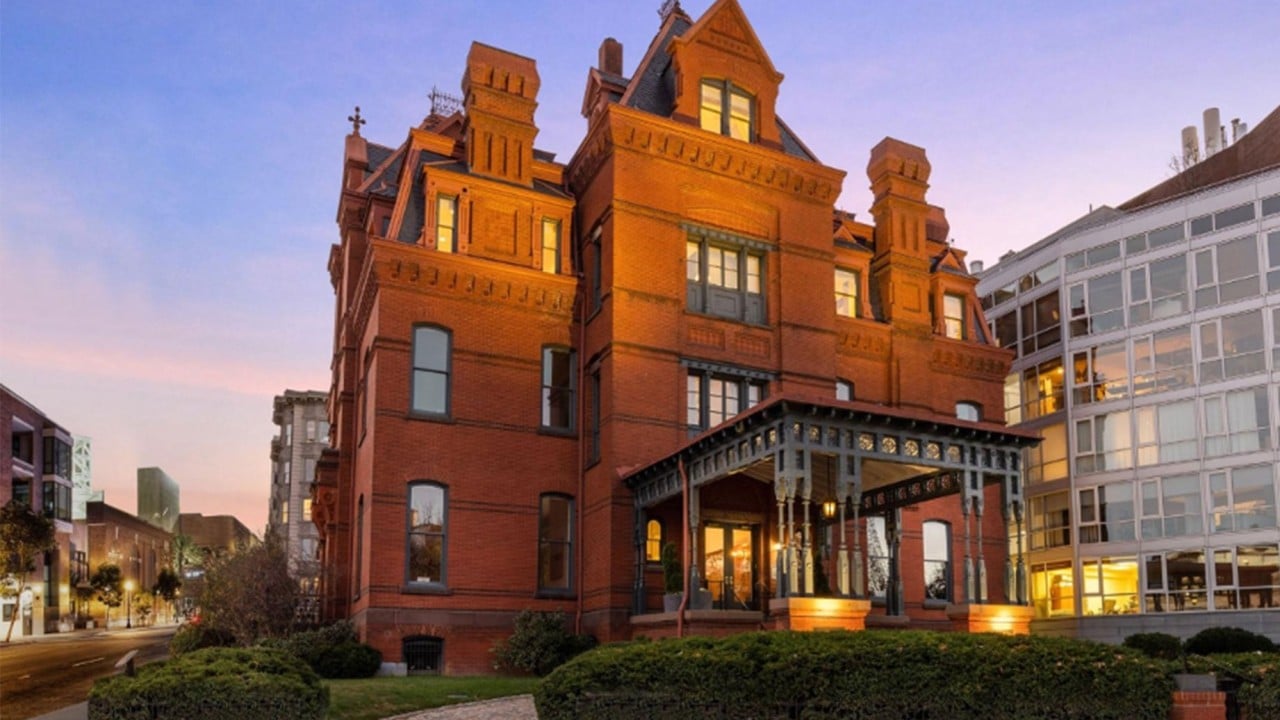
Asia Society just planted a permanent flag in Washington, D.C. by buying the historic Blaine Mansion near Dupont Circle.
Let's be real. For decades, a Washington office can feel like a satellite outpost rather than a true seat at the table. Asia Society has had a presence in D.C. since 1970, yet owning a roughly 15,000-square-foot landmark sitting right where Embassy Row meets the think tank corridor changes the math. Reports put the price tag at $17.58 million, backed by a lead gift from Blackstone co-founder Stephen A. Schwarzman. Meanwhile, you can find related stories here: The Structural Mechanics of Migration Surges An Economic and Logistical Deconstruction.
That isn't just real estate news. It's a signal about where U.S.-Asia policy debates happen—and who gets to host them.
What Asia Society Buying the Blaine Mansion Means for DC
Owning your building in Washington does something renting never quite pulls off. It gives an organization permanence when administrations turn over, funding shifts, and office leases expire. To see the full picture, we recommend the recent article by Reuters.
Global President and CEO Kevin Rudd has steered the Asia Society Policy Institute into a major force on U.S.-Asia affairs, including launching its Center for China Analysis in 2022. Having a dedicated home in Dupont Circle gives that policy work—alongside arts, culture, and convening programs—a physical anchor in the city.
Think about how Washington actually works. Off-the-record roundtables, embassy dinners, panel briefings, and quiet hallway chats after a formal talk matter just as much as white papers. When an institution controls its own convening spaces and conference rooms, it sets the agenda instead of squeezing into someone else's auditorium.
I've watched plenty of policy groups in D.C. struggle with geography and space. If a venue is too cramped or tucked away on an inconvenient block, diplomats and busy staffers skip it. Dupont Circle sits right in the mix of embassies, policy shops, and transit lines. Convenience breeds attendance.
A Gilded Age Landmark with Serious History
The Blaine Mansion isn't some generic glass box with a plaque out front. Its first resident was 19th-century political figure James G. Blaine, and preservation records identify it as the rare surviving example of the grand mansions that once lined Dupont Circle during the Gilded Age.
Depending on the record you check, construction dates from 1881 to 1883 under architect John Fraser. The property entered the D.C. Inventory of Historic Sites in November 1964 and sits inside both the Dupont Circle and Massachusetts Avenue historic districts. Before Asia Society stepped in, former U.S. Ambassador to Italy John R. Phillips and former journalist Linda Douglass oversaw major renovation and development work on the property.
The Catch with Historic Properties in DC
Falling in love with a 140-year-old mansion is easy. Running one is a headache.
Historic preservation rules in Washington are thorough for a reason, and D.C. Historic Preservation Review Board records show how closely exterior changes and additions get scrutinized over the years. Even when previous owners put serious money into renovations, adapting a Gilded Age residence for modern policy conferences, security, AV gear, and daily staff operations takes constant care.
There's also a broader trend worth noticing. While overall nonprofit office leasing in the D.C. metro area has looked cautious at times—with Bisnow reporting 2024 nonprofit leasing volume 18% below its historic average—well-capitalized buyers have still moved on storied properties along Embassy Row. For instance, the Czech Republic's foreign ministry bought the nearby Samuel M. Bryan House on Massachusetts Avenue NW in 2025 for $11.8 million.
Wait—does buying a mansion guarantee sharper policy analysis? No. A pretty room doesn't write better research on its own. Good policy still depends on credible scholars, candid debate, and real-world nuance. Still, a permanent home gives a growing think-and-do tank room to breathe and build continuity.
How This Fits Asia Society's Broader Evolution
Founded in 1956 by John D. Rockefeller 3rd, Asia Society started with a clear mission to deepen American understanding of Asia and strengthen cultural ties, expanding across 16 centers and offices worldwide. Over the years, especially through the Policy Institute, its public profile has leaned heavily into geopolitical and economic policy alongside arts and education.
That blend actually makes sense in Washington. Policy debates about Asia rarely happen in a vacuum; trade rules, security anxieties, historical memory, and cultural exchange collide every day. Having a space that supports both serious policy briefings and broader cultural programming reflects how interconnected those threads really are.
One common misconception is that a think tank's Washington move is only about lobbying or chasing headlines. In practice, much of the real work happens behind closed doors—convening specialists from different countries, testing ideas before they harden into dogma, and keeping lines of communication open when headlines turn ugly.
Practical Ways to Follow What Happens Next
If you care about U.S.-Asia affairs, foreign policy careers, or D.C.'s institutional shifts, you don't need a security clearance to pay attention. Here are a few concrete ways to track the move and get value out of it:
- Check the Asia Society website and Policy Institute publications to see when public events, reports, and briefings shift to the Dupont Circle address.
- Review preservation context and neighborhood boundaries through the D.C. Office of Planning if you follow historic preservation and adaptive reuse in Washington.
- Watch event calendars from nearby think tanks and embassy programs around Dupont Circle and Massachusetts Avenue to spot overlapping panels on trade, technology, and regional security.
- If you're a student, researcher, or early-career analyst, track fellowship postings, public webinars, and open-door discussions rather than waiting for a formal job opening.


