The air in the Kashmir Valley usually carries a specific kind of chill, a mix of glacial runoff and the heavy, static silence of a million staring eyes. For a few days in recent memory, that silence didn't just feel cold. It felt brittle. It felt like the prelude to a shattering. We often measure history by the explosions we hear, but the real weight of power lies in the explosions that never happen.
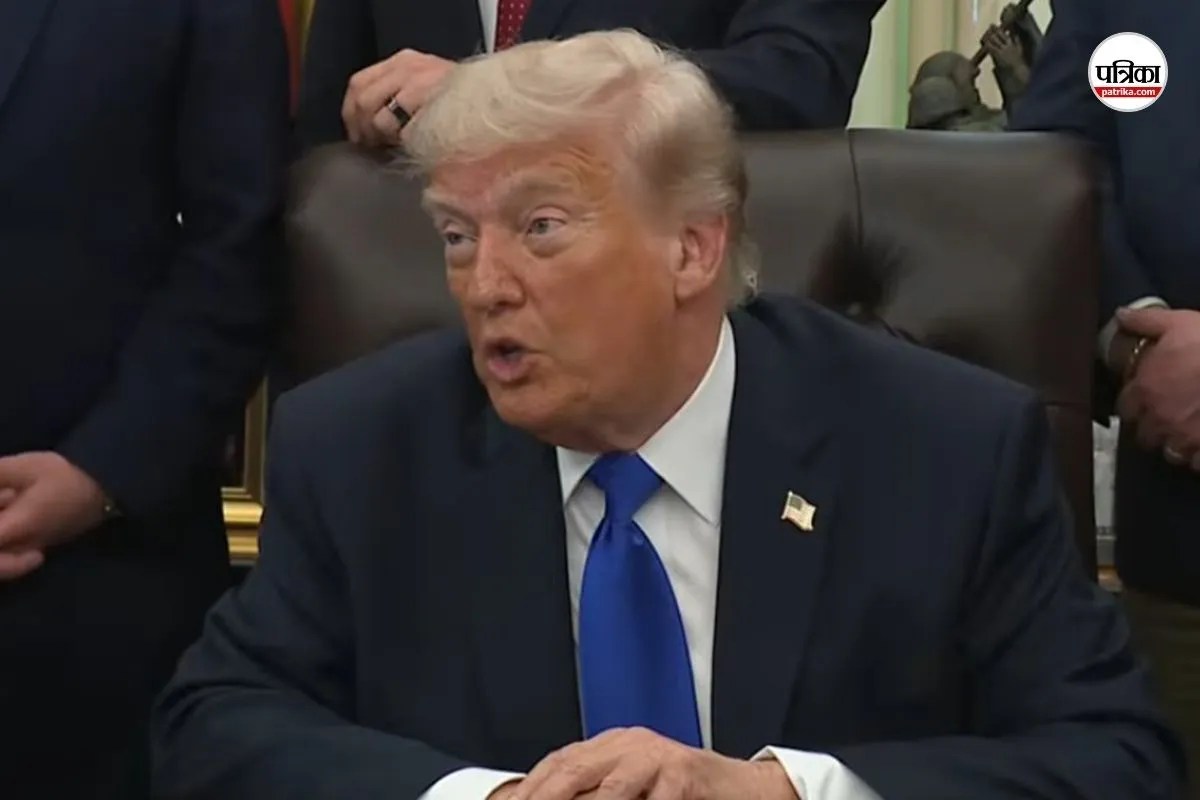
The world was looking at Iran. Missiles were tracing arcs across the Middle East, and the global oil supply held its collective breath. Yet, behind the scenes, a different fuse was burning. This one connected two nuclear-armed neighbors who have spent decades sleeping with one eye open. Donald Trump, currently maneuvering through the complex gears of global diplomacy and domestic campaigning, recently pulled back the curtain on a moment that almost broke the world.
He didn't use a peace treaty or a grand summit to stop it. He used a ledger.
The Invisible Wall of the Dollar
Imagine a small business owner in a bustling market in Lahore or a tech entrepreneur in Bengaluru. They don't wake up thinking about the fine print of international trade law. They think about the cost of shipping, the price of electricity, and whether their goods will clear customs. To them, a "tariff" is a line item on a spreadsheet.
But in the hands of a man who views the world as a series of balance sheets, a tariff is a kinetic weapon.
Trump’s claim is blunt: he stopped a brewing war between India and Pakistan by threatening to make their trade impossible. This isn't the diplomacy of the 20th century, where silver-tongued envoys spent months over tea discussing "mutual interests." This is the diplomacy of the hammer. By threatening massive financial penalties—tariffs that would effectively decapitate the export economies of both nations—he forced a standoff to turn into a stand-down.
The logic is brutal. If you are a leader and your choice is a popular war or a total economic collapse that leaves your citizens starving and your treasury empty, the "glory" of the battlefield starts to look like a suicide note.
Why the Price of Peace is Often Denominated in Currency
Money is the most effective tether to reality we have. When tensions rise between Delhi and Islamabad, the rhetoric usually centers on honor, land, and ancestral grievances. These are emotional fires. They are hard to douse with logic. However, when you introduce a massive, immediate financial catastrophe, you change the conversation from "Who is right?" to "Can we afford to exist tomorrow?"
Consider the stakes. India is a rising economic titan, a country that has positioned itself as the world’s back office and its future factory. Pakistan, meanwhile, has navigated a precarious tightrope of debt and development for years. If the United States—the world’s largest consumer market—suddenly closes its doors, the internal pressure on those governments becomes unbearable.
Trump understands a fundamental truth about modern human behavior: the hip pocket is closer to the brain than the heart is. By wielding the threat of 100% or 200% tariffs, he wasn't just talking about money. He was talking about the stability of the social fabric. He was telling these leaders that the cost of a single missile strike would be the bankruptcy of their middle class.
The Human Cost of a Non-Event
It is easy to get lost in the "Big Man" theory of history—the idea that one person’s ego or will shapes the planet. But the real story is about the millions of people who didn't die.
If those border skirmishes had escalated during the chaos of the Iran conflict, we wouldn't be talking about trade deficits. We would be talking about fallout. We would be talking about the disruption of the global monsoon, the collapse of the wheat harvest in the Punjab, and a refugee crisis that would make the last decade look like a minor logistical hiccup.
There is a hypothetical family in a border village near the Line of Control. Let’s call them the Khans. In a standard news cycle, they are just a statistic. In a war, they are "collateral." But because a president in Washington decided to play hardball with import duties on textiles and software services, the Khans got to finish their dinner. Their children went to school the next morning. The "big claim" Trump is making isn't just a campaign boast; it’s a window into how the threat of poverty can sometimes be more persuasive than the threat of a bomb.
The Strategy of Unpredictability
The most terrifying thing for a diplomat is a peer who doesn't follow the script. Standard international relations rely on "red lines"—clear markers that, if crossed, lead to specific consequences. But those consequences are often predictable and, therefore, manageable.
When Trump entered the fray, he threw the script away. He didn't offer a nuanced critique of border policy. He threatened to burn the financial house down. This unpredictability creates a specific kind of psychological leverage. If your opponent knows you will only respond with a sternly worded letter, they will push you. If they suspect you might actually destroy their ability to buy and sell on the global stage, they pause.
But this isn't a permanent fix. It’s a tourniquet. It stops the bleeding, but it doesn't heal the wound. The underlying tensions between India and Pakistan—the decades of hurt, the disputed territory, the religious friction—remain. The tariffs just made the war too expensive to buy.
The Ledger of the Future
We are entering an era where the battlefield is shifting. It’s moving from the mud and the trenches to the fiber-optic cables and the shipping containers. The "India-Pakistan war that didn't happen" is a case study in this new reality.
Power is no longer just about who has the biggest air force. It’s about who controls the gateways of consumption. If you can stop a country from selling its shirts and its code, you can stop its tanks.
Trump’s assertion that he saved "millions of lives" is, by its nature, impossible to prove. How do you count the people who didn't die in a war that never began? You can't. You can only look at the absence of smoke on the horizon. You can only listen to the continued hum of the factories in Noida and the markets in Karachi.
The real problem with this kind of "ledger diplomacy" is that it requires a constant state of tension. It requires a world where trade is not a bridge between nations, but a leash. It’s effective, yes. It’s fast. It’s visceral. But it leaves everyone wondering when the next threat will come, and what will happen when a leader finally decides that their pride is worth more than their GDP.
The silence in the Kashmir Valley remains. It is still cold. It is still brittle. But for now, it is not the silence of a graveyard. It is the silence of a world that was given a bill it wasn't ready to pay, and so, it chose to keep the peace for another day.
The ink on a trade agreement might be dry, but the blood it prevents is still warm, flowing through the veins of people who have no idea how close they came to becoming history.


