The red double-decker bus hissed to a halt near Piccadilly Circus, its brakes complaining against the damp November asphalt. Inside, the air smelled of wet wool, roasted chestnuts from a street vendor outside, and cheap coffee.
Near the front, a family of four from Ohio was trying to figure out the London Underground map. In other news, we also covered: Stop Calling Antarctic Heritage Restoration a Rescue Mission.
You could spot them from fifty paces. Not because of their faces, but because of their volume. The father wore a bright white baseball cap emblazoned with a university logo, holding a laminated tourist map like a shield. His voice boomed over the low hum of the London commute, asking his wife if they were close to Buckingham Palace. Every commuter within ten feet subtly shifted their weight, eyes glued to their phones, retreating into the quiet armor that defines British public life.
That family didn't know it, and they were entirely innocent of any malice, yet they were violating the single most critical piece of advice issued by security analysts and diplomats whenever threat levels spike across the Atlantic. Lonely Planet has analyzed this critical topic in extensive detail.
Keep a low profile.
When the U.S. State Department or the British Home Office updates its travel advisories—warning Americans in the United Kingdom to exercise increased caution, avoid large demonstrations, and blend into their surroundings—the news cycles treat it like a dry bureaucratic footnote. Bulletins get published. News anchors read three sentences off a teleprompter with practiced neutrality. Then, everyone moves on to the weather.
But if you have ever stood in the middle of a crowded European square when the ambient noise suddenly drops an octave, you know those four words are not a suggestion. They are a survival mechanism.
The Architecture of Visibility
To understand why blending in matters, consider a hypothetical scenario. Picture Sarah, a thirty-two-year-old marketing director from Chicago visiting London for a week of theater and museum hopping. Sarah is smart, well-traveled, and cautious. Before flying out of O'Hare, she checked the UK's official terror threat level, saw it sitting at "Substantial"—meaning an attack is likely—and nodded to herself. I'll be careful, she thought.
Yet, the moment Sarah steps out of Heathrow, her habits betray her.
She wears pristine white sneakers that scream tourist on cobblestone streets where locals wear dark leather boots. She walks down Oxford Street with her phone held out at chest height, following the blue dot on Google Maps, completely divorced from her peripheral vision. At a pub in Soho, she orders loudly, using American inflection that cuts through the murmur of British accents like a foghorn.
Sarah isn't doing anything wrong. She is simply radiating signals.
In the intelligence community, this is known as your "signature." Every person moving through a city leaves a behavioral and visual trail. Think of a crowded city street like a dark forest at night. Most animals survive by matching the color of the bark and staying quiet. If you walk through that same forest swinging a glowing lantern and whistling a show tune, you aren't necessarily inviting danger, but you have voluntarily removed your camouflage. If a predator happens to be looking for an easy target—or specifically hunting for someone carrying a lantern—you have done half their work for them.
I learned this lesson the hard way years ago, not in a war zone, but on a rainy Tuesday outside a train station in central Europe just days after a heightened security alert was announced. I was carrying a heavy camera bag, wearing an unmistakably American collegiate jacket, and arguing loudly into my phone about a missed hotel reservation. A local friend grabbed my elbow, pulled me into the doorway of a bakery, and told me to shut up and take off the jacket.
"You look like a target," he said, his voice flat and entirely devoid of drama. "And right now, nobody wants to stand next to a target."
The embarrassment stung, yet the clarity stayed with me forever. In moments of geopolitical tension, visibility is vulnerability.
What the Advisories Actually Mean
When governments urge citizens to maintain a low profile in the UK, people often panic, imagining barricaded streets, armed checkpoints, and imminent chaos. That is rarely the reality. London, Manchester, and Edinburgh remain overwhelmingly safe, vibrant, and welcoming cities. Millions of visitors walk their streets every year without a single incident.
So why the warnings?
Intelligence agencies operate on patterns, chatter, and probability rather than crystal balls. The UK's Joint Terrorism Analysis Centre (JTAC) sets threat levels based on real-time intelligence—intercepted communications, financial movements, and known extremist networks. When the U.S. Embassy in London echoes these warnings, urging Americans to stay vigilant around major tourist hubs, transport networks, and political protests, they are reacting to a shift in the risk calculus.
Often, these advisories are triggered by global events far removed from British soil. Foreign policy decisions, overseas conflicts, or high-profile diplomatic disputes can suddenly make Western symbols—and by extension, American citizens—attractive targets for lone actors or radicalized groups seeking maximum psychological impact.
Terrorism is, by definition, theater. Its goal is not merely physical destruction; it is spectacle. Attackers rarely seek out quiet residential neighborhoods in Surrey. They look for iconic backdrops, dense crowds, and recognizable nationalities that will guarantee front-page headlines from New York to Tokyo.
Which brings us back to the Ohio family on the double-decker bus.
When you carry the visual and auditory markers of an American tourist in a high-traffic area like Trafalgar Square, Westminster, or the South Bank, you become part of that high-visibility backdrop. You are no longer just a person enjoying a vacation; to someone looking to make a political statement through violence, you are a symbol.
The Myth of "It Won't Happen to Me"
Human beings are terrible at assessing low-probability, high-impact risks. Psychologists call it normalcy bias—the tendency to believe that because things have always been fine, they will continue to be fine.
We step off the plane at Gatwick, see red phone booths, polite bobbies, and tourists eating fish and chips, and our brains immediately file the environment under Harmless. The warning we read on the embassy website three days earlier evaporates. We assume that situational awareness is something for bodyguards, diplomats, and paranoid people.
Honestly, it is exhausting to stay hyper-alert all the time. You didn't spend thousands of dollars on transatlantic flights just to spend your holiday scanning rooftops and suspiciously eyeing backpacks. Nobody wants to live like that, and you shouldn't have to.
There is a massive difference between paranoia and quiet competence.
Paranoia keeps you locked in your hotel room, peeking through the curtains. Quiet competence lets you enjoy a pint at a historic pub in Bloomsbury, wander through the British Museum, and catch a show in the West End—all while quietly shedding the habits that make you stand out.
How to Become Invisible
Blending into the United Kingdom doesn't require an espionage course or a wardrobe overhaul. It requires unlearning a few distinctly American reflexes and adopting the rhythm of the place you are visiting.
Start with volume. In the United States, projecting your voice in public spaces is often viewed as confidence or friendliness. In the UK, public space is treated as a shared quiet zone. Lowering your conversational volume by thirty percent immediately removes the brightest spotlight shining on you. When you speak softly, your accent stops carrying across the room. You become just another face in the crowd.
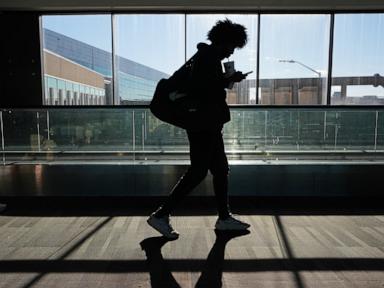
Next, look at how you navigate. Nothing screams distracted outsider louder than standing on a busy sidewalk staring down at a glowing smartphone screen. Criminals—both petty pickpockets and far worse threats—look for people whose attention is captive. Before you leave your hotel or step off the Tube, study your route. If you need to check your phone, step inside a coffee shop, a bookstore, or against a building wall with your back protected. Keep your head up. Watch the flow of the crowd.
Consider what happens next when you dress for the day. Leave the flag apparel, the loud athletic logos, and the tactical-style backpacks at home. British street style leans toward understated, darker tones—navy, charcoal, olive, black. When your clothes match the muted palette of a London drizzle, the human eye naturally slides right past you.
And perhaps most importantly, rethink your relationship with crowds.
Major demonstrations, political rallies, and spontaneous street gatherings are magnets for instability. Even when protests begin peacefully, they provide dense, chaotic environments where security forces are stretched thin and bad actors can hide easily. If you turn a corner near Whitehall or Marble Arch and see barricades, chanting crowds, or a heavy police presence, do not pull out your phone to film it. Turn around. Walk two blocks parallel. Find a quiet side street and let the commotion pass.
The Freedom of the Shadow
There is a strange, unexpected gift in learning how to keep a low profile.
When you stop broadcasting your presence to the street, you actually begin to see the city you came to visit. Without the buffer of loud conversation or the constant tether of a glowing screen, you notice the details that most tourists miss. You hear the rhythmic clatter of footsteps echoing under Victorian railway arches. You catch the dry, understated humor of a barista in Covent Garden. You notice the way the afternoon light hits the Portland stone of St. Paul's Cathedral just before dusk.
Keeping a low profile isn't about shrinking in fear. It is about respect for your environment and ownership of your own safety. You are choosing to move through the world with intention rather than noise.
Consider our hypothetical traveler, Sarah, on the fourth day of her trip.
By Thursday, she has ditched the white sneakers for dark leather boots. Her phone stays tucked inside her coat pocket while she walks. She moves with the brisk, purposeful stride of someone who knows exactly where she is going, even when she is just wandering.
At six in the evening, she steps into a crowded pub near Waterloo Station. The room is packed with commuters shaking off the rain, glasses clinking, voices blending into a warm, low roar. Sarah orders at the bar quietly, takes her glass, and finds a corner seat facing the room, her back to the oak paneling.
Nobody looks twice at her. To the bartender, she is just another regular. To the commuters beside her, she is part of the scenery. To anyone watching the door for an easy mark, she doesn't even register.
Outside, the London rain continues to fall against the frosted glass, the city hums on through the gathering dark, and she sits entirely undisturbed—safe, observant, and completely unseen.