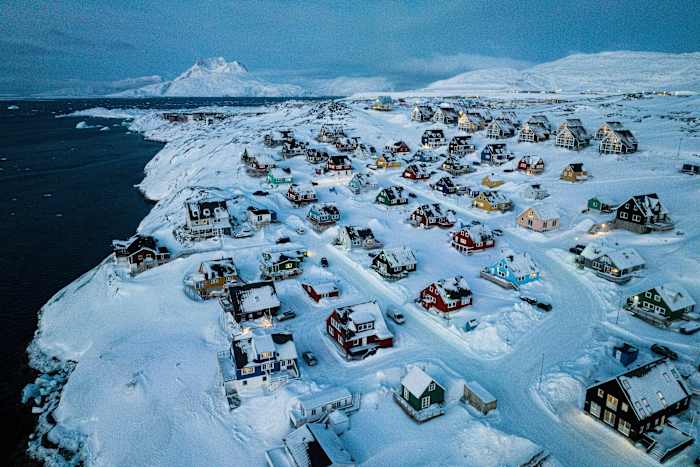
The Strategic Pressure Cooker in Nuuk
Greenland and Denmark have drawn a hard line regarding foreign overtures over Arctic sovereignty. Washington wants a tighter grip on the world's largest island, but Copenhagen and Nuuk are refusing to cede control. This dynamic is not a routine diplomatic disagreement. It is a high-stakes collision between Washington's defense ambitions in the circumpolar north and the accelerating self-determination of a territory stepping out from under Copenhagen's long shadow.
For decades, foreign policymakers viewed the Arctic through a lens of frozen irrelevance. That era ended the moment melting ice opened maritime transit routes and exposed vast reserves of critical minerals. Nuuk knows its leverage. Denmark knows its constitutional obligations. Washington, meanwhile, is watching Moscow and Beijing militarize adjacent polar sectors, driving an urgent American desire to secure the Greenlandic flank at almost any diplomatic cost.
Yet throwing financial weight around or leaning on bilateral security pacts fails to account for a fundamental shift in local politics. Greenlanders are not interested in trading Danish oversight for a different kind of foreign dominance. They want economic independence. They want mineral wealth managed on their own terms. And above all, they want the authority to say no.
Mineral Wealth Meets Geopolitical Anxiety
Beneath the massive ice sheet lie deposits of rare earth elements, uranium, zinc, and iron ore that modern industrial economies desperately require. Supply chains currently rely heavily on overseas refining hubs, creating a severe strategic vulnerability for Western technology and defense manufacturing. Greenland holds the raw materials to alter that equation.
The catch is simple. Extracting those resources requires immense capital, specialized infrastructure, and foreign engineering expertise. Local leaders have spent years courting international investors while trying to protect fragile local ecosystems and traditional fishing industries. When external powers step in with security arguments masking resource ambitions, local suspicion spikes immediately.
Foreign mining ventures cannot be divorced from national security. A processing facility funded by external capital near a strategic radar installation creates an immediate counterintelligence nightmare for Western intelligence agencies. This tension turns every licensing agreement into a geopolitical battleground. Nuuk finds itself squeezed between the economic necessity of development and the heavy footfall of competing global superpowers.
The Constitutional Tightrope in Copenhagen
Denmark provides roughly half of Greenland's annual public budget through a block grant, a financial tether that keeps the territory afloat while it builds the institutional capacity for full independence. This fiscal arrangement creates a peculiar dynamic. Copenhagen retains control over foreign policy and defense, while the Naalakkersuisut, Greenland’s government, manages domestic affairs.
When foreign actors attempt to bypass Copenhagen to strike direct deals with Nuuk, constitutional norms fray. Danish officials cannot afford to let their northern territory become an unvetted security vulnerability, yet heavy-handed intervention from Copenhagen triggers accusations of modern colonialism.
Greenlandic politicians masterfully exploit this friction. They play foreign interest against Danish caution to extract maximum autonomy. Every time a high-ranking foreign official visits Nuuk with promises of partnership, the price of the block grant debate shifts. Denmark is caught in an expensive paradox. To keep Greenland close, Copenhagen must fund the very political machinery that is methodically preparing for total separation.
Militarization of the High North
The security architecture of the Arctic is aging rapidly. Thule Air Base, now officially designated Pituffik Space Base, remains a critical node in America's ballistic missile warning network. As hypersonic glide vehicles and advanced long-range aviation alter the strategic calculus, Washington views Greenland not merely as a friendly island, but as an indispensable geographic shield.
This military necessity runs headfirst into Greenland's ambition to remain a demilitarized zone of peace. Local populations have long lived with the footprint of foreign defense installations, ranging from Cold War radar sites to abandoned research stations. The environmental cleanup bills from past operations remain largely unpaid, breeding deep skepticism toward new security proposals.
When foreign officials pitch expanded defense footprints, they often underestimate local memory. The community remembers when bilateral agreements were signed over their heads in foreign capitals. Today, any expansion of military infrastructure requires consent from Nuuk, and that consent comes with a steep price tag regarding local economic benefits, environmental guarantees, and a direct voice in regional threat assessments.
The Myth of Easy Acquisitions
External commentary frequently frames Greenland as an asset waiting to be bought, leased, or absorbed. This perspective ignores the reality of modern indigenous governance and international law. You cannot simply write a check to acquire a self-governing territory with a population fiercely protective of its identity and culture.
The path forward requires abandoning transactional diplomacy. Respecting sovereignty means accepting that Nuuk has the absolute right to set the terms of its international engagements, whether those partners come from North America, Europe, or elsewhere. Attempts to bypass local leadership or pressure Copenhagen into overriding Greenlandic autonomy will backfire, pushing local political movements closer toward radical independence factions that might sever ties with the West altogether.
The Arctic is warming, and with that thaw comes a permanent end to quiet isolation. Washington, Copenhagen, and Nuuk must navigate a narrow corridor where security imperatives do not trample local sovereignty. The alternative is a fractured alliance in the world's most sensitive strategic theater, where the very nations trying to protect the region end up destabilizing it through impatience and miscalculation.