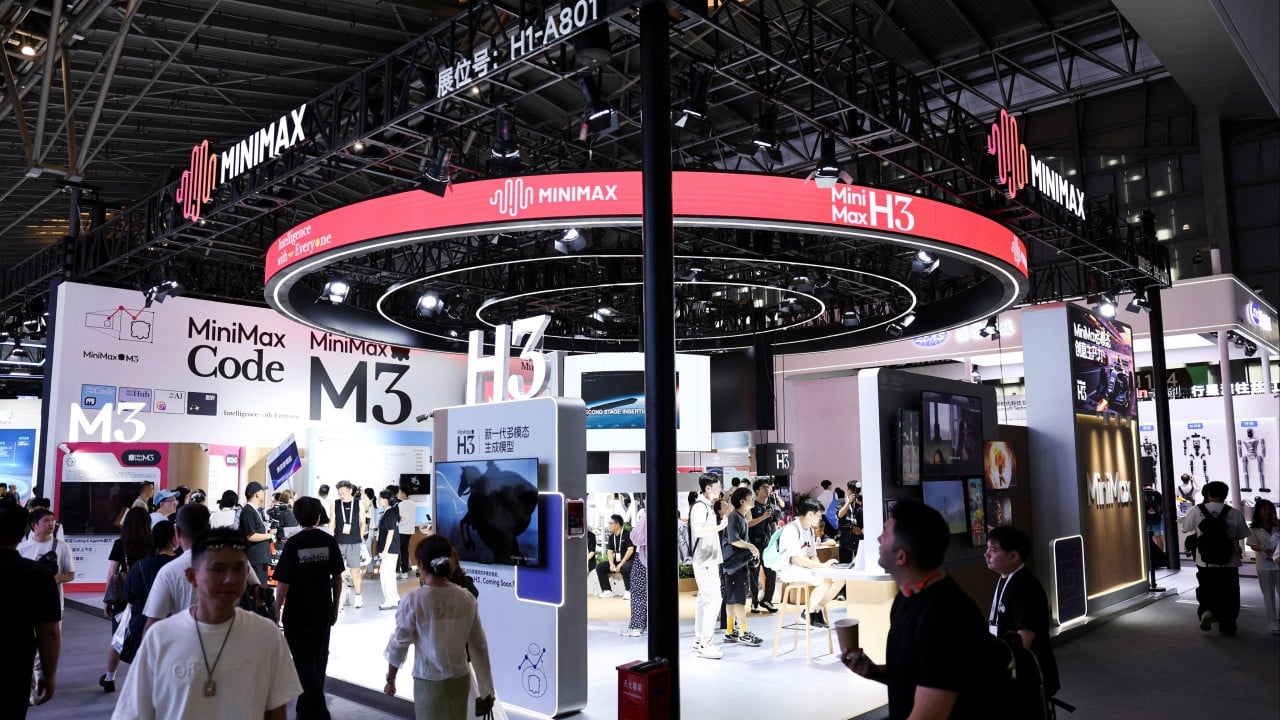
The generative video market is undergoing a structural compression of unit economics, driven by aggressive open-weights releases and architectural efficiency. MiniMax, through the deployment of its H3 video model, has altered the cost function of high-definition motion synthesis. By coupling native 2K resolution output with synchronized multi-modal audio processing at a fraction of incumbent API pricing, the model challenges proprietary closed ecosystems. Understanding this shift requires looking past marketing claims to examine the underlying economic and technical levers governing video model deployment.
The Cost Function of Multimodal Video Synthesis
Commercial video generation has historically suffered from high compute overheads driven by multi-stage processing pipelines. Traditional architectures separate visual rendering from audio generation, requiring independent inference passes followed by alignment phases. This separation introduces compounding latency and infrastructure bloat.
MiniMax H3 internalizes this process by utilizing a unified context window that ingests text, images, video clips, and audio references simultaneously. The economic impact of this design is direct:
- Inference Consolidation: By generating native stereo audio and dialogue concurrently with visual frames at 24 frames per second, the model eliminates post-hoc dubbing and alignment passes.
- Bandwidth and Resolution Efficiency: Rendering at native 2K pixel density within the primary generation loop avoids secondary upscaling networks, reducing token-to-pixel operational expenditure.
- Temporal Consistency Weights: Maintaining character identity and scene physics across a 15-second multi-shot window reduces the need for iterative regeneration cycles.
When inference providers price these unified outputs starting near thirteen cents per second, the margin profile for commercial application developers shifts fundamentally.
Open Weights Versus Closed Ecosystems
The release of open-weights models like H3 introduces a distributional advantage over closed platforms governed by restrictive API wrappers. Proprietary systems extract rent by centralizing both the model weights and the execution environment. Open-weights deployment redistributes control to downstream builders, changing market dynamics through several mechanisms.
Downstream Customization Constraints
While open weights permit fine-tuning and localized inference optimization, they shift the compute burden onto the consumer. Running a 2K multimodal model locally or managing dedicated cloud nodes requires specialized hardware orchestration. Organizations must weigh the zero-margin software cost of open weights against the capital expenditure of infrastructure management.
API Aggregation and Margin Compression
Third-party inference routers and serverless platforms host H3 alongside competitive models, creating a commodity market for video generation. Providers compete entirely on latency, uptime, and routing efficiency rather than proprietary lock-in. This market structure compresses profit margins for API intermediaries while lowering barriers to entry for application developers building automated video workflows.
Technical Mechanics of Multimodal Conditioning
The performance ceiling of a video generation model rests on its conditioning architecture. Older iterations struggled with identity drift, where characters or objects morph across camera cuts within a single generated clip. H3 addresses this through an expanded reference intake capacity, accepting multiple still images, video segments, and audio references in a single context call.
This multi-reference conditioning functions through cross-attention mechanisms that bind spatial features from reference assets directly to the latent diffusion trajectory. Instead of relying purely on textual token translation, the model maps structural invariants—such as facial topology, acoustic profiles, and spatial lighting—directly into the initial noise vectors.
The inclusion of instruction-based editing further separates this architecture from legacy text-to-video systems. By treating video modification as an in-context editing task rather than a text-to-image re-roll, the model interprets direct natural language directives to alter object properties, background environments, or motion timing while preserving background continuity.
Strategic Deployment and Operational Bottlenecks
Adopting high-definition, multi-shot generation models into production pipelines requires resolving specific technical friction points. Enterprise deployment involves balancing throughput against generation latency, particularly when scaling to high-volume commercial advertising or real-time interface design workflows.
- Context Window Saturation: Feeding maximum reference assets (such as multiple image and audio clips) increases the computational load on the attention mechanism, stretching time-to-first-frame metrics.
- Instruction Fidelity Limits: While natural language editing minimizes manual timeline slicing, complex multi-part edits can occasionally introduce semantic artifacts if the instruction set exceeds the model's spatial tracking capacity.
- Storage and Transfer Latency: Native 2K outputs at 24 frames per second generate substantial data volumes per second of video, necessitating high-speed caching layers between the inference endpoint and local asset management systems.
Production teams must architect their pipelines to ingest raw API outputs directly into automated rendering queues without manual intermediary steps, capitalizing on the native synchronization features to bypass traditional post-production editing suites.
Implement automated validation layers at the API routing boundary to monitor generation failure rates and dynamically shift traffic between serverless inference providers based on real-time latency benchmarks.