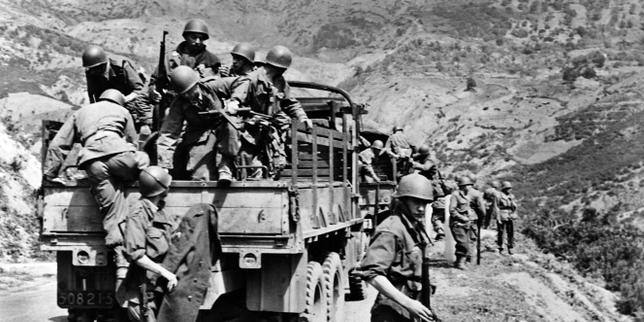
Modern states possess an inherent institutional reflex toward information containment. When historical inquiry intersects with the apparatus of state power, particularly regarding foundational military conflicts, administrative friction frequently escalates into structural obstruction. The friction surrounding the management of military archives pertaining to the Algerian War illustrates a broader systemic pathology: the collision between legal frameworks guaranteeing open historical access and bureaucratic mechanisms designed to preserve operational secrecy.
The Legal Architecture of Access and Restriction
The regulatory framework governing public archives in France rests on a foundational tension between statutory democratization and executive exception. Under standard legislative provisions, historical records transition into the public domain after defined temporal thresholds. However, this presumptive right of communication faces operational bottlenecks through internal administrative instruments and security directives.
The application of defense-related classifications to historical documentation creates a dual-track system:
- Statutory Openness: Legal codes mandate the accessibility of historical archives past specific chronological markers.
- Executive Overreach: Administrative instructions and interministerial guidelines systematically subject historical holdings to ongoing security screening.
This divergence generates a compliance paradox for researchers. Archivists and institutional managers face severe legal liabilities for unauthorized disclosure, prompting a defensive posture that restricts access well beyond statutory requirements.
The Cost Function of Institutional Rigidity
When military historical services enforce restrictive screening protocols on decades-old conflicts, the systemic costs manifest across three distinct vectors:
- Administrative Overhead: Dedicating institutional resources to retroactively declassify or restrict historical documents creates an inefficient allocation of state personnel.
- Academic Attrition: Independent and military researchers alike face interrupted trajectories, forcing shifts in institutional affiliation or premature termination of primary source research.
- Epistemic Distortion: Restricting access to primary records regarding counter-subversive operations or operational methodologies prevents rigorous historiographical analysis, leaving historical narratives dominated by partial or unverified accounts.
The case of officer-historians attempting to navigate these administrative barriers highlights the vulnerability of internal researchers. When scholarly inquiry challenges institutional comfort zones, administrative controls are frequently mobilized not merely to protect state secrets, but to manage institutional reputation.
Systemic Vulnerabilities in Archival Governance
The centralized control of military archives by defense authorities rather than independent cultural bodies generates persistent governance vulnerabilities.
- Conflict of Interest: An institution tasked with managing historical records is simultaneously incentivized to suppress documentation that exposes operational failures or legal ambiguities in past engagements.
- Procedural Opacity: Disciplinary or administrative procedures initiated against researchers within the military apparatus often lack external transparency, leaving affected individuals with limited recourse for administrative rehabilitation.
- Precedent of Judicial Invalidation: When judicial or administrative courts rule against restrictive classification practices, the institutional response frequently bypasses structural reform, favoring localized compliance while maintaining overarching barriers.
Strategic Outlook for Historical Governance
Resolving the structural impasse over sensitive military history requires aligning administrative practice with statutory jurisprudence. Effective reform demands the absolute separation of historical curation from operational security apparatuses. Until archival management is insulated from institutional self-protection reflexes, the governance of military history will remain vulnerable to administrative contraction whenever contemporary political sensitivities intersect with historical analysis.



