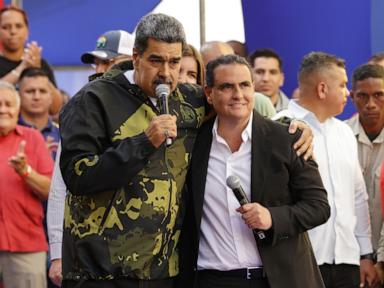
The judicial capitulation of Alex Saab in a Miami federal court marks a critical inflection point in the mechanics of kleptocratic state capture. When a primary financial conduit for the Venezuelan regime shifts from a posture of sovereign immunity defense to a formal guilty plea for conspiracy to launder monetary instruments, the structural anatomy of illicit international commerce is exposed. This case is not merely a high-profile prosecution; it is a masterclass in how authoritarian regimes weaponize public procurement systems, arbitrage foreign exchange controls, and utilize transnational shell corporations to insulate elite wealth from macroeconomic collapse.
The Operational Model of Sanctions Arbitrage
To understand the mechanics underlying Saab’s operation, one must examine the cost function of operating under strict international sanctions and economic isolation. When traditional lines of sovereign credit and petroleum export channels face regulatory contraction, a regime must construct alternative liquidity networks.
The strategy relies on three distinct operational phases:
- Procurement Capture: State entities bypass competitive bidding by awarding monopolistic contracts to politically aligned intermediaries under the guise of emergency public need, specifically targeting subsidized social welfare goods such as the CLAP food distribution network.
- Margin Inflation and Over-Invoicing: Contracts are intentionally over-valued by orders of magnitude. The delta between the actual cost of baseline commodities (e.g., imported corn flour and cooking oil) and the invoiced state expenditure generates massive pools of unallocated capital.
- Layered Liquidation: These capital pools are routed through multi-jurisdictional shell companies, moving from domestic central bank accounts through offshore tax havens, and finally settling into real estate, luxury assets, and financial accounts within Western banking ecosystems.
This closed-loop system allows a distressed state to convert dwindling natural resource assets into liquid foreign currency, while intermediaries extract substantial transaction rents for managing the operational friction of sanctions evasion.
The Mechanics of Vulnerability in Intermediary Networks
The structural flaw in any centralized kleptocratic network lies in its reliance on single points of failure. Sovereign regimes outsource their illicit financial operations to specialized fixers because traditional bureaucratic apparatuses lack the agility to navigate international compliance filters. However, this creates an asymmetric risk distribution.
While regime principals remain insulated within sovereign borders, the operational intermediaries must interface directly with the global financial grid, utilizing correspondent banking systems that fall under the regulatory jurisdiction of the United States Department of Justice. This creates an unavoidable structural exposure:
- Jurisdictional Exposure: To maintain liquidity in hard currencies, funds must eventually touch institutions subject to U.S. clearinghouse oversight.
- Paper Trail Accumulation: The sheer volume of transactions required to move hundreds of millions of dollars leaves an indelible digital and documentary footprint across international wire systems, shipping manifests, and procurement audits.
- The Prisoner’s Dilemma of Co-Defendants: When intermediaries are isolated via extradition or apprehension, the cost-benefit matrix of loyalty shifts abruptly. The threat of a multi-decade prison sentence creates an overwhelming incentive to trade proprietary operational intelligence for sentence mitigation.
Systemic Repercussions for Transnational Illicit Networks
The resolution of the Saab prosecution signals a permanent shift in how extraterritorial financial crimes are prosecuted. Law enforcement agencies have moved past traditional asset-seizure models toward comprehensive network disruption. By targeting the intersection of humanitarian procurement corruption and state-level money laundering, prosecutors establish a legal precedent that dismantles the shield of diplomatic status or executive appointment.
When financial conduits choose cooperation over prolonged litigation, the hidden ledgers of authoritarian patronage networks become accessible to international investigators. The immediate consequence is a contraction in the liquidity options available to sanctioned states, forcing them to rely on increasingly costly, less efficient, and more easily detected alternative channels to sustain operations.
Strategic evaluation of these developments indicates that future illicit procurement will face higher transaction friction, reduced counterparty trust among intermediaries, and an accelerated timeline for institutional exposure. Regimes relying on shadow financial architectures must now price in the near-certainty of structural defection when their primary operators are exposed to Western judicial systems.
Alex Saab pleads guilty and WILL REVEAL NICOLÁS MADURO'S SECRETS: "I'M GOING TO EXPOSE EVERYONE"
This video provides an overview of Alex Saab's guilty plea in a U.S. court and the broad political and legal ramifications surrounding the case.