Los Angeles is a city designed to make you feel like you are always missing out. It is a sprawling, sun-drenched grid of FOMO, where the sheer volume of choices—the "best" tacos, the "secret" hike, the gallery opening you weren't invited to—can paralyze the soul by 10:00 AM on a Sunday. We spend our lives optimized, synced, and scheduled. We treat leisure like a high-stakes performance review.
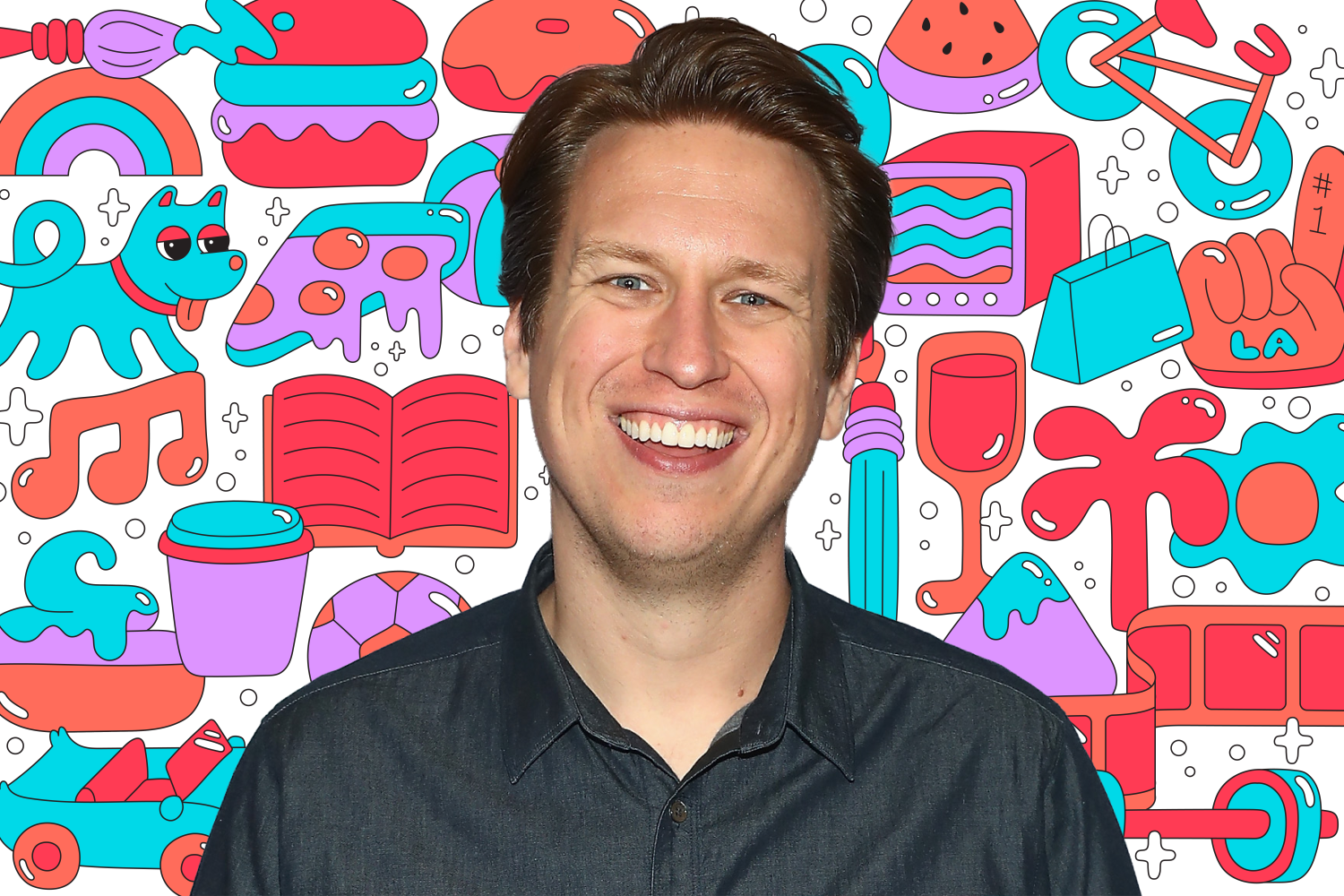
But Pete Holmes, a man who has made a career out of mining the awkward, holy, and hilarious depths of the human psyche, understands something most residents forget. A perfect Sunday isn't about productivity. It isn't even about relaxation. It is about a specific kind of spiritual surrender.
To have the best Sunday in L.A., you have to stop trying to conquer the city. You have to let the city dissolve you.
The Ritual of the Slow Wake
The light in Southern California has a specific weight on Sunday mornings. It’s heavy, golden, and apologetic for the traffic it will eventually illuminate. Most people ruin this moment immediately. They reach for the glass rectangle on the nightstand. They check the notifications. They see a world moving without them and they feel the frantic urge to catch up.
Holmes suggests a different entry point. Imagine, instead, a morning that begins with the radical act of doing nothing. No podcasts. No news. Just the internal hum of a body realizing it doesn't have to be anywhere. For a man like Holmes, whose brain often operates at the speed of a caffeinated hummingbird, this stillness is the first victory.
The morning usually centers around the neighborhood of Beachwood Canyon. It’s a pocket of the city that feels like a European village tucked into the Hollywood Hills, where the air smells of jasmine and old money. The goal here isn't a power breakfast. It’s the coffee.
There is a quiet desperation in the quest for the perfect latte, but at the Beachwood Market, the stakes feel lower. You aren't there to be seen. You are there to exist. You grab a coffee and you walk. You look at the Hollywood Sign, which looms over the canyon like a tired god, and you realize that everyone who ever moved here to be "someone" is currently sleeping, worrying, or hiking the same three trails.
By choosing the quiet path, you’ve already won.
The Sacred Middle of the Day
By noon, the city begins to bake. The heat ripples off the pavement in Silver Lake and the 101 Freeway becomes a parking lot of broken dreams and Tesla chargers. This is where most Sunday plans die. People get stuck in the "where should we eat?" loop, a psychological purgatory that has ruined more relationships than infidelity.
Holmes bypasses the trendy spots with the three-hour waits. Instead, he leans into the comfort of the familiar. There is a specific kind of magic in a place like Larchmont Village. It’s a stretch of road that feels like a movie set of what a "nice town" should look like.
The strategy here is simple: The Sunday Farmers Market.
At a farmers market, you are participating in an ancient human ritual disguised as a chore. You are touching fruit. You are smelling cilantro. You are making eye contact with the person who grew your kale. For someone like Holmes—and perhaps for you—this is grounding. It’s a sensory tether to the earth in a city that often feels like it’s made of plastic and ego.
He often talks about the importance of "the hang." The hang isn't a meeting. It’s not a networking opportunity. It’s the unstructured time spent with people who know your real name, not just your handle. On a Sunday, the hang is the priority. You buy a bag of cherries. You sit on a curb. You talk about God, or comedy, or why every dog in L.A. looks like it has a therapist.
This is the invisible heart of the day. You are reclaiming your time from the vultures of "efficiency."
The Afternoon Descent
As the sun begins its long, slow dive toward the Pacific, the energy of the city shifts. This is the danger zone. This is when the "Sunday Scaries" begin to itch at the back of the brain. The looming shadow of Monday starts to darken the mood.
The antidote is movement. Specifically, the kind of movement that makes you feel small.
Holmes often finds himself drawn to the woods, or what passes for them in Los Angeles. Franklin Canyon Park is a recurring character in this narrative. It’s a hidden reservoir tucked between Beverly Hills and the Valley, a place so quiet you can hear your own thoughts—which is exactly why most people avoid it.
Walking around the water, you see turtles sunning themselves on logs. They are the ultimate Sunday practitioners. They aren't worried about their pilot being picked up. They aren't checking their bank accounts. They are just being.
There is a psychological phenomenon called "soft fascination" that occurs when we look at nature. Unlike the "hard fascination" of a computer screen or a busy street, which drains our cognitive resources, soft fascination—the movement of leaves, the ripple of water—actually restores them.
You aren't just taking a walk. You are performing maintenance on your soul.
The Comedian’s Communion
For a comedian, even a "day off" usually ends on a stage. But on a perfect Sunday, the stage isn't a workplace. It’s a church.
Largo at the Coronet is more than just a theater; it is the spiritual home of a certain brand of Los Angeles creative. It’s where the walls are lined with photos of Jon Brion, Fiona Apple, and every comedian who has ever mattered. There is a strict "no phones" policy.
Think about that. A room full of people in the most photographed city on earth, and no one is taking a selfie.
When Holmes steps into a space like this, whether he’s performing or just watching, the transformation is complete. The day has moved from the silence of the canyon to the communal roar of a shared joke. Laughter is a biological shortcut to presence. You cannot laugh in the past, and you cannot laugh in the future. You can only laugh right now.
The evening usually winds down with food that feels like a hug. For many in this circle, that means something like Canter’s Deli on Fairfax. It’s a 24-hour institution where the vinyl booths have seen every deal, every breakup, and every late-night epiphany in the history of the city.
You sit there, under the neon lights, eating a matzo ball soup that tastes like a grandmother’s forgiveness. You realize that the city isn't your enemy. It’s just a massive, messy backdrop for the small, beautiful things you choose to notice.
The Final Surrender
The drive home is the final act. The streets are finally empty. The palms are silhouettes against a bruised purple sky.
Most people spend their Sunday trying to "recharge" so they can be better workers on Monday. They treat their joy like fuel for their labor. But the Pete Holmes philosophy suggests that the joy is the point. The Sunday wasn't a preparation for the week. The week is just the stuff you have to do between Sundays.
As you pull into your driveway, the air is finally cool. The house is quiet. You don't check your email. You don't set a million alarms. You lie in bed and you listen to the distant hum of the freeway, a sound that usually represents stress, but tonight sounds like a lullaby.
You didn't do much. You didn't "crush it." You didn't optimize a single thing.
You just stayed. You stayed in the canyon, you stayed in the conversation, and you stayed in the laughter. In a city built on the promise of the "next big thing," you committed the ultimate act of rebellion: you were happy with exactly what you had.
The lights of the city flicker outside the window, millions of people still chasing the sunset, unaware that the best part of the day was the moment they stopped running.