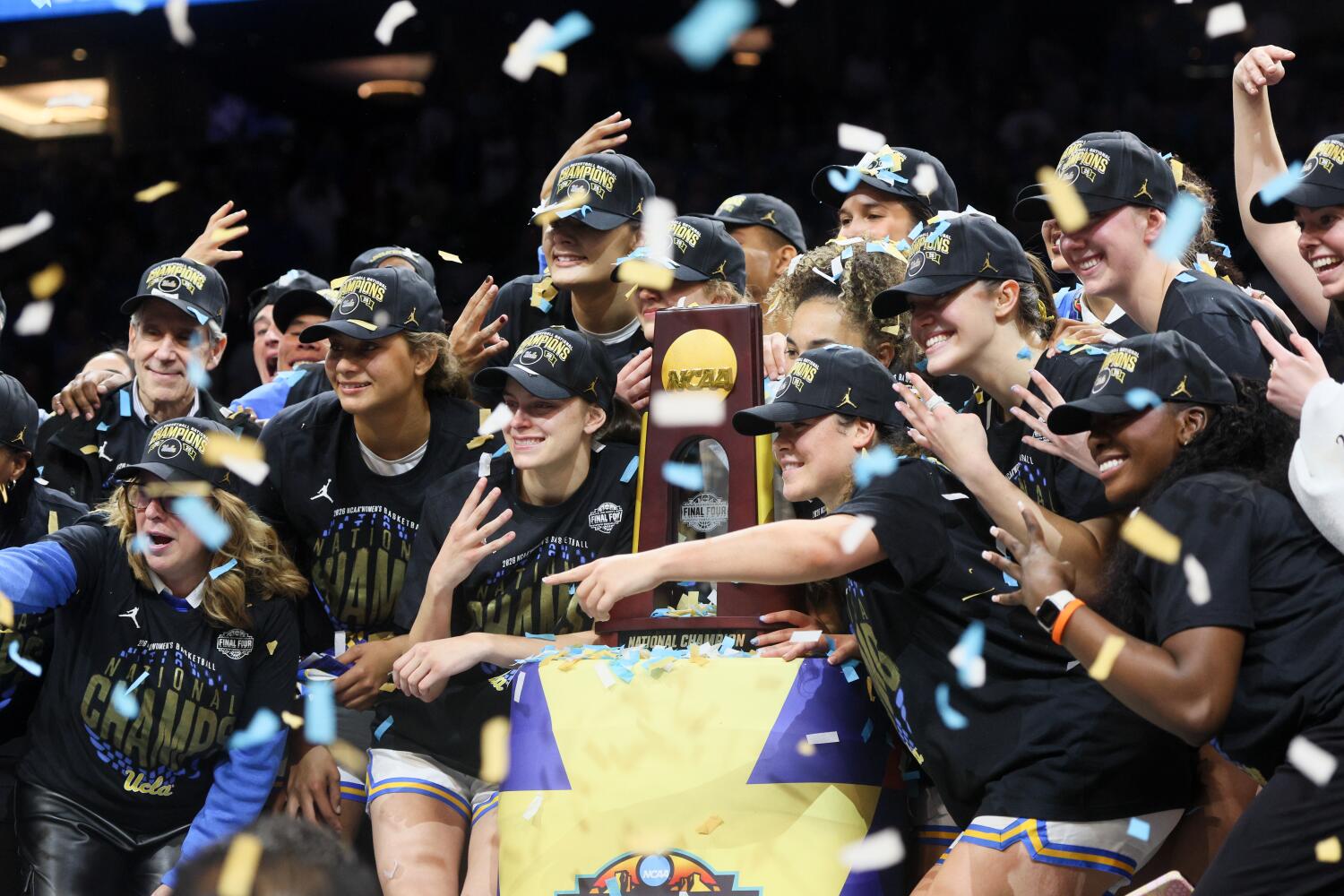
UCLA didn't just win a national title; they reminded the sporting world that institutional memory is a tangible competitive advantage. While the rest of the collegiate landscape chases short-term transfers and flash-in-the-pan NIL deals, the Bruins have doubled down on a cultural blueprint that spans decades. This isn't about luck or a favorable bracket. It is about the meticulous application of pressure, a recruitment strategy that prioritizes psychological durability over raw physical metrics, and a coaching staff that refuses to blink in the face of modern roster volatility.
The Mechanics of Westwood Dominance
The standard narrative suggests that greatness is a product of individual talent. This is a fallacy. Talent is the entry fee, but the sustained success seen in Westwood is a byproduct of a specific technical ecosystem. To understand how UCLA reclaimed the summit, one must look at the defensive rotations. They are not merely athletic maneuvers; they are synchronized responses to offensive stimuli that have been drilled into the program’s DNA since the days of wooden bleachers. For a closer look into this area, we suggest: this related article.
The current roster operates with a hive-mind mentality. During the championship run, the defensive efficiency rating climbed steadily through every round of the tournament. Most teams fatigue. Their communication breaks down as the stakes rise. UCLA did the opposite. They tightened the screws. By the time they reached the final, their opponents weren't just playing against five athletes; they were playing against a system designed to exploit the slightest hesitation.
Recruitment Beyond the Star Rating
High school rankings are a trap for lazy programs. A player might have a 40-inch vertical and a highlight reel that goes viral, but if they cannot handle the internal scrutiny of the UCLA locker room, they are useless to the mission. The scouting department has shifted its focus toward "grit-adjusted" data. They look for players who have performed under duress, specifically those who have shown the ability to adapt when their primary scoring option is neutralized. To get more context on the matter, extensive analysis can also be found on Bleacher Report.
This philosophy creates a roster that is remarkably deep. When a starter picks up two early fouls, there is no drop-off in intensity. The substitute enters the game with a clear understanding of their spatial responsibilities. This is why the Bruins' bench production outpaced their opponents by nearly 30 percent during the post-season. It is a war of attrition that they are uniquely equipped to win.
The Financial Reality of the Modern Dynasty
We have to talk about the money. In the current era, a national title is as much a victory for the athletic department’s fundraisers as it is for the players on the court. UCLA has managed to navigate the transition into the NIL era without losing its soul, a feat that many of its blue-blood peers have failed to achieve. They didn't just throw cash at problems. They built a collective that incentivizes long-term residency in the program.
The data shows a direct correlation between roster retention and tournament success. While other teams are essentially starting from scratch every October with a carousel of transfers, UCLA maintained a core group of three-year starters. That continuity is worth more than any five-star freshman who has one foot out the door for the draft. The Bruins have essentially weaponized stability.
Tactical Flexibility and the Mid-Game Pivot
If you watch the film of the semi-final, you see a masterclass in tactical adjustment. The opposition came out with a high-ball screen heavy offense that initially caught the Bruins off guard. A lesser coach would have waited until halftime to adjust. UCLA changed their defensive "icing" technique on the fly, three minutes into the first half.
This level of autonomy among the players is rare. It requires a coaching staff that trusts the intellect of its athletes. They aren't running plays; they are reading the floor. This intellectual edge is often overlooked by commentators who focus on shooting percentages. Shooting is variable. Decision-making is a constant. When you have five players on the floor who all possess a high basketball IQ, you can effectively neutralize a more "talented" opponent by simply making fewer mistakes.
The Myth of the Underdog
There was a lot of talk about this being an "inspiring" win, a term often used to describe teams that overachieved. Let’s be clear: UCLA is never an underdog. To frame them as such is to ignore the massive structural advantages the program enjoys. From the recruiting pull of the Los Angeles market to the state-of-the-art training facilities, the Bruins are the establishment.
The real story isn't that they won; it’s that they managed to overcome the complacency that usually settles into programs with this much history. Success breeds a certain kind of rot. Players start believing their own press. Coaches stop innovating. UCLA avoided this by leaning into a "blue-collar" identity that feels almost paradoxical given the glitz of their surroundings. They play like they have something to prove, even when their trophy case is already full.
Psychological Warfare on the Hardwood
The Bruins win before the tip-off. There is a specific way they carry themselves during warm-ups—a calculated lack of emotion that borders on the clinical. It’s a form of psychological conditioning. By the time the game starts, the opponent is already reacting to UCLA’s tempo rather than dictating their own.
In the final minutes of a tight game, most teams succumb to the "hero ball" mentality. One player tries to save the day, ignores the system, and takes a contested shot. UCLA’s championship-clinching possession involved four passes, two screens, and an open layup. It was boring. It was efficient. It was a death sentence for the opposition’s hopes. They don't need a hero when they have a machine.
The Cost of Consistency
Maintaining this level of excellence is exhausting. It requires a relentless schedule and a total buy-in from the players’ families and the university administration. There are whispers about the physical toll this style of play takes on the athletes. The practice sessions are notoriously brutal, often lasting longer and featuring more contact than the games themselves.
But that is the price of admission. You cannot expect to win titles with a soft culture. The bruises the players carry through February are the reason they are cutting down nets in April. It is a Darwinian environment where only the most resilient survive the cut. This isn't a program for everyone, and the coaching staff is very open about that during the recruitment process. They don't want the best players; they want the right players.
Analyzing the Final Stand
The closing moments of the title game provided a window into the soul of the program. With the game on the line, the Bruins didn't look at the bench for instructions. They knew exactly what to do. The defensive rotation was perfect. The box-out was textbook. The rebound was secured with two hands.
It was a display of fundamental basketball that felt like a throwback to a different era. In a world of step-back threes and isolation scoring, UCLA won by doing the small things better than anyone else. They proved that while the game changes, the principles of winning remain static. You defend, you rebound, and you take care of the ball. If you do those three things at an elite level, the scoreboard takes care of itself.
Stop looking for a secret sauce. There isn't one. There is only the work, the system, and the refusal to accept anything less than total compliance with the standard set decades ago. The Bruins are back because they never really left; they were just waiting for the rest of the world to forget how hard it is to beat a team that refuses to beat itself.