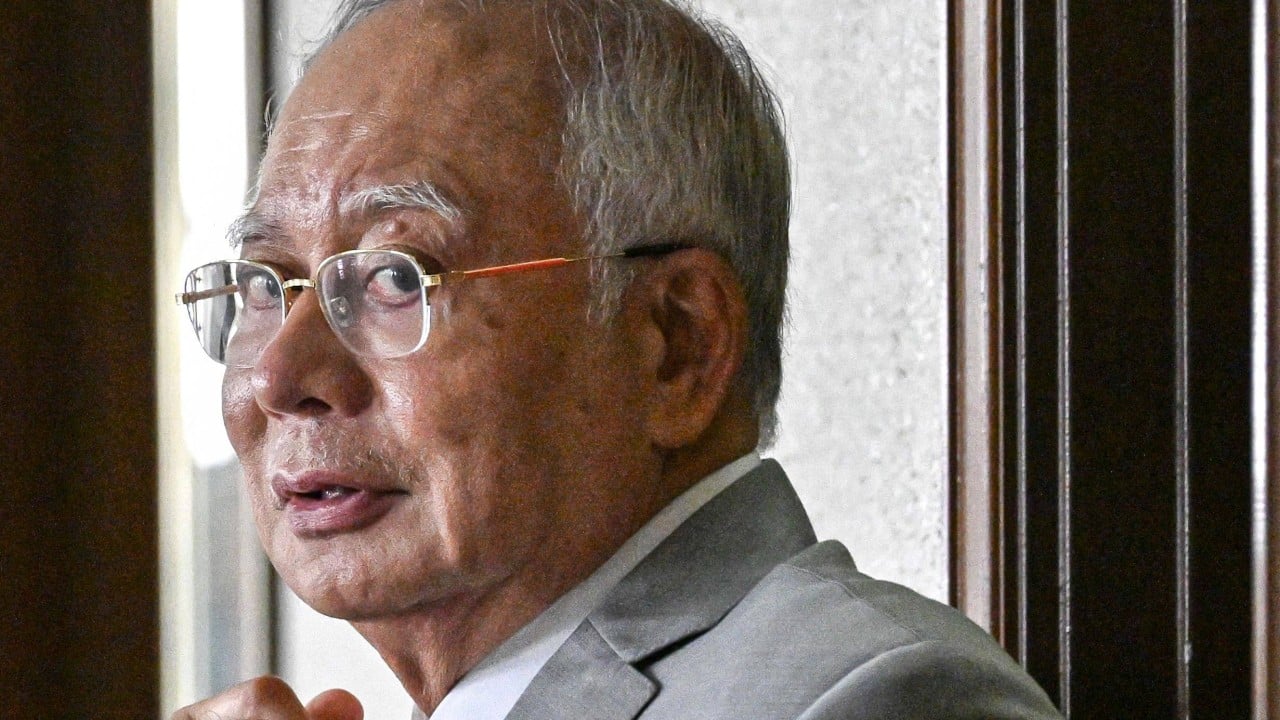
The courtroom in Kuala Lumpur smelled of old paper and air conditioning fighting a losing battle against the tropical humidity outside. Court of Appeal Judge Abdul Karim Ali sat high above the gallery, looking down at a man who had once held the absolute destiny of 32 million people in his hands.
When the judge spoke, the words weren’t just a legal verdict. They were an epitaph for an era of unprecedented greed. Meanwhile, you can read related events here: Why the G7 and India are Rushing to Stop the Next Ebola Outbreak Before It Starts.
He noted that the actions of former Malaysian Prime Minister Najib Razak did not reflect national interest, as the defense had fiercely argued. Instead, it was a national embarrassment. The judge remarked that the scale of the plunder made Attila the Hun look like a choirboy.
It was a striking historical comparison. Attila burned cities to the ground with swords and horses. Najib Razak allegedly did his raiding with a fountain pen, electronic bank transfers, and a shell company network that spanned the globe. To see the full picture, check out the excellent report by The Washington Post.
To understand how a nation’s sovereign wealth fund—meant to build roads, schools, and futures—became a personal piggy bank, you have to look past the dense financial audits. You have to look at the grocery stores in the heart of Kuala Lumpur. You have to look at the rubber plantations in Rural Kedah.
Money is an abstract concept when it hits nine zeroes. It ceases to look like currency and begins to look like a score in a game. But every dollar scrubbed through a Swiss bank account or spent on a New York penthouse is a dollar stripped from a reality somewhere else.
Consider a hypothetical citizen. Let's call her Aini. In 2014, Aini was trying to open a small bakery in a neighborhood just outside the capital. She needed a micro-loan from a state-backed program, the kind of small-scale economic engine that sovereign development funds are supposed to grease. The funds weren't there. The bureaucracy shrugged. The system was dry.
At that exact moment, thousands of miles away, a superyacht named the Equanimity was cruising the Mediterranean. It featured a helipad, a movie theater, and a Turkish bath. It was paid for with money that was supposed to fund Aini’s loan, and the loans of thousands like her.
The mechanism was 1Malaysia Development Berhad, universally known now by the scar tissue acronym: 1MDB.
Sovereign wealth funds are usually boring. They are supposed to be boring. A government takes surplus money, invests it in stable assets, and ensures that future generations have a safety net when resources run thin. It is an act of national stewardship.
But 1MDB was structured differently from the start. It wasn't built on a surplus; it was built on borrowed money.
Imagine walking into a bank, taking out a massive mortgage on a house you don’t own, telling the neighbors you’re investing it for the good of the street, and then using the cash to buy diamonds for your inner circle. That was the core blueprint.
The brilliance of the scheme, and its ultimate tragedy, lay in its complexity. If you steal a television from a shop, the police can trace the physical object. If you siphon billions of dollars, you don't use a sack with a dollar sign on it. You use a financial labyrinth.
Money flowed from the Malaysian state fund into offshore accounts with names designed to mimic legitimate investment firms. It bounced from Kuala Lumpur to Riyadh, from the Cayman Islands to Switzerland, tumbling through the global banking system until its origin was completely obscured. By the time it emerged on the other end, it was clean enough to buy Hollywood film productions, high-end real estate, and Monet paintings.
The sheer audacity of the operation required an absolute certainty of immunity. When you are the Prime Minister, the Finance Minister, and the chairman of the fund's advisory board all at once, who exactly is going to audit you?
The institutional guardrails didn't just fail; they were systematically dismantled. Investigators were reassigned. The Attorney General was replaced overnight. Journalists who asked too many questions found their publications suspended or faced the threat of arrest under state security laws.
For years, a heavy silence hung over the country. Everyone knew the math didn’t add up, but the math was too dangerous to speak aloud.
The turning point did not come from a sudden burst of official conscience. It came from the sheer weight of the truth breaking through the floorboards. International journalists began pulling at the loose threads. The US Department of Justice launched asset forfeiture lawsuits, calling it the largest kleptocracy case in its history.
Suddenly, the abstract numbers became visceral realities. The public learned about millions of dollars spent on birthday parties in Las Vegas, Hermès Birkin bags stacked to the ceiling in luxury condominiums, and millions diverted directly into the personal bank accounts of the country's top leader.
When the political dam finally broke in the 2018 election, it wasn't just a political shift. It was an exorcism. The people of Malaysia stood in lines for hours, some flying across the world at their own expense just to cast a ballot, driven by a quiet, collective rage.
The defense during the trials maintained a consistent narrative: the Prime Minister was an innocent victim of a rogue financier, a man named Jho Low who allegedly masterminded the entire operation while keeping the leader in the dark. He claimed he genuinely believed the hundreds of millions appearing in his accounts were gifts from Arab royalty.
Judge Abdul Karim’s ruling shattered that defense with clinical precision. The court found it entirely implausible that a seasoned politician, holding the highest financial offices in the land, could remain oblivious to the source of such vast sums of money pouring into his personal domain.
The comparison to Attila the Hun is instructive because of what it says about modern power. Barbarians at the gates are easy to spot. They carry weapons. They make noise.
The modern raider wears a bespoke suit. They speak the language of international finance, global development, and economic transformation. They use the very institutions built to protect the public wealth as the crowbars to pry it open.
Najib Razak now resides in Kajang Prison. The appeals have been heard, the sentences upheld, and the legal battles continue to grind through the courts on remaining charges.
But the money is largely gone, scattered into the wind of global commerce, recovered only in fractions through complex international asset seizures. The debt, however, remains. It belongs to the citizens. It belongs to the taxpayers. It belongs to the children who will attend schools with fewer resources because a generation of national wealth was liquidated for a fleeting taste of absolute luxury.
The true cost of the 1MDB scandal isn’t found in the court documents or the billions of dollars cited in the indictments.
It is found in the invisible deficit of trust. When the highest office in a nation is used to orchestrate a global financial heist, the damage isn't just financial. It rusts the soul of the state. It leaves a public wondering if any institution can ever truly be clean, or if the system itself is just an elaborate front for those with the power to write the rules.
In the quiet interior of the Malaysian high court, as the finality of the judgment settled into the room, the historical weight of the moment became clear. A nation had peered into the vault, found it empty, and decided that no one, no matter how powerful, was too big to face the ledger.