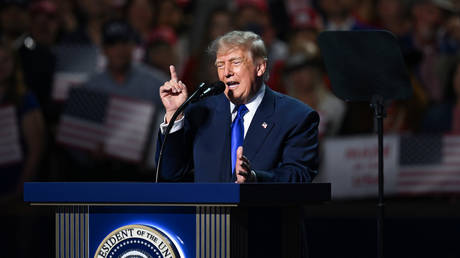
International diplomacy operates on an implicit assumption of shared institutional utility. When sovereign states assemble within multilateral frameworks, they theoretically submit to procedural norms designed to reduce transaction costs, lower uncertainty, and channel geopolitical competition away from kinetic conflict. Yet, high-level addresses at the United Nations General Assembly frequently expose the structural fault lines underlying this system. Rather than serving as an instrument for consensus building, the global podium often functions as a high-visibility theater where leaders project domestic grievances, challenge established norms, and test the limits of institutional relevance. Analyzing these addresses requires stripping away rhetorical posturing to examine the underlying mechanics of statecraft, the economics of coercion, and the systemic drift away from cooperative security architecture.
The Structural Mechanics of Institutional Decay
The United Nations was constructed in the aftermath of catastrophic conflict to solve specific collective action problems among sovereign states. Its architecture assumes that permanent members of the Security Council and the broader body of member nations share a baseline commitment to international law, territorial integrity, and peaceful dispute resolution. However, when systemic shocks—such as regional wars, supply chain fragmentation, and economic weaponization—accumulate, the functional capacity of these institutions degrades. For a closer look into this area, we suggest: this related article.
Institutional decay manifests through three distinct mechanisms: procedural paralysis, norm erosion, and alternative alignment.
First, procedural paralysis occurs when the structural design of a governing body prevents decisive action during crises. The veto power and deeply entrenched geopolitical divisions ensure that the Security Council frequently reaches equilibrium at inaction. Second, norm erosion accelerates when powerful actors bypass institutional channels to achieve unilateral objectives, demonstrating to secondary powers that adherence to international law is optional rather than binding. Third, alternative alignment emerges as dissatisfied states construct parallel economic and security networks, reducing their reliance on Western-dominated financial systems and governance mechanisms. For additional context on the matter, in-depth analysis is available at Al Jazeera.
When a head of state utilizes the General Assembly to openly critique the efficacy of the organization, it is rarely an accidental diplomatic gaffe. It is a calculated signaling mechanism. By highlighting institutional shortcomings, leaders perform dual functions: they mobilize domestic constituencies by projecting defiance against external constraints, and they signal to adversaries that existing security guarantees or multilateral treaties are subject to immediate renegotiation.
The Utility Function of the Multilateral Stage
To understand why leaders choose aggressive rhetoric on a global stage, one must examine the utility function of multilateral addresses. International summits offer an asymmetric return on investment for political actors seeking to influence multiple audiences simultaneously.
The primary audience is rarely the assembly hall itself. Diplomatic delegations frequently respond to provocative statements through calculated silence, walkouts, or formal rebuttals. Instead, the speech acts as a primary source for domestic media ecosystems, where international confrontation translates directly into internal political capital. In periods of domestic economic strain or political polarization, externalizing conflict through fiery rhetoric alters the national conversation, shifting voter attention from internal failures to external struggles.
Simultaneously, the secondary audience comprises financial markets, intelligence analysts, and allied capitals. These actors parse every sentence for shifts in red lines, trade policy intentions, and military posture. When a leader explicitly threatens severe escalation or dismisses multilateral norms, risk models across global financial institutions must immediately reprice sovereign risk, energy futures, and currency stability. The rhetorical strategy is thus designed to create strategic ambiguity, keeping adversaries off balance by refusing to adhere to predictable diplomatic etiquette.
Economic Coercion and the Pricing of Geopolitical Risk
Rhetoric at the United Nations rarely occurs in a vacuum; it is tethered to the tangible instruments of state power, chief among them being economic coercion. Modern statecraft increasingly relies on financial sanctions, trade restrictions, and supply chain choke points rather than direct military engagement.
The mechanism
Decoding Diplomatic Signaling in a Fragmented Global Order
news
International institutions operate under a severe institutional deficit during periods of geopolitical fracturing. When leaders address the United Nations General Assembly amid acute systemic stress, the primary function of their discourse is rarely consensus-building. Instead, the podium operates as a high-frequency transmitter for sovereign signaling, targeted simultaneously at domestic constituencies, allied networks, and adversary states. Deconstructing high-level diplomatic addresses requires stripping away rhetorical ornamentation to examine the underlying game-theoretic mechanics, transaction costs, and power asymmetries that dictate modern statecraft.
The Structural Cost Function of Multilateralism
Multilateral organizations like the United Nations function on a premise of collective security and institutionalized norms. However, the utility of these platforms decays rapidly when the distribution of global power shifts from unipolar hegemony to a multipolar or fragmented architecture.
States evaluate international engagement through a cost-benefit framework where sovereignty preservation is weighed against the economic and security dividends of cooperation. When global friction increases—driven by supply chain weaponization, regional conflicts, and divergent economic models—the transaction costs of compliance with international norms spike. Leaders addressing global bodies under these conditions frequently abandon institutional deference in favor of transactional positioning.
This shift alters the fundamental economics of diplomacy. Traditional statecraft relies on predictable adherence to established protocols, reducing uncertainty among trading partners and security allies. When a major power begins utilizing multilateral forums to challenge the structural legitimacy of the system itself, it externalizes uncertainty onto the global market. Foreign direct investment decisions, sovereign debt ratings, and alliance commitments are immediately recalibrated to account for heightened systemic volatility.
The Dual-Audience Dilemma in Sovereign Address
Every major speech delivered on an international stage is burdened by a structural contradiction: the speaker must address a domestic political audience while projecting authority to an international audience. These two targets have entirely conflicting optimization functions.
Domestic electorates respond to signals of strength, defiance, and protection of local interests against external coercion. International partners and adversaries, by contrast, listen for indicators of predictability, adherence to red lines, and willingness to compromise. When domestic political pressures demand populist rhetoric, the international signaling value degrades.
The Mechanics of Audience Segmentation
- Domestic Signaling: Focuses on zero-sum framing, moral clarity, and the mitigation of perceived external threats to national sovereignty.
- Adversary Deterrence: Relies on clear, verifiable thresholds of response rather than rhetorical escalation, which can lead to miscalculation.
- Allied Coordination: Requires explicit commitments to burden-sharing and institutional continuity, elements frequently sidelined during populist appeals.
When a head of state uses the United Nations to prioritize domestic political optics, adversary states often interpret the rhetoric through a worst-case scenario lens. This creates a security dilemma where defensive signaling is misconstrued as offensive posturing, accelerating arms races, trade fragmentation, and diplomatic disengagement.
Information Asymmetry and Signaling Theory
In game theory, cheap talk—communication that is costless to send and does not directly affect the payoffs of the game—carries limited analytical weight. Diplomatic addresses are inherently prone to cheap talk criticism unless backed by credible commitments or structural changes in policy.
To overcome this credibility deficit, leaders resort to specific signaling mechanisms designed to impose audience costs. By making uncompromising public statements on a global stage, a leader binds their own hands domestically. Backing down later incurs a severe political penalty. While this strategy increases the credibility of the threat or demand in the eyes of foreign adversaries, it simultaneously eliminates the diplomatic flexibility required to negotiate de-escalation.
The effectiveness of this approach hinges on the distribution of power. A hegemonic state can impose high costs through unilateral economic or military instruments, making its public declarations credible threats. Conversely, a state operating within a constrained geopolitical environment finds its public signaling discounted by international actors who recognize the absence of coercive enforcement mechanisms.
Systemic Friction and the Decay of Normative Architecture
The long-term consequence of aggressive sovereign posturing within multilateral institutions is the progressive erosion of the institutional guardrails designed to prevent major power conflict. When the United Nations is treated purely as a media megaphone rather than a venue for backroom compromise, its utility as an early-warning system and de-escalation channel diminishes.
This decay manifests across three distinct operational layers:
- Normative Degradation: Repeated public violations of institutional etiquette normalize diplomatic hostility, lowering the threshold for open economic and military conflict.
- Institutional Paralysis: Security Council and General Assembly mechanisms become blocked by hardened ideological blocks, preventing coordinated responses to transnational crises such as financial contagion, climate disruptions, or pandemics.
- Bilateral Fragmentation: As multilateral trust evaporates, nations retreat into exclusive security pacts and bilateral trade blocs, replacing global efficiency with regional protectionism and redundancy.
Strategic Forecast for Global Risk Management
Corporations, sovereign wealth funds, and intelligence apparatuses must adjust their risk models to account for the permanent degradation of multilateral predictability. The assumption that international institutions can serve as reliable shock absorbers during geopolitical crises is fundamentally flawed.
Strategy moving forward requires abandoning globalized operational models in favor of localized redundancy. Supply chains must be stress-tested against sudden tariff escalation and sovereign asset freezes. Diplomatic rhetoric delivered at international forums should no longer be analyzed as policy aspirations, but as lagging indicators of domestic political survival strategies and hardening ideological fault lines. The global system has transitioned from a rules-based order to an interest-based transactional matrix, where resilience is dictated by balance sheets, resource self-sufficiency, and the capacity to absorb unmitigated systemic shocks.