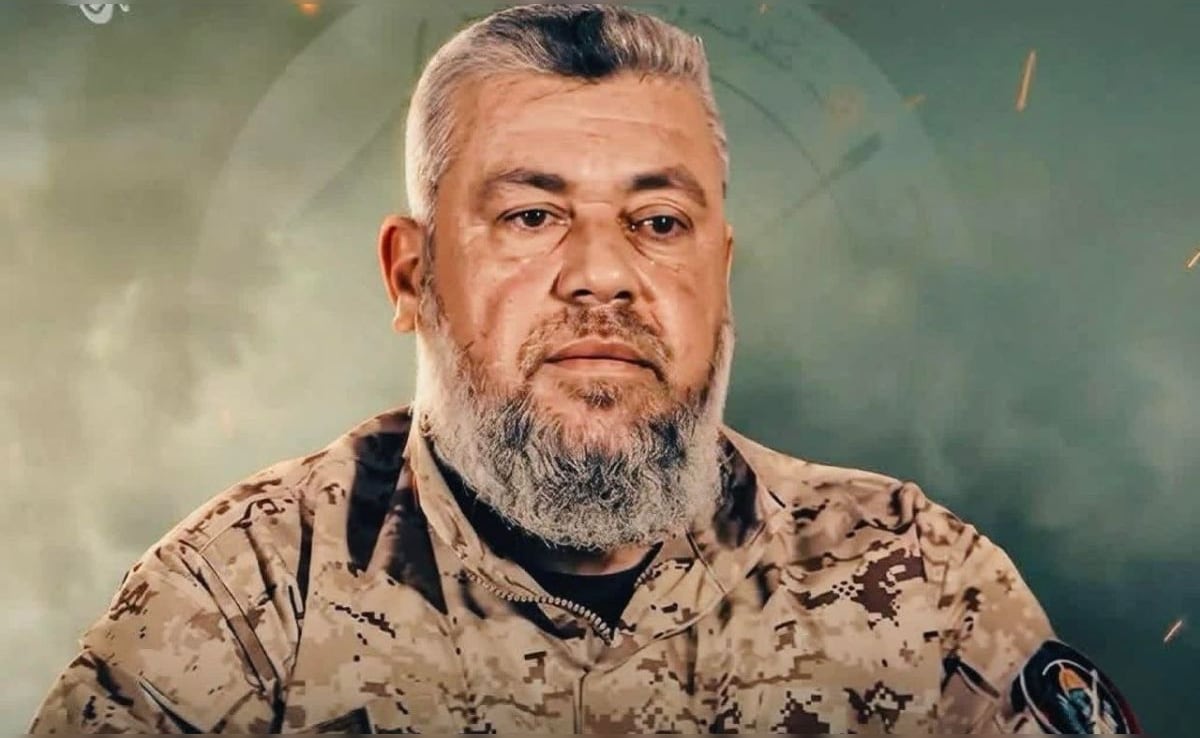
The sirens in Tel Aviv do not sound like a warning. They sound like a tear in the fabric of the day, a mechanical shriek that forces thousands of people into stairwells, reinforced rooms, and concrete shelters. For over a year, that sound was tied directly to the mind of one man. Yahya Sinwar, the leader of Hamas in Gaza and the mastermind behind the October 7 attacks, spent decades studying the vulnerabilities of the society across the fence. He knew exactly when to strike, how to paralyze, and how to turn a sunny Saturday morning into a generational trauma.
Then, a routine patrol in Rafah changed everything.
It was not a cinematic, high-tech assassination planned in a subterranean briefing room. There were no flashing screens tracking a pinpoint laser. Instead, standard infantry soldiers spotted three armed men moving through the ruins of a devastated neighborhood. A tank round collapsed a wall. A drone buzzed through the dust of a shattered second-story window, filming a lone figure slumped in a chair, masked, wounded, yet throwing a wooden stick at the camera in a final, futile gesture of defiance. When the dust settled, the DNA tests confirmed what the world had spent twelve months wondering about. The architect was dead.
The Weight of the Shadow
To understand what this moment means, you have to understand the sheer weight of the shadow Sinwar cast over millions of lives. For Israelis, he was the face of an existential nightmare. He was fluent in Hebrew, learned during more than two decades in Israeli prisons, a period he used to analyze his enemy’s media, psychology, and societal fractures. He did not just lead an armed wing; he constructed an entire strategy based on the belief that Israeli society was fragile and could be broken by overwhelming psychological terror.
The reality on the ground, however, is a landscape of shared, asymmetric grief.
In Gaza, the cost of that strategy is visible in every square inch of the horizon. The enclave is a panorama of gray dust, twisted rebar, and makeshift tent cities. More than 42,000 Palestinians have died since the war began, according to local health officials. For the families digging through the debris of Khan Younis or queuing for hours just to fill a plastic jerrycan with brackish water, Sinwar’s grand design did not bring liberation. It brought an apocalypse.
Consider the duality of this death. For a family in Kibbutz Be'eri, still living in temporary housing, the news of Sinwar's demise brings a cold, heavy sense of justice, but it does not rebuild their burned-out living rooms or bring back the slaughtered. For a mother in Gaza City, shielding her children from the winter cold in a school-turned-shelter, his death is a geopolitical shift that changes absolutely nothing about her immediate search for flour.
The Machinery of a Movement
A common mistake in the West is treating militant organizations like corporate hierarchies. We assume that if you remove the Chief Executive Officer, the company collapses.
History suggests otherwise. Hamas is not a corporation; it is an ideological bureaucracy deeply embedded in the social and political fabric of Gaza. When Israel assassinated Sheikh Ahmed Yassin, the wheelchair-bound spiritual founder of the group in 2004, analysts predicted the end of the movement. Instead, it became more radical, more militarized, and vastly more effective.
The network of tunnels snaking beneath Gaza—hundreds of miles of reinforced concrete equipped with electricity, ventilation, and communication lines—was not built by one man. It was dug by thousands of hands, funded by complex international financial webs, and sustained by a profound, enduring anger. Sinwar was the coordinator, the ruthless enforcer who executed suspected collaborators with his own hands in his early days, earning the moniker "The Butcher of Khan Younis." But the infrastructure remains.
The immediate question shifts from who is dead to who is left.
The leadership will inevitably fracture or migrate. Figures like Khaled Meshal, operating from the relative safety of luxury hotels in Qatar, represent the political, diplomatic face of the organization. But the men actually holding the rifles in the tunnels of Gaza are a different breed. They are younger, traumatized by the intense bombardment of the past year, and completely disconnected from the nuances of international diplomacy. They do not look for a political settlement; they look for survival and revenge.
The Paradox of the Captives
The most agonizing variable in this entire equation is the fate of the hostages.
When Sinwar was alive, negotiations were a agonizing game of telephone. Messages had to be passed through intermediaries in Doha and Cairo, written on scraps of paper, carried by couriers through the tunnel network, and delivered to a man deep underground. The process took days, sometimes weeks. Sinwar viewed the hostages as his ultimate insurance policy, human shields that kept him alive and gave him leverage to demand a permanent ceasefire and the release of thousands of Palestinian prisoners.
Now that the central command is gone, who holds the keys?
The remaining hostages are believed to be scattered across Gaza, held in small groups by different factions, extended families, or isolated cells of fighters. With the top commander dead, the chain of command is broken. A cell leader in a tunnel beneath central Gaza may not receive orders from Qatar. They are scared, hungry, and heavily armed. They might see the death of Sinwar as a sign to surrender and negotiate for their own safe passage, or they might see it as the end of the line, leading to the worst possible outcome for those in captivity.
This is the vulnerability of triumph. The elimination of a tyrannical adversary creates a vacuum, and in the Middle East, vacuums are rarely filled by peace.
The Illusion of the Final Victory
Wars rarely have a clean credits roll. There is no signature on a battleship that instantly restores normal life. The death of Yahya Sinwar is undeniably the most significant military achievement for Israel since October 7, a moment of profound symbolic validation for a military and intelligence apparatus that was deeply humiliated by the failures of that autumn morning.
But symbols do not feed children, and they do not secure borders.
The conflict has already expanded far beyond the borders of Gaza. The northern border with Lebanon is a friction point of artillery and airstrikes, where Hezbollah continues its own campaign. Iran, the regional patron of this entire axis, watches the destruction of its proxies with a calculation that alternates between strategic restraint and ballistic missile launches. The removal of one man from a rubble-strewn room in Rafah does not rewrite the regional calculus of Tehran.
True security is not the absence of a specific enemy. It is the presence of a viable future.
As long as the underlying drivers of the conflict remain unaddressed—the lack of a political horizon for Palestinians, the ongoing blockade, the existential fear of Israelis surrounded by hostile actors—the vacuum will pull in new actors. Another young man, currently sitting in a tent in central Gaza, watching his family survive on humanitarian rations, is already being shaped by this moment. He does not need to read Sinwar’s speeches. He only needs to look around him to find a reason to pick up where the last architect left off.
The drone footage of Sinwar’s final moments will be interpreted in two completely incompatible ways. To the world that watched the horrors of October 7, it is the pathetic, lonely end of a mass murderer who brought ruin upon his own people. To the radicalized fringes of the region, it will be repackaged as the martyrdom of a warrior who died in combat gear, fighting until his last breath. The stick thrown at the drone will become a symbol in a new wave of propaganda.
The dust in Rafah has settled, but the air remains thick with uncertainty. The architect is gone, but the labyrinth he built—both literal and psychological—will take generations to dismantle.