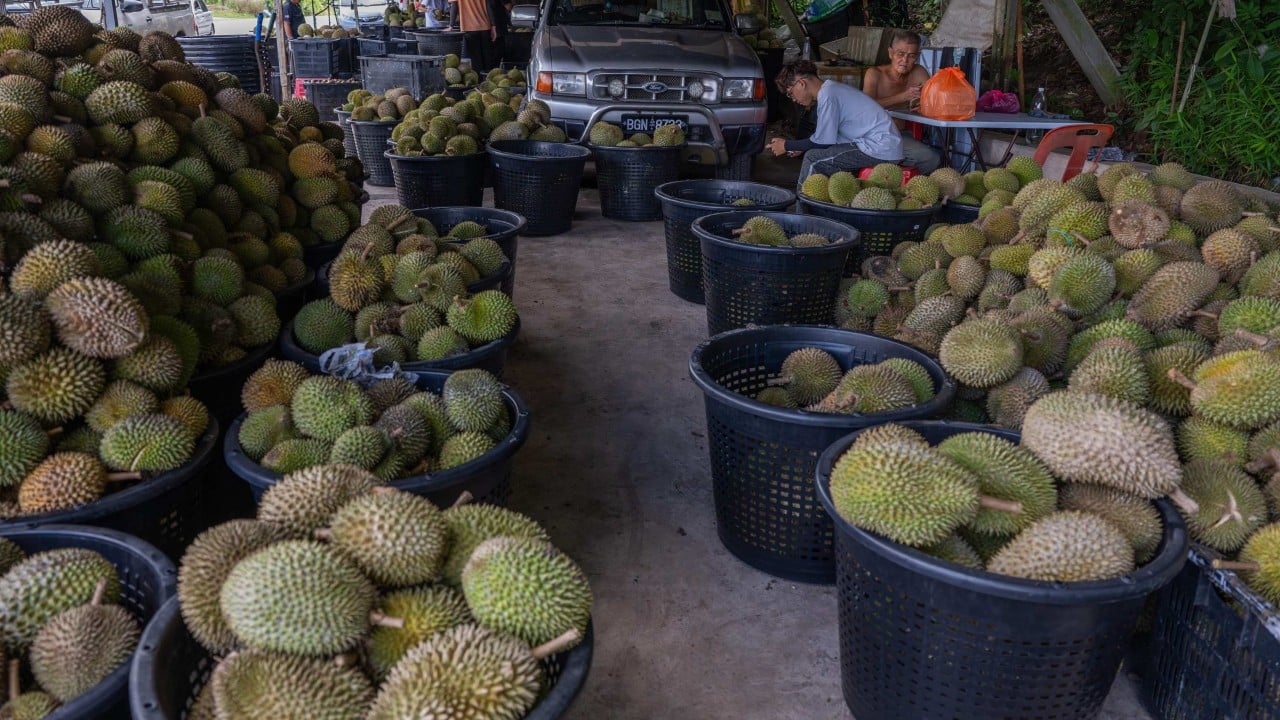
Malaysia's durian farmers are in deep trouble, and the crisis is unfolding right in their orchards. A massive, near-simultaneous peak harvest across Peninsular Malaysia has triggered a brutal durian price crash. Walk into any market in Johor or Selangor, and you will see mountains of premium fruit selling for a fraction of what they commanded just a year ago. It's great news for local consumers who want cheap Musang King, but it's a financial nightmare for the country's 63,000 durian growers who are watching their margins evaporate.
Enter Prime Minister Anwar Ibrahim. During a packed town hall session in the Gambir state constituency in Tangkak, Johor, Anwar didn't mince words about the crisis. He looked directly at the anxious farmers and made a bold, highly personal promise. He plans to personally lean on Chinese Premier Li Qiang during an official visit to Beijing next month to bail out the domestic market by opening China's doors even wider to Malaysian exports.
"All right, I promise one thing," Anwar told the crowd. "Li Qiang, the Premier of China, is a good friend. I will be going to China next month, and I want to bring up durian because I see prices are falling."
It's a classic Anwar move. He's turning a localized agricultural glut into a high-stakes game of international diplomacy. But can a personal friendship between two leaders actually fix structural oversupply and save smallholders from financial ruin?
The Reality of the Great Malaysian Durian Glut
To understand why Anwar is flying to Beijing to talk about fruit, you have to look at the sheer scale of the oversupply. Usually, different states in Malaysia hit their peak durian seasons at slightly different times. This staggered harvest keeps prices stable. This year, the weather didn't cooperate. Perfect heat and sudden rainfall caused orchards across the peninsula to drop their fruit all at once.
When a massive wave of Musang King, Black Thorn, and D101 hits the market simultaneously, supply dwarfs local demand. Prices plummeted fast. For farmers who invested heavily in fertilizer, irrigation, and labor over the last few years, selling premium fruit at rock-bottom prices means they might not even break even this season.
This isn't just about a bad month; it's about the survival of rural economies. Anwar knows that disgruntled farmers mean lost votes, especially with local political dynamics heating up in states like Johor. That's why he's taking the problem straight to the biggest consumer market on Earth.
Why China Holds the Key to Stabilizing Prices
China’s appetite for durian is legendary. The country is the world's second-largest economy, and its middle class views premium Malaysian varieties like Musang King as a luxury status symbol.
Historically, Malaysia faced massive structural disadvantages compared to Thailand. While Thai farmers could ship fresh durians directly across the border by the truckload, Malaysia was restricted for years to exporting only frozen pulp and paste, and later whole frozen fruit. It wasn't until June 2024—coincidentally during a visit by Li Qiang to Putrajaya—that Malaysia finally signed the historic protocol allowing fresh durian exports to China.
The export data shows exactly why Anwar is fixated on Beijing:
- In 2018, Malaysia exported just $36.3 million worth of frozen durian to China.
- By 2023, that figure skyrocketed seven-fold to $260 million.
- The government's official target is to hit nearly $500 million in durian exports by 2030.
On paper, the Chinese market has plenty of room to absorb Malaysia's current glut. If Anwar can convince Beijing to streamline import procedures, lower trade barriers, or clear custom bottlenecks for fresh shipments, the excess supply sitting in Johor could be on supermarket shelves in Shanghai within days.
The Complicated Logistics of Saving Fresh Fruit
It sounds like a simple fix. We have too many durians; China wants durians; let's ship them over. Honestly, it's not that easy.
Anwar himself admitted that the negotiation won't be a walk in the park. "China has very high standards, very high. But I will try to negotiate," he warned the farmers.
Those high standards refer to China's incredibly strict phytosanitary rules. Fresh durians must be entirely free of pests, meticulously cleaned, and packed in approved facilities. When Malaysia sent its first historic 40-ton shipment of fresh durian to China in August 2024, the logistical hurdles were immense.
Unlike frozen durians, which can sit in a cold-storage warehouse for months while customs paperwork gets sorted, fresh durians have a ticking clock. They have a notoriously short shelf life. To get a premium fresh Musang King to a Chinese consumer before it spoils, exporters have to use expensive air freight.
If Anwar wants to rescue the farmers suffering right now, he can't just ask China to buy more fruit. He needs to negotiate expedited customs clearance lanes—essentially a "green channel" for perishable Malaysian agricultural goods—so that fresh shipments aren't held up at Chinese airports.
Can Personal Diplomacy Overrule Strict Trade Rules
Anwar is banking heavily on his personal rapport with Li Qiang. The two leaders have cultivated a close relationship, using the 50th anniversary of diplomatic ties between Malaysia and China to sign a flurry of economic pacts.
But let's be realistic about how Beijing operates. China doesn't compromise its customs inspections or biosecurity protocols just because a prime minister is a "good friend." What personal diplomacy can do is speed up the bureaucratic timeline. It can force Chinese trade officials to prioritize meetings, review Malaysian orchard certifications faster, and allocate more customs staff to handle the influx of fresh fruit.
There is also a broader geopolitical game at play. China wants to expand its footprint and investments across the Asia-Pacific region to counter Western influence. Malaysia is a key player in Southeast Asia and currently sits on low, heavily subsidized fuel prices that keep its domestic economy stable despite global inflation. By helping Anwar solve a major domestic crisis involving tens of thousands of rural voters, Beijing scores massive diplomatic points and locks in goodwill with Kuala Lumpur.
What Farmers Must Do While Anwar Negotiates
If you are a durian farmer waiting around for Anwar to return from Beijing with a magic wand, you are making a mistake. Government intervention takes time, and the harvest season waits for no one.
While the prime minister works the diplomatic channels, the local industry needs to take immediate steps to mitigate the damage of the price crash. Relying entirely on fresh exports is risky. Large-scale processors should actively pivot toward downstream processing. When fresh prices dive, turning excess fruit into frozen pulp, durian paste, ice cream, and baked goods preserves the value of the harvest and allows farmers to sell the product later when the market recovers.
Furthermore, farmers need to upgrade their infrastructure to meet China's demanding standards. This means investing in better pest management, proper sorting equipment, and cold-chain logistics at the orchard level. Anwar can open the door in Beijing, but only the farmers can ensure that the fruit arriving at the border is high quality enough to pass through. Keep your eyes on the upcoming bilateral talks next month—the future of Malaysia's multi-million dollar durian industry depends entirely on what happens behind those closed doors in Beijing.