The radiators in the Dirksen Senate Office Building emit a heavy, rhythmic clanking, a sound that has accompanied the drafting of laws since the era of vacuum tubes and rotary telephones. Outside, the Washington air is damp and grey. Inside, under the amber glow of chandeliers that predate commercial aviation, a room full of men and women in dark wool suits lean over spiral-bound briefing folders.
They are staring at a piece of paper. On it is printed a definition of a neural network. For an alternative perspective, consider: this related article.
Across the country, thousands of miles away in a climate-controlled server warehouse in Oregon, rows of high-density graphic processors hum with a quiet, furious intensity. They are chewing through terabytes of human language, code, and imagery every second, learning how to write code, compose symphonies, and predict cellular mutations. The machine does not sleep. It does not wait for committee quorum. It evolves at the speed of electricity.
Here, in the marble halls of American democracy, progress moves at the speed of a seventy-year-old senator trying to turn off Bluetooth on an iPad. Further insight on this matter has been provided by Wired.
This is the great, unspoken anxiety of our current century. We have handed the steering wheel of human destiny to a legislature where a startling number of members require their twenty-something staffers to explain how to clear their browser cache, yet these same individuals are tasked with drafting the rules that will govern artificial intelligence. It sounds like the setup for a cynical political satire. Instead, it is our daily reality.
Consider the baseline of institutional capability. Lawmaking is, by design, an exercise in friction. The founders built a system intentionally resistant to sudden shifts. They wanted a republic of deliberation, of slow-moving consensus, of brakes upon brakes. For two hundred years, that structural inertia was a feature, not a bug. It protected the nation from the volatile whims of demagogues and fleeting technological panics.
Then came an exponential curve.
Exponential growth defies human intuition. Our brains are wired for linear progression—we understand walking three miles, then six miles, then nine. We do not intuitively grasp doubling, where step thirty lands you a billion steps away. When a technology doubles its capacity, drops its cost, and expands its reach every few months, a legislative body that takes eighteen months merely to debate a minor postal reform bill is fundamentally mismatched with the adversary.
Arthur knows this better than most. He is a senior legislative clerk who has spent twenty-two years watching the machinery of Capitol Hill grind against the unstoppable force of digital innovation. He remembers the hearings on the early internet, when lawmakers asked wide-eyed questions about whether the web was a physical cable that could get clogged with too much traffic. He remembers the hearings on social media algorithms, where senators expressed genuine bewilderment over how a platform in California could show ads for running shoes to a grandmother in Ohio who had merely thought about jogging.
"It is not that they are unintelligent," Arthur says, leaning back in a leather chair that smells of floor wax and old wool. "Many of them possess sharp, legalistic minds. They can cross-examine a CEO with the surgical precision of a prosecutor. But their entire mental model of power is spatial. They think in terms of territory, borders, and tangible goods. You can tax a ship. You can regulate a factory chimney. How do you draw a legislative boundary around a billion-parameter model that exists everywhere and nowhere at once?"
The disconnect is rarely malicious. More often, it is theatrical.
Witness the typical congressional hearing on artificial intelligence. A tech executive sits at the witness table, polished, polite, and wearing the uniform of Silicon Valley: unstructured blazer, dark jeans, no tie. Around him sit lawmakers elevated by decades of local political campaigns, men and women whose mastery lies in hand-shaking, baby-kissing, and fundraising dinners.
The questions begin. They oscillate wildly between two extremes. On one side are apocalyptic warnings about rogue algorithms destroying humanity, drawn straight from Hollywood science fiction. On the other side are mundane, almost tragicomic inquiries about why a specific search engine result made a senator look unflattering.
Missing entirely from the dais is the vast, messy middle. No one is asking about data provenance training sets, or the copyright implications of synthetic art generation, or the concentration of compute power in the hands of three trillion-dollar corporations. The questions skip over the systemic plumbing of the economy and bounce between sci-fi existentialism and petty personal grievances.
Why does this happen? Because political incentives and technological realities operate in entirely different dimensions.
A senator lives in a two-year electoral cycle. Their currency is attention, soundbites, and short-term wins that can fit into a thirty-second campaign ad. If you fix a pothole in Peoria today, voters notice by November. If you establish a nuanced, forward-looking regulatory framework for algorithmic bias that prevents systemic discrimination in mortgage approvals five years from now, no one names a bridge after you. In fact, if you get the technical details wrong, you might accidentally crush an entire domestic startup ecosystem while leaving foreign competitors untouched, handing your opponent a powerful club for the next election.
So the default response to complexity is performative concern followed by inaction.
Yet, to write off Congress as completely incapable of understanding or regulating AI is to make a dangerous mistake. It misreads the nature of institutional power. When legislators cannot write the code themselves, they rely on proxies. They hire young, hyper-literate staffers who grew up writing Python scripts in high school. They summon lobbyists, academics, and industry insiders who whisper their preferred statutory language directly into the ear of committee writers.
And that is where the true peril lies.
When a legislature is technologically illiterate, it does not become neutral; it becomes vulnerable to capture. If you do not understand how a foundational model works, you cannot evaluate whether a tech company's safety claims are genuine or whether their proposed regulations are actually designed to pull the ladder up behind them and crush open-source competitors.
Regulation written by the regulated is not regulation at all. It is a protective moat.
We saw this script play out during the early days of social media. For a decade, Washington watched Silicon Valley grow from a quirky garage culture into an all-powerful digital public square, doing little more than issuing sternly worded letters. When lawmakers finally woke up, the ecosystem was too consolidated, the network effects too entrenched, and the business models too deeply woven into the global economy to untangle without massive collateral damage.
Now, we are watching the sequel, but the stakes are higher by several orders of magnitude.
Artificial intelligence is not just another app on a glass screen. It is an infrastructure technology, akin to electricity or the internal combustion engine. It will rewrite the terms of labor, medicine, national defense, and education. If an algorithm begins screening job applicants based on biased historical data, the discrimination is no longer the accidental prejudice of a hiring manager; it is codified, automated, and scaled across millions of lives with the silent indifference of math. If a deepfake generator can effortlessly manufacture audio of a head of state declaring war before breakfast, the friction of truth vanishes entirely.
Can a Congress that struggles with email handle this?
The question itself is a rhetorical trap. It assumes Congress is a static monument of aging politicians doomed to eternal obsolescence. But institutions adapt, even if they do so kicking and screaming.
Look closely at the committees and you will notice a generational shift happening beneath the surface. A new crop of staffers—and a handful of younger lawmakers who entered politics with backgrounds in engineering, computer science, and data analysis—are quietly building parallel structures. They are establishing congressional tech caucuses, partnering with scientific fellowships, and bringing in independent researchers who refuse to drink the Silicon Valley Kool-Aid.
They know they cannot out-code the engineers. They do not need to. Lawmaking is not about writing code; it is about establishing boundaries, liability, and accountability. You do not need to understand the precise mathematical weight of a neural node to understand that a company should be held legally liable if its automated medical diagnostic tool causes patient harm without human oversight. You do not need to know how large language models tokenize text to decide whether copyrighted material can be ingested without compensation.
The fundamental battle is not technical. It is political.
It is a contest between those who believe technology should serve human dignity and those who believe human society should bend to the optimization curves of corporate balance sheets.
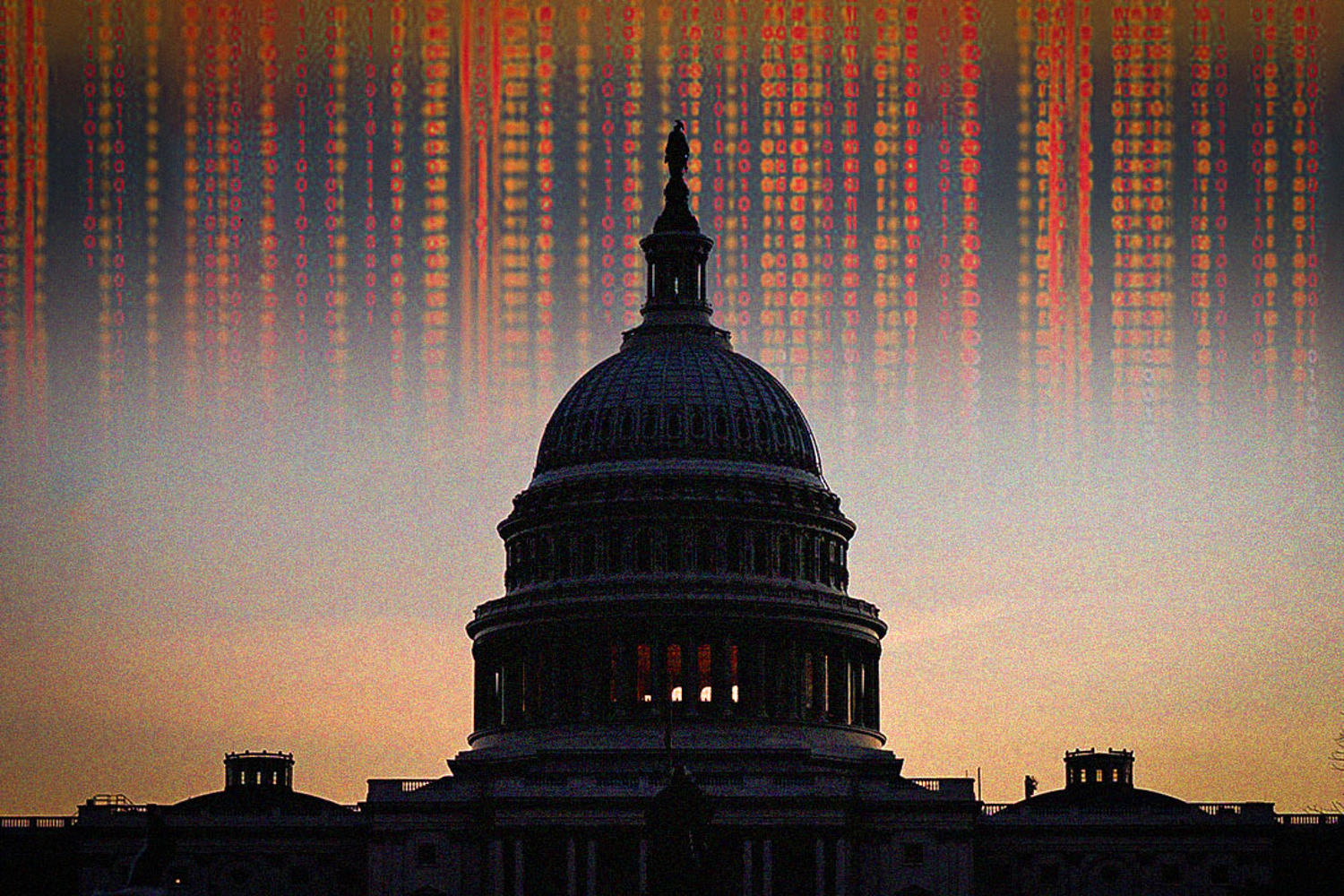
As the sun sets over the Potomac, the limestone pillars of the Capitol turn a deep, bruised orange. Inside, the lights remain on in the committee rooms. The custodians push their heavy carts down the long marble corridors, past portraits of nineteenth-century statesmen who could not have imagined a world lit by electricity, let alone governed by code.
The lawmakers have gone home to prepare for their evening fundraising calls or catch flights back to their home districts. But the servers in Oregon are still humming. The models are still training. The future is arriving, sentence by sentence, line by line, indifferent to the chaos of our politics and the limitations of our leaders.
We are racing toward a horizon we cannot fully see, guided by institutions built for a world that no longer exists. The challenge before us is not whether Congress is smart enough to understand the machine. It is whether we, as a society, can force our fragmented, slow-moving democracy to wake up before the machine writes the rules for us.