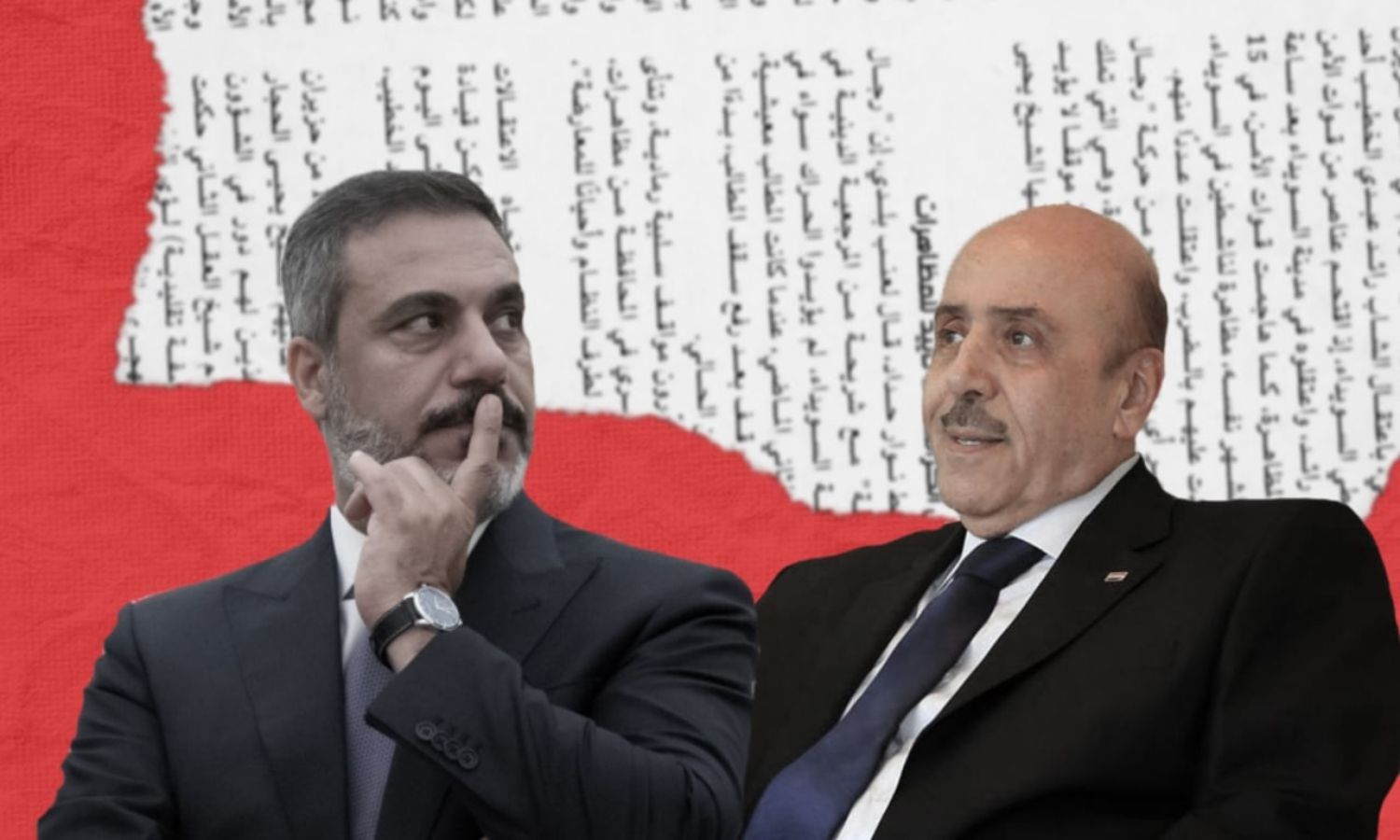
The request from Turkish intelligence (MIT) for British MI6 assistance in securing Farouq al-Sharaa, Syria’s former Vice President, represents a calculated shift in regional power dynamics rather than a simple security concern. This move signals a transition from active regime opposition to a managed transition strategy. The central objective is the stabilization of a high-value political asset who remains the only figure capable of bridging the gap between the Ba'athist old guard and the fragmented Syrian opposition.
The Strategic Logic of External Security Procurement
Turkey’s decision to involve MI6 involves a complex cost-benefit analysis of regional optics and operational deniability. While Turkey possesses the physical capacity to provide protection, utilizing a Western intelligence agency serves three primary strategic functions. You might also find this similar article interesting: Structural Incongruity in Indonesian Fiscal Policy and the Executive Mobility Premium.
- Neutrality and Legitimacy: Turkish protection of a high-ranking Syrian defector or "middle-ground" figure carries the baggage of Ankara's decade-long support for armed rebels. MI6 involvement provides a layer of international "neutrality," framing Sharaa not as a Turkish puppet, but as a globally recognized statesman-in-waiting.
- Mitigation of Retaliatory Risk: If Sharaa were assassinated under Turkish watch, the failure would be a catastrophic blow to Ankara’s diplomatic credibility. Distributing the security burden to a Five Eyes member creates a broader deterrent against Iranian or Russian-backed liquidation squads.
- Intelligence Reciprocity: Engaging the UK in the "Sharaa Project" forces a synchronization of British and Turkish interests in Northern Syria. It effectively tethers London to Ankara’s vision for a post-Assad or reformed-Assad transition.
The Sharaa Variable: Why Farouq al-Sharaa Matters Now
Farouq al-Sharaa is not merely a retired politician; he is a unique geopolitical instrument. His value is derived from his historical distance from the most brutal aspects of the Syrian Civil War's late-stage crackdowns.
- Internal Ba'athist Credibility: Unlike the military-intelligence complex surrounding Bashar al-Assad, Sharaa retains respect among the civilian wing of the party and the Sunni merchant classes of Damascus and Daraa.
- The Russian Preference: Moscow has historically viewed Sharaa as a "Plan B." He represents the "State" rather than the "Family," offering a path to preserve Russian naval and air assets in Latakia and Tartus without the liability of the Assad name.
- The Sectarian Bridge: As a prominent Sunni within a predominantly Alawite power structure, Sharaa is the logical choice for a transitional council aimed at preventing a total state collapse and the subsequent vacuum that groups like HTS (Hay'at Tahrir al-Sham) would inevitably fill.
The Triangulation of Denials: Reading Between the Lines
Ankara’s official denial of the report follows a standard intelligence protocol known as "plausible deniability." In the realm of high-stakes extraction and protection, the public admission of such a request would immediately increase the target's "threat surface." As highlighted in latest coverage by USA Today, the effects are significant.
The denial serves as a tactical smokescreen. If the talks are ongoing, the denial protects the negotiators. If the talks have concluded, the denial protects the operation. The structural reality remains: Turkey cannot unilaterally manage the Syrian transition. The "Syrian file" has become too heavy for any single regional power, necessitating a consortium of intelligence services to manage the risk of a "Black Swan" event—such as the sudden death of a primary transition candidate.
Operational Constraints and the Cost of Failure
The protection of a figure like Sharaa in a high-threat environment involves more than physical bodyguards. It requires the management of "Information Corridors."
- Electronic Countermeasures: Protecting against SIGINT (Signals Intelligence) tracking by Russian or Iranian assets stationed within Syria.
- Human Intelligence (HUMINT) Screening: Vetting every individual within Sharaa’s inner circle to prevent "insider threats," a task where MI6’s deep-cover networks in the Levant provide a comparative advantage over Turkey’s more overt presence.
- Extraction Contingencies: The necessity of a guaranteed "out" if the political situation in Damascus shifts rapidly. British maritime assets in the Eastern Mediterranean offer a more discreet extraction path than Turkish land routes, which are heavily monitored.
The Iranian Obstacle
Tehran views any move to elevate Sharaa as a direct threat to its "Forward Defense" doctrine. Sharaa’s ascension would likely lead to a reduction in Hezbollah’s influence and a curtailment of the "Land Bridge" from Tehran to Beirut. This creates a high-probability assassination risk. The involvement of MI6 is, in many ways, a message to Tehran: an attack on Sharaa is an attack on a project backed by the UK and, by extension, the broader Western intelligence community.
Regional Stability as a Function of Managed Transition
The status quo in Syria is a decaying orbit. The Turkish-British collaboration, if realized, indicates a pivot toward "Managed Transition Theory." This theory posits that state collapse is avoided not by maintaining the dictator, but by isolating the dictator from the state apparatus and replacing the head with a pre-vetted, stable alternative.
Farouq al-Sharaa is the "minimum viable product" for a unified Syrian state. He is acceptable enough to the West to lift sanctions, legitimate enough to the Russians to maintain order, and Sunni enough to satisfy the regional Arab powers and Turkey.
The strategic play here is the institutionalization of Farouq al-Sharaa. By requesting MI6 protection, Turkey is effectively attempting to "underwrite" Sharaa’s political life insurance. The next move for regional stakeholders is to monitor the movement of diplomatic envoys between London and Ankara; any increase in high-level intelligence sharing will confirm that the "Sharaa Option" has moved from a theoretical contingency to an active operational objective. Investors and regional analysts should prepare for a scenario where the Syrian state begins a top-down restructuring, centered around a figurehead who has been kept in the shadows for over a decade, waiting for the precise moment of maximum leverage.