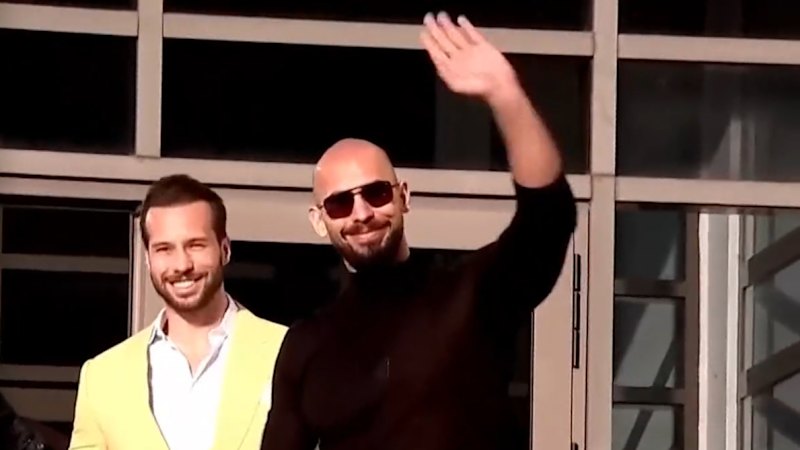
The mainstream media is treating the arrest of Andrew and Tristan Tate in Miami by U.S. Marshals as a straightforward, triumphant final act in a global game of law enforcement tag. They are getting it entirely wrong.
The lazy consensus dominating the headlines views this as the inevitable closing of the net. The narrative suggests that because the Crown Prosecution Service (CPS) piled on 38 new charges—ranging from rape and human trafficking to severe digital offenses—and a sealed warrant was executed in Florida, the Tate brothers are one step away from a UK prison cell.
This view ignores the brutal, calculated mechanics of international extradition treaty law. It completely misses how the U.S. federal court system actually functions when dealing with high-profile dual citizens who fly around on private jets.
This is not the end of the Tate brothers' media or legal circus. It is a highly volatile geopolitical and legal standoff that could take years to untangle, and the prosecution’s strategy might backfire entirely.
The Illusion of a Swift Extradition
The public reads "arrested by U.S. Marshals for UK extradition" and assumes a plane is already being prepped to fly them to London. Having consulted on international jurisdictional disputes for over a decade, I can tell you that the reality is a sluggish, procedural nightmare.
The United States does not simply hand over its citizens because a foreign government asks nicely or drops a massive file of fresh allegations on a weekend.
The defense team is already positioning this as a coordinated political hit designed to derail the Tates' ongoing defamation lawsuits in America. Whether you buy that narrative or not, it is a potent legal angle in a U.S. federal court.
To successfully extradite the brothers, British authorities must satisfy the dual criminality requirement and prove that these charges are not politically motivated or a form of double jeopardy given the stalled, messy proceedings in Romania.
Imagine a scenario where a federal judge reviews the sudden influx of decades-old charges—allegedly spanning from 2010 to 2017—and demands a rigorous examination of why these specific charges are only surfacing with maximum theatricality right now.
The U.S. Department of Justice must defend its execution of a sealed warrant against intense scrutiny regarding due process. If the defense can prove an abuse of authority or political maneuvering by foreign actors, the U.S. courts will dig their heels in. America is notoriously protective of its legal sovereignty.
Piling on Charges: The Prosecutor's Gamble
The CPS announced a staggering escalation: 38 new charges across four new victims. This brings the total count to a dizzying array of offenses, including severe claims against Andrew Tate regarding extreme pornography and profiting from prostitution.
The media presents this mountain of paperwork as an open-and-shut case. In reality, over-charging is a classic, high-risk prosecutorial gamble that often signals anxiety rather than absolute confidence.
By throwing every conceivable charge at the wall, the UK authorities are trying to ensure that something sticks to justify the immense international resources deployed. But this strategy presents two major liabilities:
- Evidentiary Dilution: Proving complex human trafficking and assault charges across a timeline stretching back 16 years requires flawless, airtight evidence. The older the allegations, the harder it is to maintain a cohesive chain of custody on digital data and witness testimonies.
- The Propaganda Weapon: For a brand built entirely on the concept of a "Matrix" trying to suppress them, a sudden, massive influx of charges is pure oxygen. It feeds their narrative perfectly. The defense will argue this isn't a prosecution; it's a public relations campaign masquerading as justice.
The Romanian Complication Everyone is Ignoring
The loudest silence in the current news cycle concerns Romania. The Tate brothers were arrested there in 2022, and that case has been completely paralyzed by legal and procedural blunders for years. They were literally allowed to leave the country on a private jet because the Romanian judicial framework couldn't hold its own weight.
Now, the UK is stepping in to claim jurisdiction over older offenses. This creates an absolute mess of competing international claims.
Which state has priority? Romania still has an open criminal proceeding, yet the U.S. is executing warrants for the UK. This jurisdictional tug-of-war plays directly into the hands of a sophisticated defense team. They will use the friction between these three different legal systems to stall, appeal, and picked apart the technicalities of the warrants.
The Flawed Question the Public Keeps Asking
The internet is currently obsessing over the question: "When will they go to jail?"
This is entirely the wrong question to ask. The real question is: "Can the UK prosecution survive the incoming discovery process in a U.S. federal court?"
Before any extradition occurs, there will be a mini-trial in Miami regarding the validity of the extradition request itself. This means British evidence will be subjected to the harsh light of American legal standards. If the Bedfordshire Police or the CPS cut any corners during their multi-year investigation, a U.S. federal judge will spot it.
The downside to this contrarian view? It means months, if not years, of exhausting legal gridlock while the brothers remain in a high-stakes legal limbo on U.S. soil. It means the public will not get the instant gratification or swift resolution they are looking for.
Do not mistake a dramatic arrest in Miami for a conviction. The U.S. Marshals did their job by enforcing the warrant, but the real battle hasn't even begun. The UK prosecution just stepped into an American courtroom, and they are about to find out that the rules of engagement are entirely different over here.