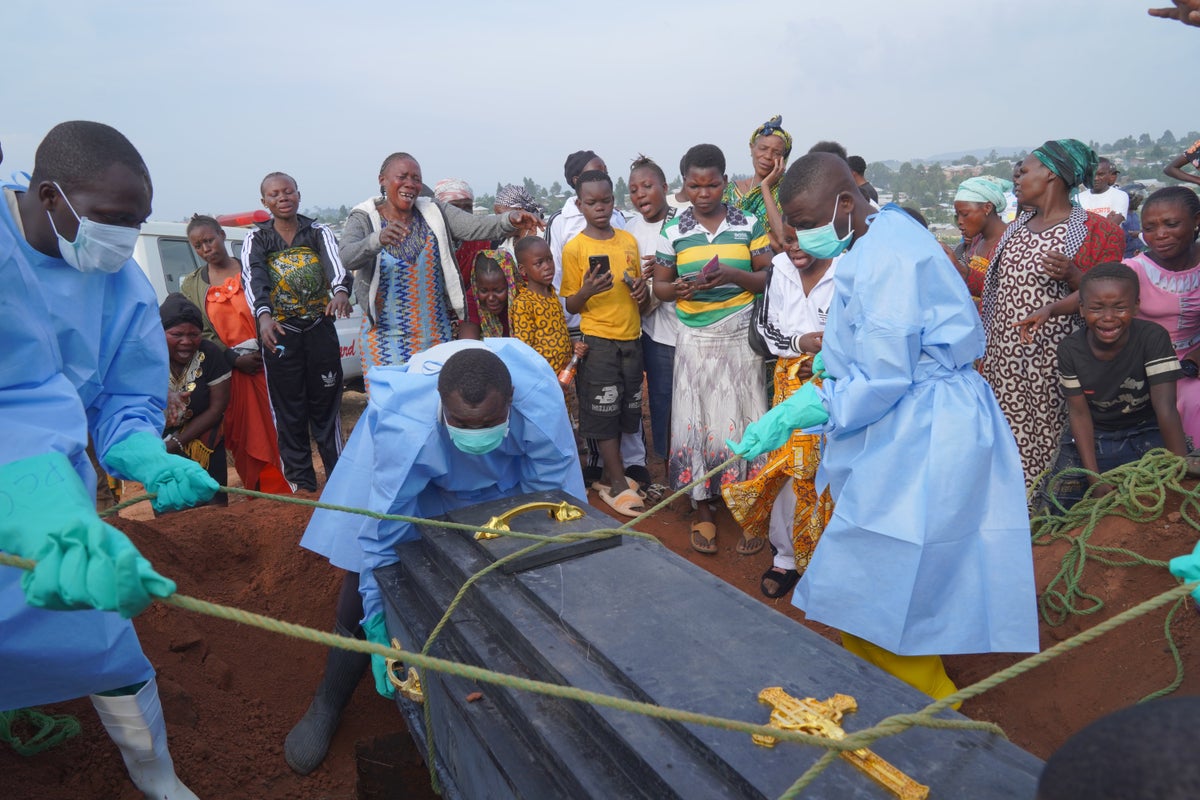
Epidemiological velocity is governed by a precise mathematical relationship between transmission chains, detection latency, and healthcare infrastructure capacity. In the Democratic Republic of the Congo, the seventeenth recorded Ebola epidemic has transitioned from an localized pathogen introduction into a structural failure of containment economics. Official tracking data confirms 4,945 cumulative cases and 2,325 fatalities, pushing the national case fatality ratio to 47 percent. By eclipsing the 2,299 deaths recorded during the 2018 to 2020 outbreak, this event is now the deadliest domestic outbreak in the nation's history. More critically, the temporal compression of these metrics—reaching 2,000 fatalities in under three months—reveals a compounding system breakdown that outpaces traditional international humanitarian response models.
The Vector Mechanics of the Bundibugyo Strain
Understanding the trajectory of this crisis requires isolating the biological variable driving the surge. The outbreak is caused by the Bundibugyo ebolavirus, a rare species first identified in Uganda in 2007. Unlike the Zaire strain that dominated previous Central African epidemics, the Bundibugyo variant presents a distinct operational challenge: an absence of approved commercial vaccines or targeted therapeutics.
While phase one safety trials for mRNA-based and vector-based countermeasures are underway, current clinical protocols rely exclusively on supportive care. This creates an unfavorable clinical denominator. When therapeutic intervention is restricted to hydration, electrolyte balancing, and symptom management rather than viral neutralization via monoclonal antibodies, patient outcomes depend almost entirely on the timing of presentation.
The biological transmission loop operates through direct contact with infected bodily fluids or contaminated fomites. In environments characterized by structural water deficits—such as the gold-mining hubs in Ituri province where only twenty percent of residents possess reliable access to safe washing water—the physical mechanism of transmission is unhindered by basic hygiene barriers.
The Cost Function of Detection Latency
In an optimized epidemiological response, the case fatality ratio should decline over time as contact tracing improves and infected individuals enter treatment facilities during the early viremic phase. In the current Congo theater, the exact inverse is occurring. The case fatality ratio has escalated from roughly twenty percent in early June to 46 percent.
This anomaly exposes a systemic failure in the surveillance-to-treatment pipeline. The operational delay between symptom onset and facility admission dictates whether an infection remains manageable or becomes terminal. Two primary structural variables drive this latency:
- Community-Level Misattribution: Over seventy percent of deaths continue to occur outside formal health facilities because initial symptoms mimic endemic maladies, leading families to treat cases as poisoning or alternative infections until terminal organ failure manifests.
- Operational Friction and Security Deficits: Armed conflict, population displacement, and localized distrust of intervention teams restrict geographic surveillance access across the six affected provinces.
When individuals bypass transit centers and rely on traditional or home-based care, the effective reproduction number of the virus within unmonitored community networks stays above the critical threshold of 1.0. Consequently, the rate of new infections accelerates faster than field teams can map contact chains.
Resource Allocation Asymmetry and Infrastructure Bottlenecks
International intervention relies on capital deployment and logistical scaling. The United Nations' allocation of emergency funding provides necessary liquidity, yet capital injections encounter severe physical bottlenecks on the ground. The containment equation is constrained by three physical limits:
- Safe Burial Capacity: The volume of certified safe burial teams is mathematically mismatched with community death rates, forcing families into hazardous traditional mortuary rituals that serve as major transmission multipliers.
- Treatment Center Saturation: Isolation wards in Ituri and North Kivu operate at or above capacity, forcing triage officers to ration care.
- Workforce Vulnerability: Local health workers face supply shortages, occasionally forcing them to procure basic disinfectants using personal funds.
Independent analytics firms estimate that true infection volumes exceed official tallies by a significant factor, driven by unrecorded community deaths and localized under-reporting. Without decentralized diagnostic units capable of rapid point-of-care antigen testing at the village level, central authorities remain perpetually downstream of the contagion.
Strategic Operational Reconfiguration
Reversing the trajectory of the epidemic requires shifting from reactive containment to preemptive network disruption. Logistics coordinators must immediately decouple testing protocols from centralized urban laboratories by flooding affected health zones with portable diagnostic kits. Concurrently, operational commanders must transition community engagement models from external enforcement to decentralized peer-led surveillance, integrating local leaders into the verification chain to eliminate the structural mistrust that drives patients into late-stage isolation. Until local clinical throughput exceeds the exponential growth of new transmission chains, the outbreak will continue to dictate terms to the response apparatus.