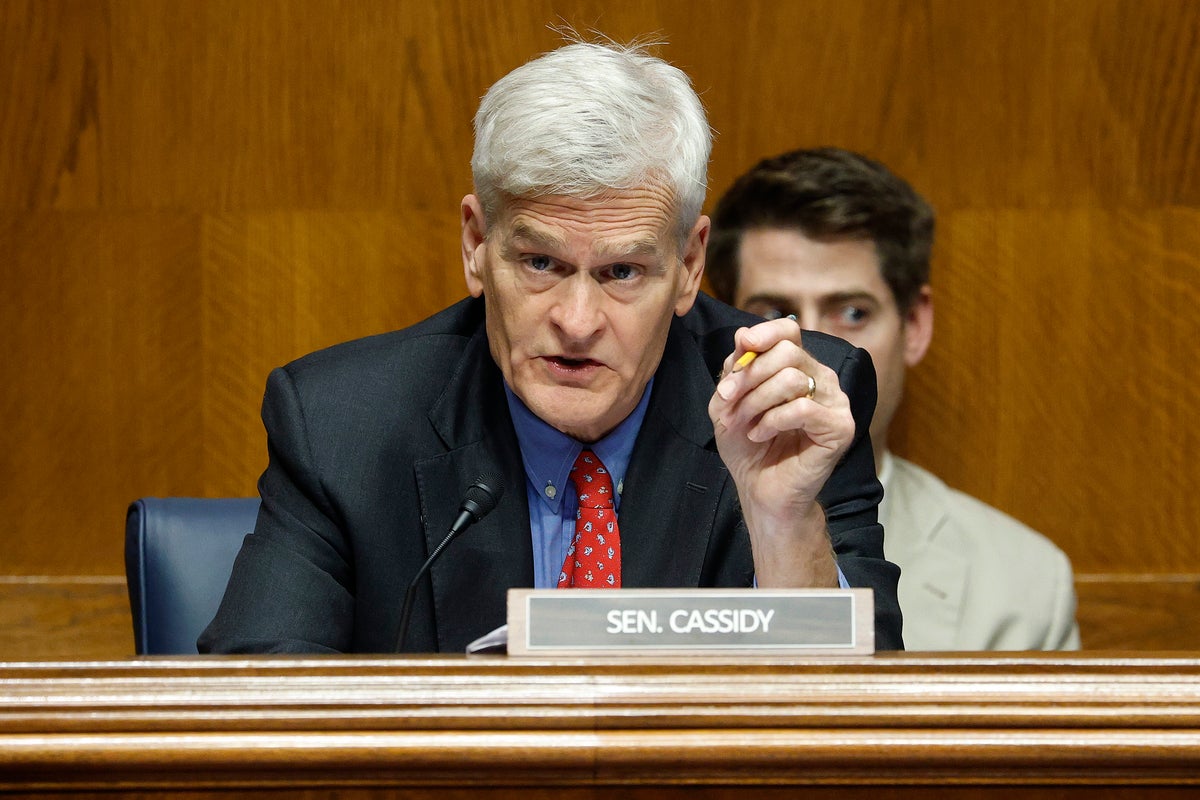
When Senator Bill Cassidy cast the decisive vote to confirm Robert F. Kennedy Jr. to lead the Department of Health and Human Services, he told anyone who would listen that he had secured the necessary guardrails. A physician by training, the Louisiana Republican positioned himself as a pragmatic gatekeeper. He argued that having an institutional skeptic inside the tent with administrative reins was preferable to leaving him untethered. It was a calculated risk that traded legislative capital for executive containment.
That transaction has collapsed entirely.
Months into an administration defined by escalating friction over immunization schedules, executive orders scaling back pediatric vaccine recommendations, and a fractured public health apparatus, Cassidy finds himself facing the logical outcome of his own calculus. Publicly lamenting that the commitments made to him have been violated offers little comfort to an American medical community watching decades of epidemiological consensus get dismantled from the inside. The political architecture that Cassidy helped construct is now actively working against the foundational science he spent his medical career practicing.
The Illusion of Containment
The core error of modern legislative compliance lies in the belief that an institutional extremist can be managed through private assurances. When the Senate Health Committee advanced Kennedy’s nomination, defenders whispered about internal oversight, bureaucratic friction, and the sobering realities of managing a massive federal agency. They assumed the sheer weight of the civil service would blunt the sharpest edges of an unconventional agenda.
Instead, the apparatus bent. Key advisory panels were overhauled, research priorities shifted away from critical prophylactic technologies, and messaging from the top tiers of health leadership began to systematically amplify long-disproven anxieties regarding routine immunizations. Cassidy’s premise—that a system with guardrails is inherently safer than one without—misunderstood the nature of executive power in a polarized environment. Guardrails only function if the person steering the vehicle respects the road.
The fallout materialized swiftly across institutional lines. When an executive order recently targeted the childhood vaccination schedule—advocating for the arbitrary reduction of standard inoculations and the fracturing of combined MMR doses—the separation between political rhetoric and clinical reality turned into an open chasm. Cassidy’s response, delivered via sharp public rebukes, highlighted the impotence of post-confirmation buyer's remorse. A senator can issue statements calling an order fundamentally wrong, but those statements carry diminished weight when that same senator provided the literal key that unlocked the executive door.
The Cost of Institutional Compromise
To understand why this friction matters beyond the Beltway, one must look at the mechanics of public trust. Epidemiology relies on a delicate chain of shared confidence between provider and patient. When federal health leadership entertains speculative theories about vaccines and autism—theories exhaustively debunked by decades of independent global research—that chain begins to fray.
Cassidy himself noted that building public health upon a foundation of falsehoods guarantees systemic failure. Yet his legislative maneuver directly enabled the architects of those very falsehoods to occupy the highest pulpits of health governance. The strategy of transactional confirmation treats cabinet posts like ordinary political appointments subject to standard horse-trading, ignoring the unique damage inflicted when health institutions lose their evidentiary compass.
Consider the downstream effects on state-level policy and pediatric care. While many states maintain independent vaccine requirements for schools and major medical associations continue to push back against federal interference, the mere existence of conflicting guidance from Washington creates administrative chaos. Pediatricians now spend precious appointment time combating misinformation originating from the very agencies designed to protect public welfare. Parents face a barrage of contradictory directives, forced to choose between the consensus of medical professionals and the proclamations of political appointees.
The Record Cannot Be Rewritten
Legislators often operate under the assumption that public memory is short, that a well-timed critique can erase the footprint of an earlier vote. But in matters of public health, legislative history leaves permanent scars. By choosing to prioritize party alignment and administrative leverage over a flat rejection of an unqualified nominee, the Senate health leadership tied its own hands.
The fallout extends far beyond one senator's political discomfort. It serves as a masterclass in the failure of institutional appeasement. When political actors compromise on foundational expertise to maintain a seat at the table, they usually discover they are no longer shaping the policy—they are merely providing cover for it.
The machinery of federal health policy now moves forward under a cloud of manufactured skepticism, leaving frontline physicians and state health departments to pick up the pieces. The warnings were clear before the confirmation votes were cast, rendering subsequent expressions of shock entirely hollow. The framework was built with legislative assistance, and the resulting vulnerability belongs entirely to those who signed off on the blueprint.


