The inflation ticker in Buenos Aires did not sound like a machine. It sounded like a heartbeat racing in an alleyway, accelerating until the chest burst.
Mateo stood behind the glass counter of his neighborhood bakery, wiping flour from hands that had worked the same dough for thirty years. Before him lay a cardboard sign with yesterday's prices, crossed out with a black marker. Beside it, the new sign. Always higher. Always by an impossible margin. A kilo of bread was no longer a breakfast staple; it was a numerical abstraction. By the time the sun hit the corrugated iron roofs of Villa Lugano, the money in Mateo’s cash register could buy fewer eggs than it had at dawn.
This was the quiet, grinding violence of modern Argentine economics. For decades, the population lived inside a permanent financial emergency, where savings evaporated overnight and politicians in suits spoke an alien language of fiscal targets while grocery store shelves grew bare. People were exhausted. Not just tired from long hours, but spiritually hollowed out by a system that seemed designed to steal their tomorrows.
Then came the man with the sideburns and the chainsaw.
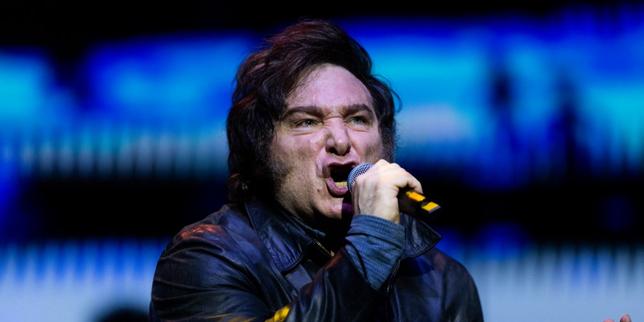
Javier Milei did not enter politics through the front door of polite debate. He kicked it off its hinges. To the international press, reading dispatches from air-conditioned newsrooms in Paris or Washington, he was an anomaly—an eccentric libertarian economist who shouted about Austrian school economics and waved a mechanical saw as a prop. They called him ultraliberal. They analyzed his talk show appearances, his wild hair, his academic papers on monetary theory.
They missed the point entirely.
Milei was not a political candidate in the traditional sense. He was a human shockwave. When he stood on a stage and roared against the casta—the entrenched political elite who had traded the country's future for party patronage—he was giving voice to the kitchen table conversations happening in millions of homes every single night.
Consider what happens when a society reaches the edge of despair. When the national currency becomes little more than colored paper, trust in institutions does not merely decline; it collapses into ash. In that vacuum, moderate reform feels like a cruel joke. If a house is burning down, you do not invite an architect to discuss the placement of new curtains. You want someone with an axe.
Milei provided the axe.
His rise was built on a precise alchemy of academic credibility and raw, unfiltered fury. Here was an economist who could quote Ludwig von Mises, yet spoke with the cadence of a stadium rock star swearing at the establishment. He diagnosed the rot of the Argentine peso not as a temporary glitch, but as the inevitable result of decades of printing money to feed an insatiable state machine. Burn the central bank, he urged. Dollarize the economy. Let the bloated ministries vanish.
To mainstream economists, these proposals were heresy, bordering on madness. To Mateo, watching his life's savings shrink to the price of a cup of coffee, they sounded like the only therapy left that might hurt enough to work.
Power, once seized by an outsider, is a different beast entirely from the performance of opposition. The roar of the campaign trail eventually gives way to the silent, suffocating reality of legislative arithmetic, judicial pushback, and the stubborn resistance of streets filled with union workers. Governing requires subtraction, but it also requires holding together a coalition of the desperate.
When the chainsaw started cutting, it did not miss flesh. Subsidies vanished. Public works froze. Prices for transport and utilities jolted upward to match a harsh, unmasked reality. Economists call this fiscal consolidation. For ordinary citizens, it meant calculating whether to pay for the bus or buy milk.
Yet, beneath the protests echoing down the Avenida de Mayo, something stranger persisted. A stubborn, bruised patience.
The phenomenon of Milei’s survival—and the quiet loyalty of those who voted for him—lies in a psychological truth that policy papers ignore. People can endure immense hardship if they believe the pain has a purpose, if they believe the arithmetic of their suffering finally connects to a real cause rather than the secret corruption of someone else's bank account. For generations, Argentines had suffered through austerity packages designed by technocrats who promised gradual recovery while protecting their own privileges. Milei offered no gentle transition. He offered a brutal, terrifying honesty: We are already ruined. Let us see if we can build on stone instead of quicksand.
History is rarely neat. It does not move in straight lines drawn by think tanks. It surges forward in waves of exhaustion and anger, reshaping nations not because the new path is guaranteed to be paradise, but because the old path became entirely unlivable.
In the back of the bakery, the fluorescent light flickered. Mateo turned off the register, locked the metal security gate, and looked out into the Buenos Aires night. The inflation figures for the month were coming out on television. They would be terrible. Everyone knew they would be terrible. But for the first time in a very long time, the sign he would write for tomorrow morning’s bread would not be based on a lie.
The chainsaw was still running, and the dust was everywhere.