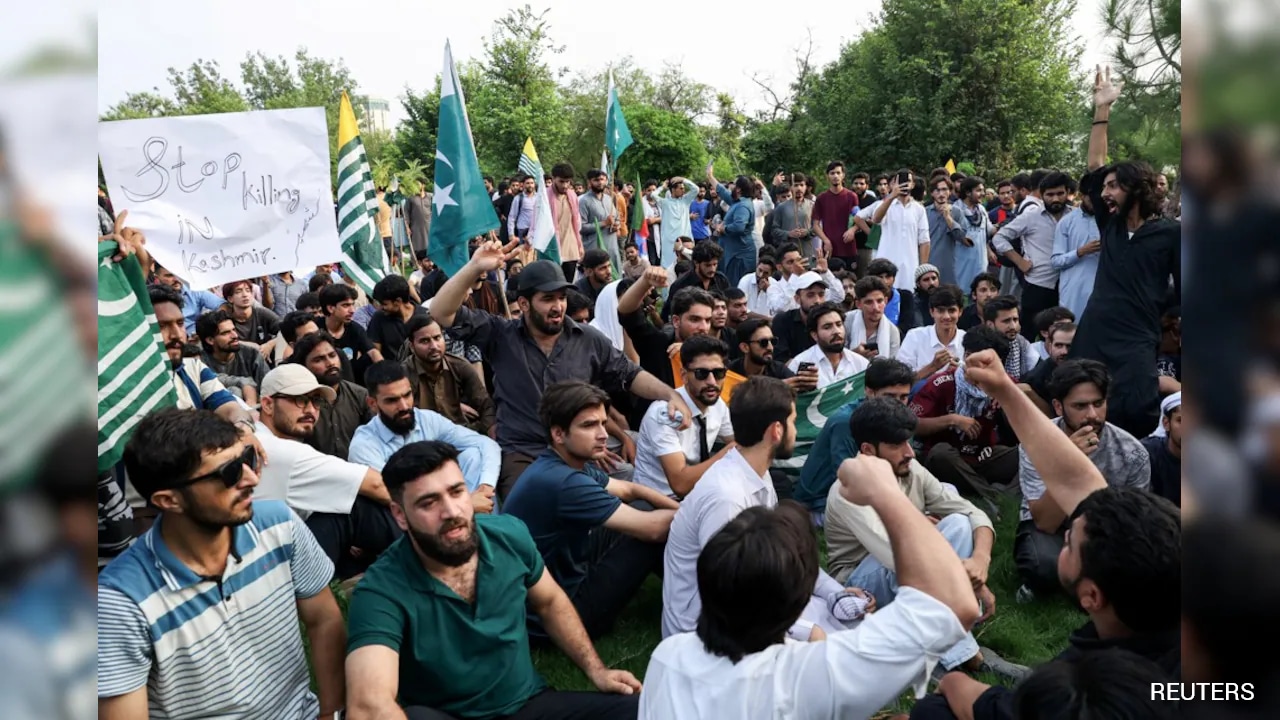
Civil unrest in Pakistan-administered Kashmir, locally designated as PoK, operates within a rigid matrix of structural economic dependency, fiscal mismanagement, and historical governance deficits. When regional populations mobilize under the banner of historical poetic symbolism, such as the invocation of Ram Prasad Bismil’s anti-colonial anthem Sarfaroshi Ki Tamannah, the phenomenon is frequently misinterpreted by external observers as a simple cultural outburst. A rigorous operational analysis reveals that poetry serves primarily as a compression algorithm for complex economic grievances. The deployment of revolutionary verse provides a standardized linguistic framework for a population experiencing acute structural strain, transforming fragmented complaints about resource allocation into unified political defiance.
The Economic Mechanics of Resource Extraction and Subsidy Dependency
To understand the friction points driving continuous protests in the region, one must examine the fundamental cost-return function governing local administration. The territory's primary economic output centers on hydroelectric power generation. Water resources originating within the administrative boundaries feed major downstream grid networks, yet the local population faces systemic supply restrictions, rolling blackouts, and tariff structures that fail to reflect local generation realities.
This dynamic creates an extractive economic model characterized by three distinct structural failures:
- Asymmetric Value Capture: The capital generated through energy production flows outward to national fiscal authorities, while the ecological and infrastructural costs of resource extraction remain localized.
- Fiscal Dependency Loops: Local governance structures rely on federal subventions rather than endogenous revenue generation, creating a vulnerability to macroeconomic shifts at the national center.
- Inflationary Pressures on Essentials: Subsidized commodities, particularly wheat and electricity, have faced repeated structural adjustment measures driven by national stabilization programs, directly eroding household purchasing power.
When the federal government attempts to rationalize subsidies to meet external debt obligations, the cost is immediately borne by consumers in peripheral regions. The resulting demonstrations are not erratic emotional responses; they are rational supply-and-demand reactions to sudden increases in the cost of living coupled with perceived resource expropriation.
Information Control and the Mechanics of State Suppression
The state response to regional agitation follows a predictable sequence of intervention protocols designed to suppress network coordination. Because modern protest movements rely on digital infrastructure for mobilization and situational awareness, administrative authorities routinely deploy kinetic and digital countermeasures.
The Network Disruption Cascade
When decentralized protests threaten critical administrative nodes, the state initiates a graduated containment strategy:
- Bandwidth Throttling: Initial containment involves reducing cellular data speeds to degrade real-time video transmission and coordinate logistics.
- Infrastructure Blackouts: Total communication shutdowns are enforced during peak mobilization periods to sever the feedback loop between physical crowds and digital amplification.
- Kinetic Interdiction: Paramilitary deployment focuses on securing arterial transport routes, establishing checkpoints, and enforcing curfews to isolate urban centers.
This technological and physical friction increases the transaction costs of organizing collective action. However, it simultaneously hardens the resolve of the populace by validating local narratives of systemic marginalization and administrative bad faith.
The Role of Cultural Signifiers in Decentralized Mobilization
The invocation of historical figures and revolutionary literature from the broader South Asian anti-colonial movement warrants operational scrutiny. In decentralized movements lacking a unified institutional leadership structure, cultural artifacts function as decentralized coordination protocols.
When protesters adopt verses originally written against British colonial rule, they achieve three distinct strategic objectives:
- Legitimacy Transfer: The moral weight of historical resistance is imported into current contemporary grievances, framing local administrative disputes as fundamental struggles for sovereignty and dignity.
- Ideological Interoperability: Standardized slogans bypass linguistic and factional divides within the protest movement, allowing disparate interest groups—ranging from trade unions to student organizations—to operate under a unified banner.
- Asymmetric Deterrence: Framing the movement through universally recognized cultural heritage raises the reputational cost for the state if it applies excessive kinetic force.
The deployment of these cultural tools signals a transition from passive discontent to active political framing. The population no longer petitions the state for minor welfare adjustments; instead, they challenge the foundational legitimacy of the administrative compact.
Strategic Trajectory and the Risk Calculus for Central Authorities
The persistence of structural friction in the region establishes a permanent risk premium for the central government. Traditional containment strategies—relying on short-term financial bailouts, localized concessions, and temporary communication blackouts—fail to address the underlying solvency crisis of the regional administration.
National policymakers face a narrow decision space defined by competing constraints:
- Fiscal Constraints: Expanding permanent subsidies to appease peripheral regions violates the stabilization parameters dictated by international lenders.
- Security Constraints: Maintaining heavy military and paramilitary footprints drains national resources and deepens local alienation.
- Political Constraints: Granting structural fiscal autonomy risks creating a precedent for other marginalized territories within the federation.
The resolution of this dynamic requires a fundamental restructuring of the fiscal relationship between the center and the periphery, moving away from extractive resource models toward equitable revenue-sharing agreements. Until such structural reforms are implemented, the underlying drivers of civil unrest will remain active, ensuring that historical verse continues to find contemporary resonance in the streets.