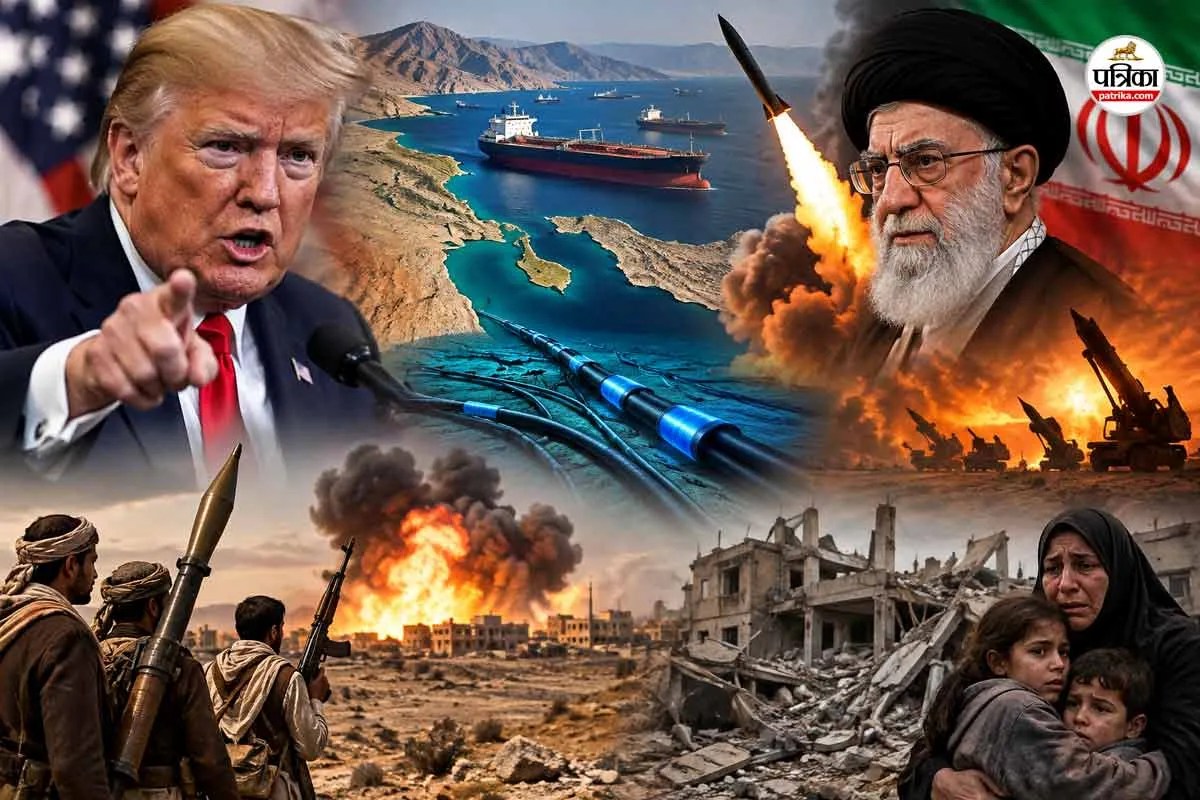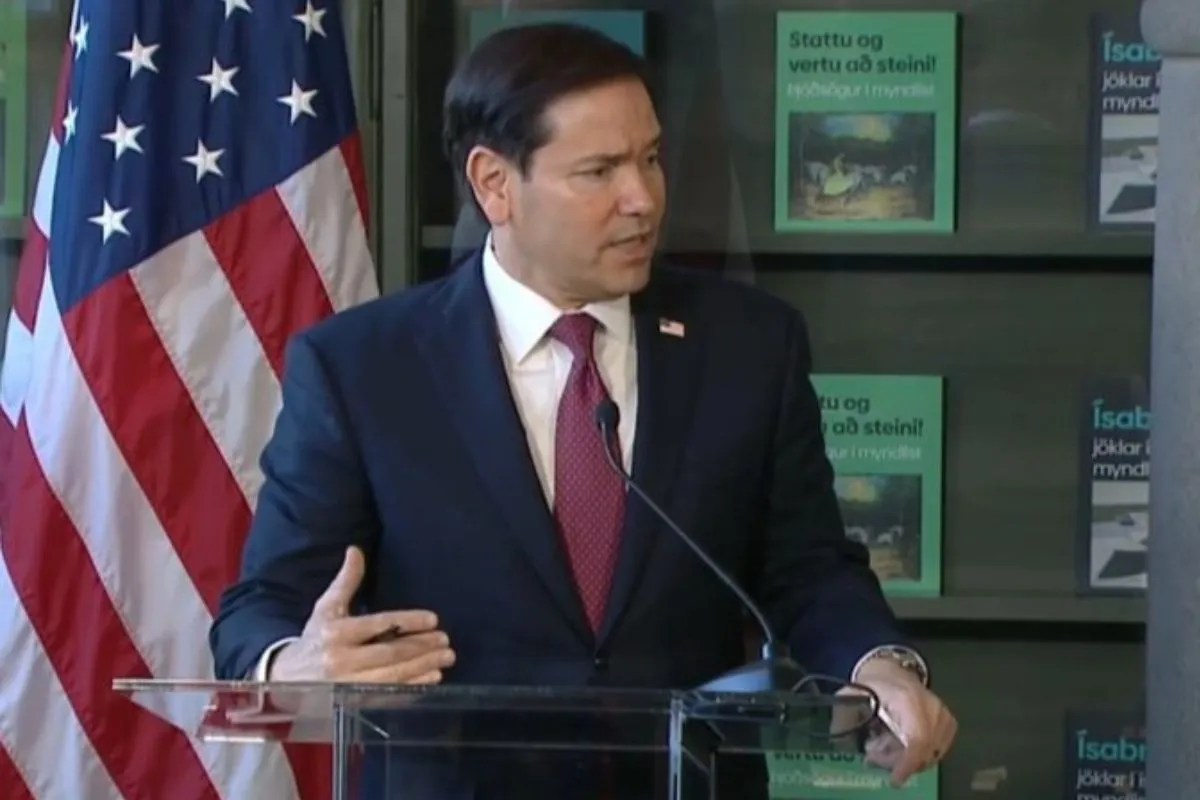
Diplomatic rhetoric declaring a rival's economy in freefall often mistakes naval blockade visibility for permanent fiscal collapse. When US Secretary of State Marco Rubio frames American naval pressure around the Strait of Hormuz as locking Tehran out of oil revenues while restoring transit flows, analysts need a sharper instrument than headline claims. The core question behind this standoff is whether maritime interdiction and financial enforcement can sever a rent-dependent state's fiscal lifeline without triggering asymmetric retaliation that raises global energy costs for everyone.
A rigorous examination of this confrontation requires separating three distinct layers of power: physical maritime control at the chokepoint, port-level financial and naval interdiction, and internal macroeconomic adaptation inside Iran. Standard commentary frequently collapses these layers into a single binary—either the strait is open or closed, and either Iran's budget breaks or holds. In practice, each layer operates on a different clock and responds to different incentives.
Deconstructing the Standard Headline Narrative
Competitor reporting around statements such as "Strait of Hormuz पर अमेरिका का शिकंजा, ईरान की तेल कमाई पर लगा ताला? अमेरिकी विदेश मंत्री मार्को रुबियो ने किया दावा" typically relies on a linear chain of assertions: Washington applies maritime and sanctions pressure, transit or export flows shift, and Tehran faces imminent economic ruin. That framing captures the political theater of coercive diplomacy, yet it leaves out the structural mechanics that determine whether pressure translates into strategic concessions.
Three analytical blind spots weaken standard coverage of this dispute:
- Equating transit recovery with sea-lane security: Official claims that oil flows approach pre-conflict levels on certain nights do not eliminate residual mine or interdiction risk. Shipping insurance, war-risk premiums, and routing decisions react to tail risk and incident frequency, not isolated transit nights.
- Treating export blockades as instantaneous budget death: Cutting off or restricting seaborne crude sales squeezes state hard-currency receipts, yet fiscal survival depends on domestic tax extraction, central bank liquidity buffers, subsidized domestic pricing, and non-oil trade channels.
- Ignoring asymmetric chokepoint coupling: The Strait of Hormuz is not merely an Iranian exit lane; it is a regional conduit carrying roughly one-fifth of global petroleum and liquefied natural gas exports, with heavy import exposure across Asian markets. Coercion that destabilizes transit imposes external costs on third-party buyers and regional producers alike.
To evaluate what is actually happening, the dispute must be mapped as a two-sided coercion game where naval force, sanctions enforcement, and asymmetric maritime denial interact.
The Three Pillars of Maritime and Revenue Coercion
Coercive leverage in a contested waterway rests on three operational pillars. Each pillar alters a different part of the target state's cost-benefit calculation.
Physical Chokepoint Denial Versus Counter-Blockade
At the tactical level, maritime conflict around the Strait of Hormuz pits sea-lane protection and counter-blockades against asymmetric denial. Naval mines, coastal missiles, fast-attack craft, and threats to commercial vessels create friction even without continuous fleet-on-fleet engagements. Conversely, naval blockades or patrols targeting ports, terminals, and offshore transfers aim to choke off physical loading and maritime logistics.
Physical presence alone does not guarantee frictionless commerce. Commercial operators weigh hull safety, crew welfare, salvage capacity, and insurer coverage. Even when naval forces escort or deter major escalations, localized incidents or mine warnings can cause sudden schedule disruptions and freight spikes.
Financial Interdiction and Revenue Repatriation
Exporting crude oil is only half of the revenue equation; repatriating and converting proceeds into usable fiscal or import purchasing power is the second half. Sanctions enforcement and maritime interdiction target multiple links in that chain simultaneously:
- Vessel and transfer visibility: Monitoring port departures, automatic identification transponders, and ship-to-ship transfers at sea raises the operational cost of moving covert barrels.
- Payment clearing and currency conversion: Restricting correspondent banking, shadow clearing routes, and hard-currency access limits how easily export earnings finance imports or state outlays.
- Discounting and intermediary margins: When buyers face legal or physical risk, cargoes typically sell at steeper discounts or absorb higher middleman fees, shrinking net state capture per barrel even when some volume moves.
Domestic Macroeconomic Absorption
When external revenue tightens, the target economy absorbs the shock through inflation, currency depreciation, import compression, and fiscal reprioritization. High inflation and currency erosion act as an implicit tax on households and fixed-income earners while straining state payrolls and subsidies.
Yet states under prolonged sanctions rarely collapse overnight if they retain core administrative control, domestic energy production for internal use, and contingency budget planning. Rather than an abrupt cliff, pressure often produces grinding stagflation, delayed public investment, and heightened political bargaining inside the ruling coalition.
The Cost Function of Economic Pressure Versus Military Escalation
Policymakers weigh economic coercion against direct military strikes using an implicit cost function. In strategic terms, Washington has articulated a preference for achieving policy objectives through economic pressure rather than open-ended military escalation, while keeping diplomatic channels conditional on core security demands.
Consider the trade-offs between the two instruments:
- Direct military strikes carry immediate escalation risks, potential allied exposure across the region, and high political and operational costs if objectives remain ambiguous or incomplete.
- Naval blockades and sanctions enforcement apply sustained financial and logistical strain over months, but they test domestic endurance, diplomatic cohesion, and enforcement stamina over time.
- Diplomatic off-ramps depend on whether pressure shifts negotiating positions or hardens resistance around non-negotiable red lines such as nuclear constraints and regional security terms.
The central vulnerability of a prolonged standoff is attrition fatigue. A strategy built on economic strangulation works best when the coercer's coalition remains united, enforcement loopholes stay narrow, and the target's fiscal cushion erodes faster than its political cohesion. If enforcement leaks through alternative routes or third-party trade, or if energy price shocks alienate partners dependent on Gulf shipments, coercive leverage loses sharpness.
Cause-and-Effect Chains Most Coverage Misses
Surface reporting often treats diplomatic statements as proof of settled outcomes. Tracing second- and third-order effects reveals why the reality is more contested.
Why "Open Strait" Claims Do Not Equal Risk-Free Markets
Suppose transit volumes rebound during quieter windows. Commercial shipping markets still price the probability of renewed mining, drone or missile threats, or sudden maritime restrictions. A single strike or mine incident near a major shipping lane can reset risk premiums across the entire Persian Gulf. Thus, physical passage and market confidence decouple easily: vessels may move while freight and insurance costs remain elevated.
How Export Restrictions Reshape Bargaining Inside Tehran
When oil revenues face severe compression, internal debates inside Tehran shift from routine budget allocation to survival triage. Scenario planning for low- or near-zero oil budgets forces choices between protecting security apparatus funding, maintaining basic food and fuel subsidies, or conceding diplomatic ground. That pressure can create factions favoring negotiated relief alongside hardliners demanding strict conditions or prolonged resistance. External pressure alone does not dictate which faction prevails; internal governance incentives mediate the outcome.
Why Third-Party Energy Buyers Shape the Standoff
Because a large share of crude and liquefied natural gas transiting the Strait of Hormuz flows toward Asian economies, prolonged maritime friction acts as a global supply-chain tax. Importing nations face higher energy bills, balance-of-payments strain, and industrial cost pressure whenever transit is threatened or restricted. Over time, affected importers have strong incentives to push for de-escalation, alternative supply sourcing, or diplomatic settlement—creating diplomatic cross-currents that Washington and Tehran must both manage.
Tactical Framework for Tracking Real Leverage
To cut through official spin and sensational headlines, analysts and commercial decision-makers should track concrete operational indicators rather than rhetoric.
- Audit physical export and transfer anomalies: Monitor port loading patterns, anchorage queues, and offshore ship-to-ship transfer activity rather than relying solely on diplomatic characterizations of blockade effectiveness.
- Separate gross volume from net repatriated value: Track currency exchange rate behavior, domestic inflation prints, and liquidity indicators alongside export estimates to see how much revenue actually reaches state coffers.
- Watch maritime risk pricing: Follow war-risk insurance adjustments, rerouting behavior, and incident reports around regional waterways to gauge true commercial confidence.
- Track negotiating preconditions and diplomatic signals: Compare public bargaining conditions from both sides against quiet backchannel or regional mediation activity to distinguish posturing from genuine movement.
Limitations and Blind Spots of This Framework
No analytical model is immune to sudden shocks or opaque data. Exact figures on covert oil transfers, shadow banking clearing, and internal state reserves are rarely verified in real time, requiring analysts to rely on ranges, proxies, and mechanism analysis rather than false precision. Furthermore, an unexpected military escalation, a domestic political rupture, or a sudden diplomatic breakthrough can overturn baseline assumptions faster than incremental indicators update.
Strategic Play for Decision-Makers
Treat diplomatic claims of economic collapse or maritime mastery as bargaining positions, and anchor decisions to verified flows, currency stress, and transit risk indicators. For commercial operators and energy planners, the highest-value move is to stress-test supply chains, freight budgets, and working-capital buffers against intermittent chokepoint friction and currency volatility across a prolonged "no war, no peace" stalemate rather than betting on an immediate, tidy resolution.