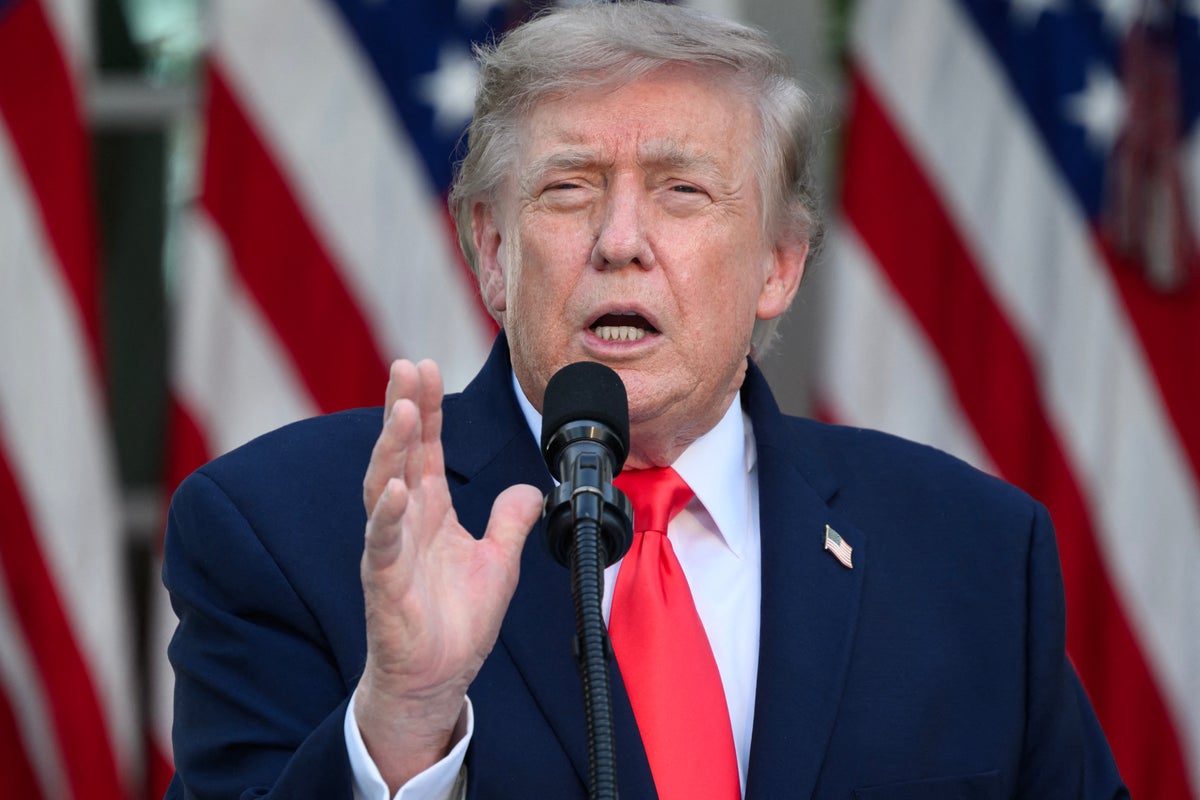
The television hums in a dimly lit living room in Ohio. A retired factory worker sits in his favorite armchair, checking his phone while a cable news anchor drones on in the background. On the screen, a familiar face stands at a podium, leaning into the microphone with absolute, unshakable certainty. He proclaims that his approval rating has soared to sixty-five percent.
The man in the armchair blinks. He wants to believe it. It feels good to hear. It feels like winning. But deep down, a quiet, uneasy question creeps in: Where did that number actually come from?
Numbers possess a strange, almost mystical power over the human psyche. We treat them as objective anchors in an otherwise chaotic world. When a temperature reads ninety degrees, we sweat. When a bank account hits zero, we panic. We are hardwired to trust digits because they feel immune to human bias. But in the modern political arena, numbers are no longer just measurements. They are weapons. They are stories told to reshape reality itself.
The disconnect between political rhetoric and statistical reality is not just a math problem. It is a psychological drama that plays out daily in millions of households, altering how we view our neighbors, our country, and the truth itself.
The Magic of the Made Up Metric
Imagine walking into a local diner. The owner steps out from behind the counter, smiles warmly, and announces that nearly two-thirds of the town absolutely loves his new meatloaf recipe. You look around the room. Half the booths are empty. The people who are eating seem to be picking at their plates. A few are openly grimacing.
If you ask the owner which survey he is relying on, he merely waves a hand vaguely toward the kitchen and says, "Everyone knows it. The numbers are historic."
This is precisely what happened when Donald Trump repeatedly boasted of a sixty-five percent approval rating. It was a beautiful, soaring figure. It suggested an overwhelming, unifying mandate—a nation marching in lockstep.
There was only one problem. The math did not exist.
During the entire period in question, major non-partisan polling organizations—from Gallup to Pew Research, from conservative-leaning outlets like Rasmussen to liberal-leaning academic institutions—were all tracking the exact same national pulse. None of them showed an approval rating anywhere near sixty-five percent. In fact, the averages stubbornly hovered in the low forties, occasionally dipping into the high thirties or climbing into the mid-forties.
To bridge a gap that wide requires more than a simple rounding error. It requires a fundamental re-engineering of how we define truth.
Why We Crave the Illusion
To understand why a leader would manufacture a statistic so easily disproven, you have to look past the politician and look at the voter. Why do we buy into it?
Human beings are profoundly uncomfortable with ambiguity. We hate feeling isolated. There is an evolutionary safety in numbers; the herd keeps us warm and protects us from predators. When a political figure creates a fictional supermajority, they are not just trying to trick the opposition. They are offering an emotional blanket to their supporters.
Consider a hypothetical voter named Sarah. She lives in a suburb where political tensions run high. Her neighbors have different lawn signs than she does. Thanksgiving dinners with her extended family have become minefields of forced silence. It is exhausting. It feels lonely.
Then, she hears the number: sixty-five percent.
Instantly, Sarah’s world changes. She is no longer part of a embattled, defensive faction. She is part of the grand majority. The people disagreeing with her are suddenly cast as an eccentric, out-of-touch minority. The number validates her choices, soothes her anxieties, and silences her doubts. The psychological relief is so intoxicating that she forgets to ask for the source.
This is the hidden currency of modern politics. Leaders do not just trade in policy; they trade in reassurance. A fabricated statistic is a highly effective tool for generating instant compliance and fierce loyalty, even if its shelf life is dangerously short.
The Invisible Stakes of the Data Wars
When we treat statistics like fiction, we lose something vital. Polling, for all its flaws and historical missteps, was invented to give the public a voice between elections. It was designed to be a mirror held up to the nation, showing leaders what the people truly needed, feared, and desired.
When that mirror is smashed and replaced with a painted portrait, the democratic conversation breaks down.
Think of a pilot flying through a heavy storm. The instruments on the dashboard are flickering. The co-pilot looks out the window, sees nothing but gray fog, and says, "Don't worry, my gut tells me we are at twenty thousand feet and the sun is shining."
You would not want to be on that plane. Yet, we allow our political discourse to operate on precisely that level of wishful thinking.
When a leader claims a mandate they do not possess, it changes how they govern. They stop seeking compromise because they believe the country is already entirely behind them. They dismiss opposition not as a legitimate difference of opinion, but as a fringe conspiracy against the will of the people. The middle ground disappears, swallowed whole by a number that never was.
The Hard Work of Staying Grounded
Skeptical thinking is exhausting. It takes time to cross-reference headlines, to look up methodology, to check if a sample size was robust or if the questions were biased. It is much easier to just let the headlines wash over us, accepting the ones that make us feel good and rejecting the ones that sting.
But the moment we stop checking the math is the moment we surrender our agency.
The true danger of the sixty-five percent claim is not that it misled people for a few news cycles. The danger is that it chips away at the very idea that an objective truth exists. If one side can choose its own gravity, the other side will eventually do the same. Soon, we are no longer living in the same country; we are living in parallel realities, shouting across an unbridgeable void.
Back in that Ohio living room, the television screen flashes to a commercial. The retired factory worker sets his phone down on the side table. He looks out the window at the street below, where cars are passing and neighbors are walking their dogs in the fading evening light.
The world outside is quiet, complicated, and entirely unquantifiable by a single boast. It is a place of nuance, where people cannot be neatly divided into clean, fictional majorities. And it is only by stepping out of the illusion of the perfect number that we can begin to see each other clearly again.