The confirmation by the Knesset that Israel will hold its next general election on October 27, 2026, marks the first time since 1988 that a legislative session will conclude on its legally mandated timeline without premature dissolution. Beneath the veneer of democratic continuity lies a highly calculated exercise in structural preservation. By bypassing the introduction of a Knesset Dissolution Law ahead of the July 17 parliamentary recess, the governing coalition has neutralized the near-term risk of an unintended collapse. This decision shifts the political battlefield from speculative parliamentary maneuvers to a multi-variable calculus of voter sentiment, defense liabilities, and coalition mechanics.
Understanding the upcoming election requires stripping away rhetorical posturing and analyzing the precise mechanisms keeping the current government intact, the structural headwinds facing Prime Minister Benjamin Netanyahu, and the baseline mathematics of the Israeli electoral system.
The Tri-Border Coalition Incentive Structure
The durability of the 25th Knesset defies a modern history defined by volatile, short-lived governments. This structural persistence can be mapped through three distinct operational incentives that bind the ruling parties together.
- The Depleted Alternate Option Matrix: Under Israel’s nationwide proportional representation framework, a coalition requires a minimum of 61 seats in the 120-member Knesset to govern. For the nationalist and ultra-Orthodox factions—specifically Shas, United Torah Judaism, Otzma Yehudit, and the Religious Zionist Party—the current alignment represents an optimal policy-enforcement vehicle. Current polling trends indicate that any alternative coalition formation would likely depend on centrist or Arab-led factions, effectively shutting these conservative parties out of executive influence. This reality forces internal discipline despite profound ideological friction.
- The Legislative Pipeline Runway: The period leading up to the July 17 recess functions as a high-velocity legislative window. The coalition is driving a sequence of structural bills designed to secure structural concessions for its core voter bases before candidate lists lock on September 7. Dissolving the parliament early would have frozen these initiatives, stripping parties of tangible legislative deliverables to show their constituents.
- The Executive Preservation Buffer: Facing an ongoing criminal trial and severe public blowback over the catastrophic intelligence failures of October 7, 2023, the Prime Minister relies on his executive position as a primary shield. Maintaining office grants substantial control over the state apparatus and delays structural reckonings, such as a formal, independent state commission of inquiry into the defense breakdowns.
The Strategic Shift: Pivoting from Ideology to National Unity
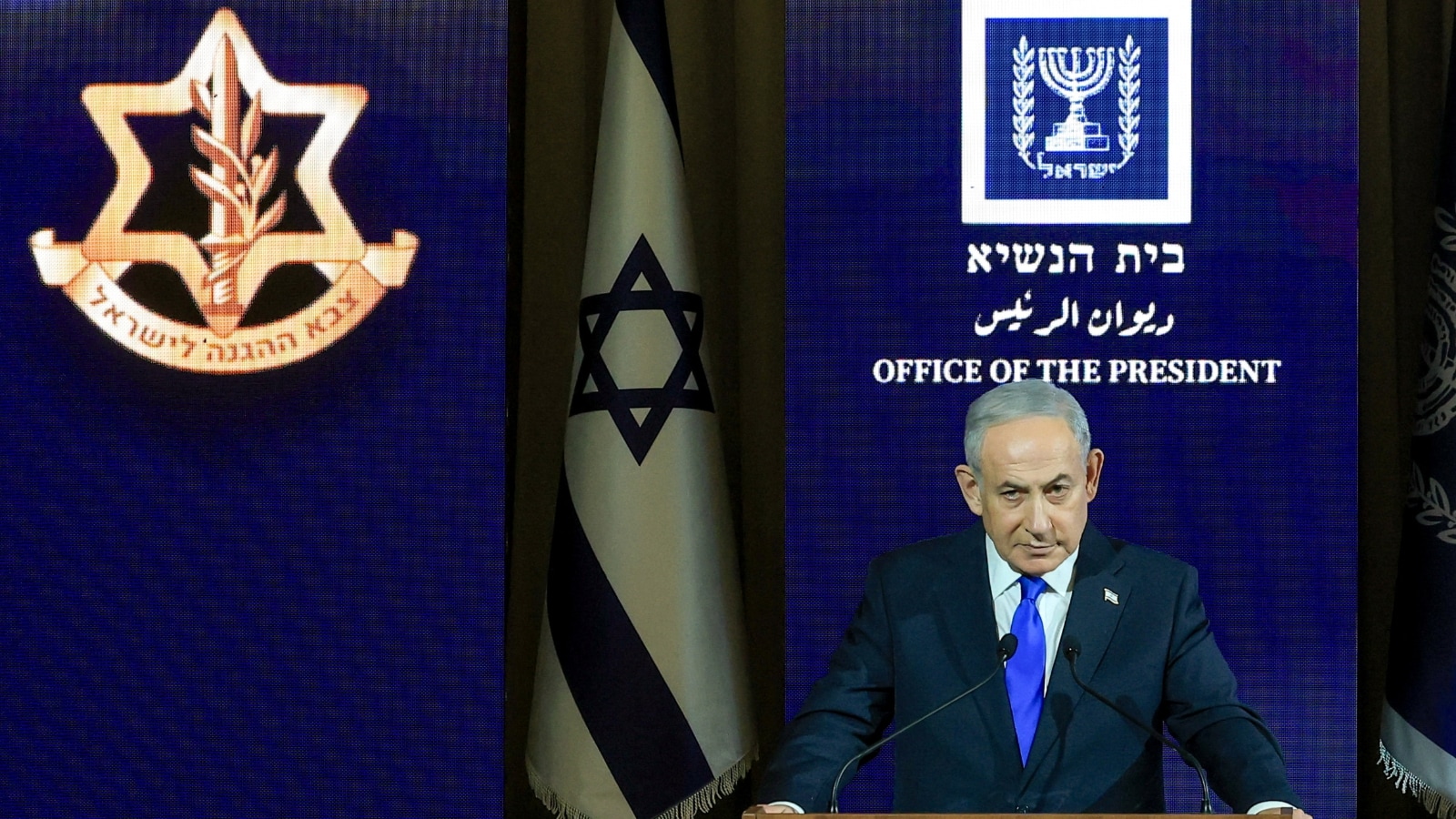
Netanyahu’s public declaration that he intends to build a "broad national government" rather than an ideologically uniform right-wing or left-wing administration marks an abrupt departure from his 2022 campaign playbook. This strategic adjustment is a direct response to a severely degraded polling baseline.
Data from the Hebrew University of Jerusalem and recent network polls highlight a stark reality: public confidence plunged throughout the first half of 2026, driven largely by dissatisfaction with the U.S.-backed ceasefire that halted direct military confrontations with Iran in late February. With a significant portion of the electorate viewing the diplomatic outcome as unfavorable, Netanyahu can no longer run purely on a platform of total security dominance.
The pivot toward a national unity narrative serves two structural functions. First, it attempts to neutralize his primary challenger, former Israel Defense Forces Chief of Staff Gadi Eisenkot, whose surge in popularity is built on a reputation for pragmatic, non-partisan security management. Second, it offers an escape hatch from the rigid demands of his current far-right partners.
This strategy faces immediate pushback from inside his own circle. National Security Minister Itamar Ben Gvir has publicly flagged the unity rhetoric as highly problematic, demanding instead a continuation of a fully right-wing governance model. This internal tension highlights the central paradox of Netanyahu's campaign: he must project a message of broad national unity to reclaim the center-right voters he lost, all while maintaining the day-to-day allegiance of ideological hardliners to keep his current government from collapsing before October.
Three Structural Bottlenecks to Coalition Preservation
While the setting of the election date ensures a predictable timeline, the coalition faces three structural variables capable of disrupting its electoral arithmetic.
1. The Defense Manpower Cost Function
The most immediate internal threat stems from the structural requirement to reform military conscription exemptions for the ultra-Orthodox (Haredi) community. Decades of legal exemptions have collided with a severe operational reality: prolonged conflicts across Gaza, Lebanon, and Iran have overextended the Israel Defense Forces' manpower reserves. The secular and nationalist-secular public, alongside the military high command, is demanding broader conscription to rebalance the defense burden.
[Haredi Draft Exemptions] ---> Threatens Coalition Collapse (Shas/UTJ Exit)
[Broad Conscription Demands] -> Threatens Electorate Backlash & Military Strain
This creates a zero-sum bottleneck. If the coalition passes an exemption bill to satisfy United Torah Judaism and Shas, it risks severe backlash from the broader electorate and its own nationalist elements. If it enforces a mandatory draft, the ultra-Orthodox parties have vowed to break the government apart.
2. The Asymmetrical Opposition Matrix
The primary structural challenge for the opposition is the lack of a unified command structure. Channel 12 and Channel 13 projections indicate a fragmented distribution of seats, with Likud and Eisenkot’s Yashar party locked in a close race around 23 seats each.
The opposition is a fragile coalition spanning the secular right (Yisrael Beiteinu), centrist formations (Yashar, Blue and White), left-leaning factions (The Democrats), and Arab joint lists. Because several of these factions hold incompatible views on territorial defense and state-religion relations, constructing a cohesive 61-seat alternative remains highly complex, even if the current ruling bloc falls short of a majority.
3. The Economic Deficit Friction Point
The prolonged, multi-front military campaigns have disrupted Israel’s macroeconomic stability, forcing sovereign credit downgrades and driving up defensive expenditures. The next government will immediately confront an aggressive fiscal consolidation cycle. The need to slash discretionary spending and reallocate capital away from sectoral coalition payouts toward the defense budget will test the cohesion of any prospective governing alliance.
The Final Play
The October 27 election will not yield a clean, binary outcome. Instead, the data points toward a protracted post-election coalition-building phase characterized by intense horse-trading.
Netanyahu’s optimal move is to leverage the lack of a unified opposition leader to peel away centrist factions under the banner of regional security stabilization, specifically pointing to ongoing diplomatic maneuvers with Lebanon and containment strategies against Iran's proxy network. The opposition’s success hinges entirely on their ability to consolidate around a single candidate—likely Eisenkot—and present a coherent, uniform policy on the ultra-Orthodox draft that flips traditional coalition dynamics.
Ultimately, the election will be won or lost on defense manpower mathematics and economic stabilization plans, not ideological purity.


