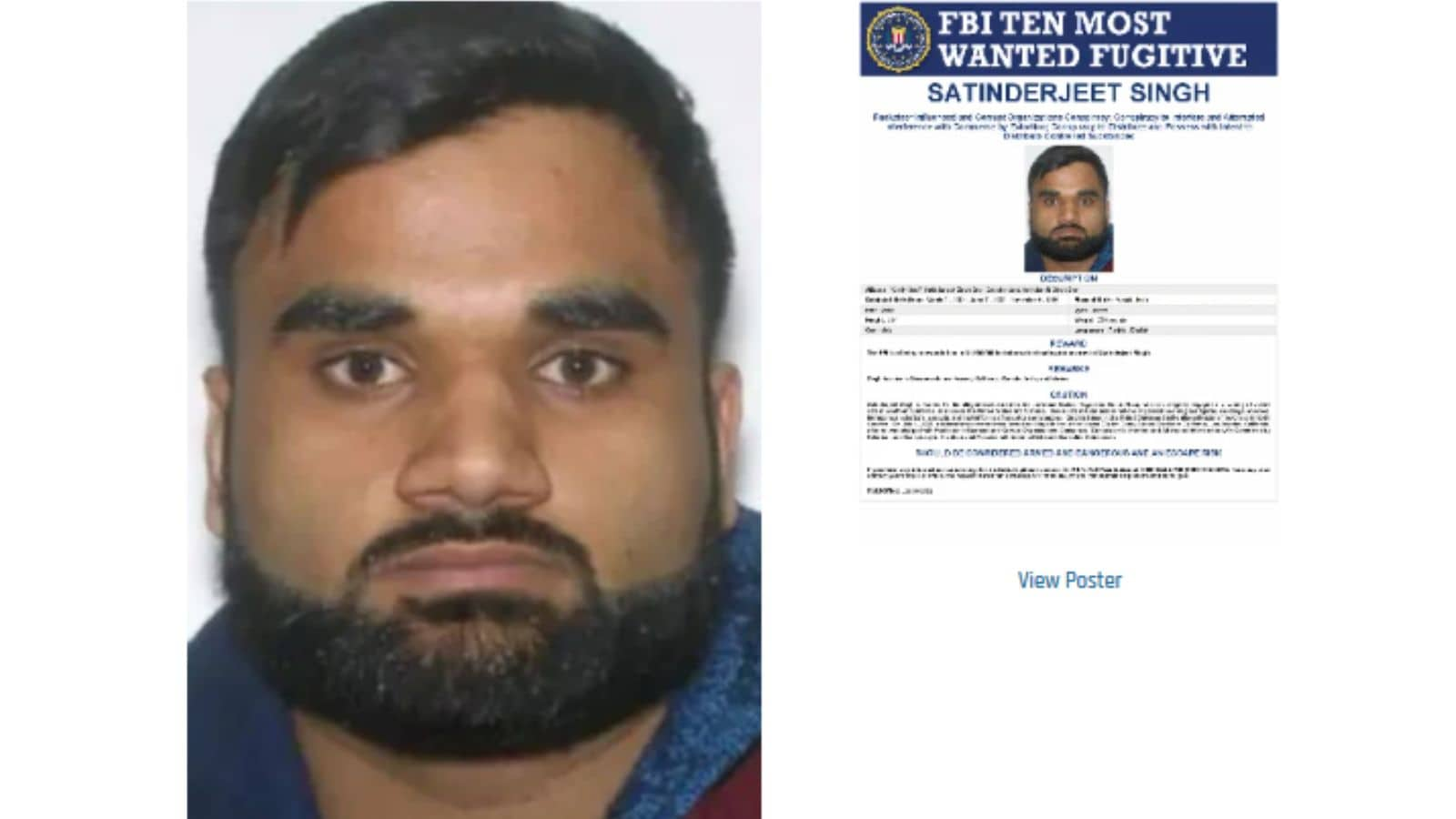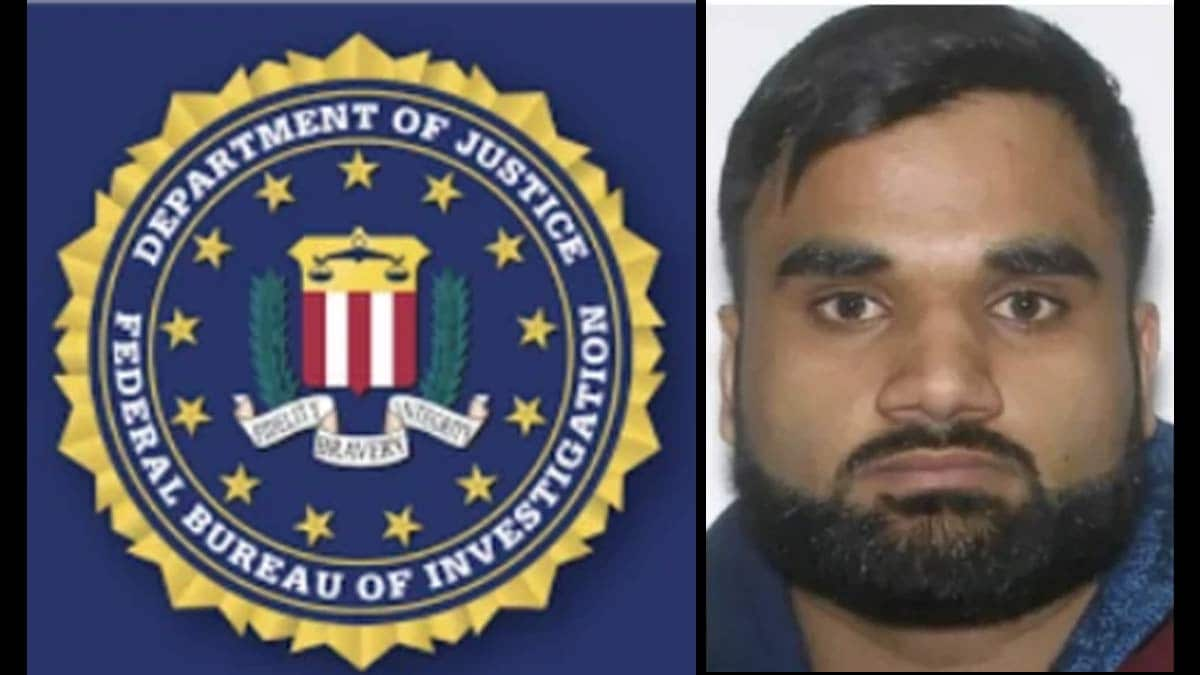
Satinderjeet Singh, universally known as Goldy Brar, did not sneak onto the Federal Bureau of Investigation’s Ten Most Wanted Fugitives list by operating in the traditional shadows of organized crime. When the FBI attached a USD 1 million bounty to his name, it marked a profound shift in how transnational syndicates operating out of South Asia intersect with Western law enforcement. Brar, an alleged leader of the Lawrence Bishnoi criminal enterprise, transitioned from a regional gang figure in Punjab to a transnational security headache spanning North America.
The mechanics of how a fugitive reaches the Bureau's premier wanted registry involve a convergence of federal indictments, racketeering charges, and intense geopolitical scrutiny. Federal prosecutors in the Central District of California tied Brar to extensive racketeering conspiracy, extortion, and narcotics distribution. But the escalation from a standard international warrant to a seven-figure bounty highlights an uncomfortable reality for security agencies. Modern criminal networks do not respect borders, utilizing encrypted communications, diaspora networks, and localized proxies to project lethal force thousands of miles away from their origin points. Meanwhile, you can find similar developments here: Inside the Alberta Separatism Debate and the Dangerous Illusion of Political Bluffs.
The Transnational Architecture of Modern Syndicates
Traditional organized crime models relied on localized hierarchies, physical territories, and predictable revenue streams like protection rackets within specific city blocks. The Bishnoi syndicate, through figures like Brar, operates on a networked franchise model. Brar relocated to Canada on a student visa years prior, maintaining command loops back to South Asia while simultaneously establishing operational depth across North American soil.
This structure creates an investigative nightmare for domestic agencies. When a syndicate can order a targeted hit or run an extortion ring spanning multiple continents via cellular applications, conventional policing models fail. Local police departments lack the jurisdictional reach, and federal intelligence agencies are often siloed. Brar's indictment under Racketeer Influenced and Corrupt Organizations (RICO) statutes was the U.S. government's attempt to legalistically rope together disparate acts of violence, financial coercion, and narcotics trafficking into a single, prosecutable enterprise. To explore the bigger picture, check out the recent article by TIME.
Beyond the Headlines: The Geopolitical Undercurrents
The spotlight on Brar intensified following high-profile assassinations and cross-border security friction that drew the attention of intelligence apparatuses in both New Delhi and Ottawa. Court filings and federal disclosures linked the syndicate's operational scope to high-stakes political violence, including investigations touching on the killing of activist Hardeep Singh Nijjar in British Columbia.
When criminal syndicates begin functioning as proxy enforcement arms or overlapping with geopolitical flashpoints, they cease to be ordinary domestic crime problems. They transform into national security threats. The decision by U.S. authorities to elevate the bounty to USD 1 million is a direct financial inducement designed to fracture the loyalty within Brar's immediate circle. In the underworld, a million-dollar price tag converts every associate, safehouse landlord, and courier into a potential informant.
The Limits of Bounties in the Digital Era
Yet, throwing capital at a manhunt has diminishing returns when dealing with digital-native fugitives. Historical precedents show that high-value targets survive by compartmentalizing their movements and relying on ideologically motivated or financially dependent protection networks. Brar has weathered persistent rumors of his demise—such as unverified reports of a fatal shooting in Fresno, California, which local police later debunked—demonstrating how easily misinformation shields a high-value target in sprawling North American suburbs.
A million-dollar reward generates thousands of tips, ninety-nine percent of which are noise that strains investigative bandwidth. Intelligence analysts must sift through a deluge of fabricated sightings, retaliatory tips from rival factions, and dead-end leads. The true value of the FBI's public escalation is not immediate capture through a civilian tip, but the legal and diplomatic pressure it places on foreign partners to close safe havens.
As federal prosecutors prepare their case against the broader network, the pursuit of Brar serves as a stress test for international extradition treaties and cross-border intelligence sharing. The net is undeniably tighter, but until the digital infrastructure supporting these transnational syndicates is systematically dismantled, the playbook pioneered by figures like Brar will continue to challenge the architecture of global justice.