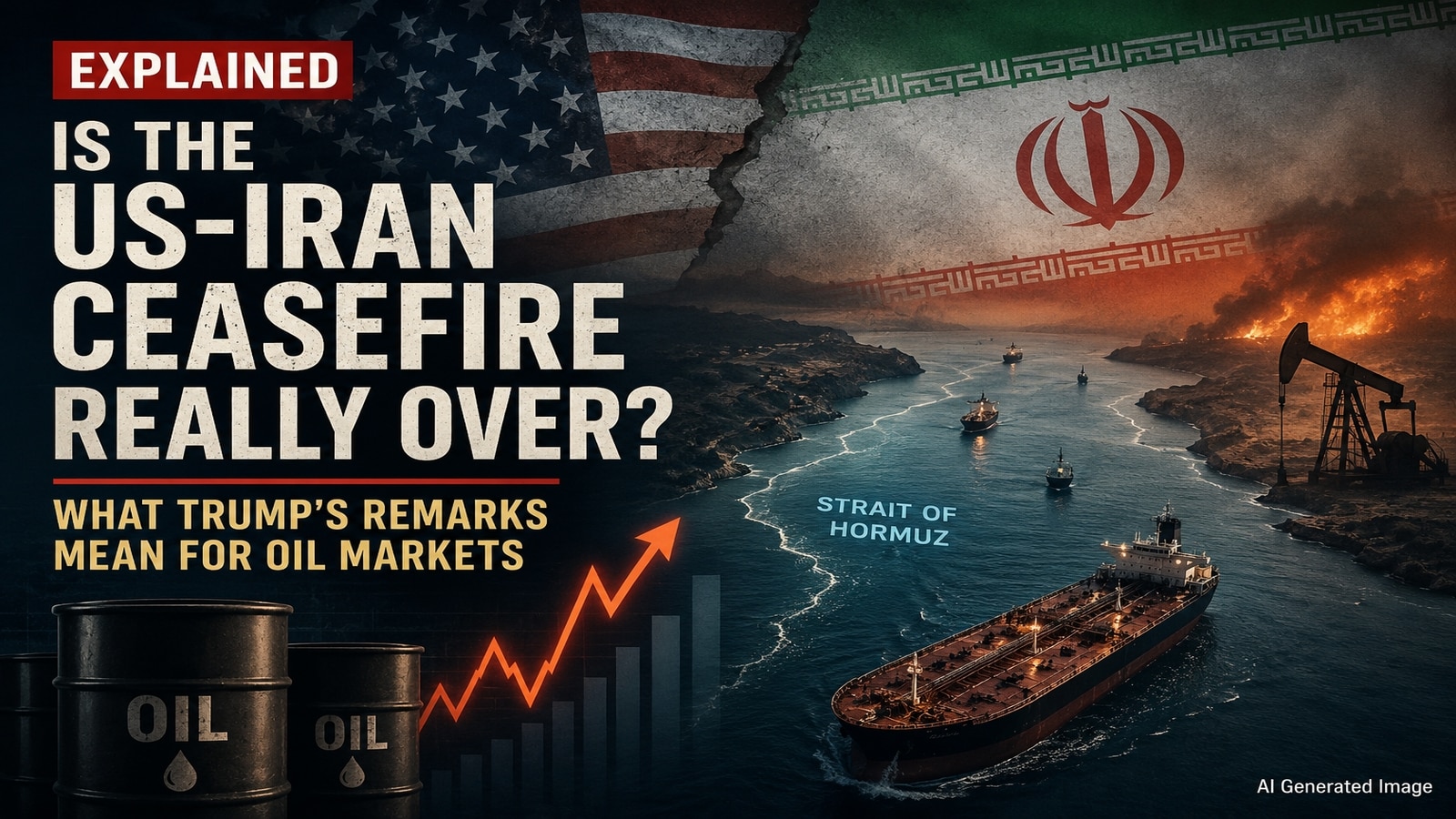
Geopolitical risk premia in energy markets function not as a psychological reaction, but as a mechanical pricing mechanism driven by inventory depletion rates and chokepoint capacity. The collapse of the June 17 Memorandum of Understanding (MoU) between the United States and Iran, accelerated by recent statements at the NATO summit in Ankara, serves as a textbook study in how structural supply-side vulnerability dictates asset pricing. When physical bottlenecks like the Strait of Hormuz are threatened, crude oil futures price in the literal physical destruction of infrastructure rather than mere diplomatic posturing.
To evaluate the impact of this breakdown, analysts must discard standard political rhetoric and quantify the operational realities of global energy infrastructure. The sudden 6% surge in Brent and West Texas Intermediate (WTI) futures following the revocation of General License X illustrates how quickly capital markets recalibrate when supply elasticity drops to zero.
The Microeconomics of the Hormuz Chokepoint
The Strait of Hormuz controls the flow of approximately 20% of global petroleum consumption. Understanding its disruption requires a strict structural framework centered on the Chokepoint Inelasticity Function. When an alternative route does not possess the capacity to absorb displaced volumes, pricing models must account for a structural deficit.
The Alternative Route Capacity Deficit
The global market operates under the assumption that spare pipeline capacity can mitigate maritime blockades. The reality is structurally constrained:
- The East-West Pipeline (Saudi Arabia): Boasting a nominal capacity of 5 million barrels per day (bpd), this infrastructure is historically underutilized but structurally restricted by terminal throughput caps at the Red Sea port of Yanbu. Furthermore, recent security hazards along this line limit its reliability as a redundant system.
- The Abu Dhabi Crude Oil Pipeline: This line provides an alternative route directly to the port of Fujairah, bypassing the strait entirely, yet its peak operational capacity is capped at 1.5 million bpd.
The aggregate bypass capacity of the region stands at fewer than 6.5 million bpd, leaving over 11 million bpd of regional output entirely dependent on the physical opening of the strait. Consequently, any military friction that shuts down transit through Hormuz creates an unbridgeable global supply deficit that cannot be resolved by shifting logistics.
Inventory Depletion Acceleration
The global crude market was already operating under severe structural deficits before the current escalation. According to data from the Energy Information Administration (EIA), commercial stockpiles within Organization for Economic Cooperation and Development (OECD) nations are projected to decline to under 2.3 billion barrels. This represents the lowest inventory level since 2003.
When inventories are near their historical floor, price sensitivity to supply shocks increases exponentially. The market loses its buffer mechanism. A single day of disruption at the strait draws directly from a diminishing pool of physical inventories, forcing spot prices to disconnect from long-term equilibrium models.
The Three Pillars of the US-Iran Escalation Framework
To model the next phase of this energy crisis, the market evaluates three distinct operational pillars rather than relying on generalized political forecasts.
1. The Revenue Interdiction Pillar
The revocation of General License X systematically dismantles the economic basis of the brief truce. This mechanism directly strips away the legal waiver allowing international entities to purchase Iranian crude without facing secondary sanctions from the US Treasury. By removing this volume from the market, global supply drops by an immediate, quantifiable margin of roughly 1.2 to 1.5 million bpd—the baseline volume Iran managed to export during the temporary détente.
2. Tactical Kinetic Degradation
The current military posture involves targeted infrastructure degradation rather than symbolic maneuvers. The enforcement actions executed by US Central Command involved the destruction of over 80 targets, including anti-ship coastal radar arrays and fast-attack naval craft belonging to the Islamic Revolutionary Guard Corps (IRGC). This indicates a shift from defensive escort operations to active degradation of defensive and offensive capabilities.
The primary structural risk lies in the targeted assets. Threatened retaliatory strikes on Kharg Island—which processes over 90% of Iran's crude exports—would permanently alter the supply equation by removing physical infrastructure that requires years to rebuild, moving the risk premium from a temporary transit delay to permanent capital destruction.
3. Macro-Inflationary Feedback Loops
The pricing of crude oil acts as a foundational cost input for the global economy. A sustained expansion of the war premium directly pressures global capital allocation through predictable macroeconomic transmission channels:
- The Monetary Policy Constraint: High energy costs elevate headline inflation through transportation and refinery inputs. This prevents central banks, notably the Federal Reserve, from lowering interest rates. The 10-year US Treasury yield climbing to 4.58% reflects bonds pricing in a prolonged hawkish monetary stance.
- Refinery Margin Compression: As raw input costs rise rapidly, downstream refiners face severe margin compression unless crack spreads widen proportionally. If refined product demand softens due to high prices at the pump, refiners cut utilization rates, causing a secondary shortage of diesel and jet fuel.
Quantitative Scenarios for Brent Pricing
The trajectory of energy markets over the coming quarters depends on the duration of shipping disruptions and the severity of infrastructure damage. Based on current supply-demand balance sheets, three discrete operational paths exist.
| Scenario | Strategic Conditions | Estimated Brent Average (2026) |
|---|---|---|
| Tactical Attrition | Low-level asymmetric attacks in the strait; shipping insurance premiums rise 300%; physical infrastructure remains intact. | $85.00 – $90.00 |
| Chokepoint Interdiction | Total closure of the Strait of Hormuz lasting 30 to 60 days; Western states initiate strategic petroleum reserve drawdowns. | $100.00 – $110.00 |
| Infrastructure Destruction | Kinetic strikes destroying facilities at Kharg Island or regional desalination plants; multi-year repair timelines. | Above $120.00 |
The market has already priced out the baseline scenario of a smooth diplomatic normalization. The short positions built by commodity traders throughout June on the expectation of a permanent peace deal have been forcefully covered, setting a firm floor for WTI near $74 and Brent near $78.
The Strategic Play
The breakdown of the ceasefire leaves no room for speculative long-term planning based on diplomatic breakthroughs. The immediate tactical action for enterprise consumers and institutional asset managers is to hedge against a structural deficit that cannot be solved by OPEC spare capacity. Saudi Arabia and the UAE hold the bulk of the world's spare capacity, but their export infrastructure remains geographically trapped behind the very chokepoint currently under fire.
Capital should be positioned to favor domestic upstream producers insulated from maritime chokepoints, while downstream positions should be systematically hedged against sustained input cost inflation. The current market structure is transitioning from a demand-driven narrative to a raw supply-security paradigm; positioning for anything less invites systemic exposure to the next kinetic escalation.