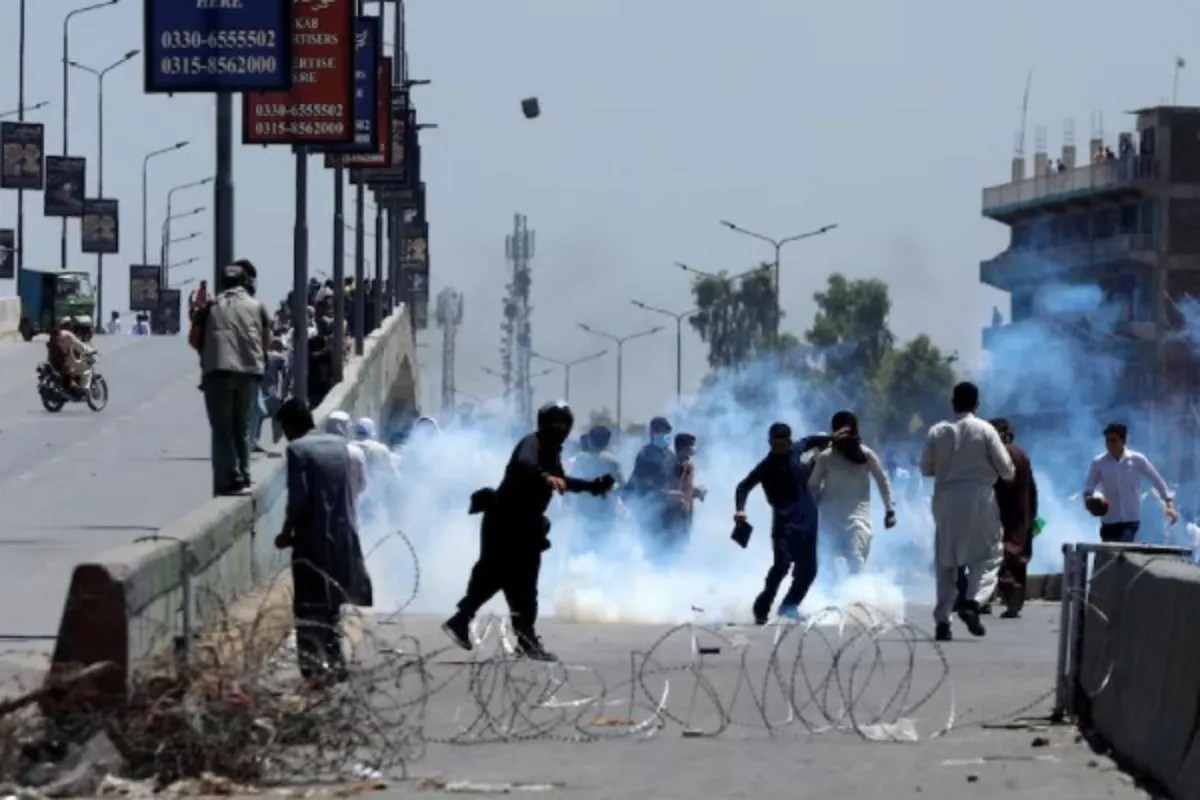
Geopolitical volatility in contested border regions is rarely an isolated phenomenon driven by spontaneous civil unrest. Instead, it represents the collision point between structural economic deprivation, heavy-handed administrative control, and systemic state security responses. Reports emerging from Pakistan Administered Kashmir point toward a severe deterioration in civil-military relations, characterized by widespread protests, severe supply chain blockades, and a disproportionate kinetic response from federal and regional security apparatuses. Analyzing this friction requires peeling back surface-level inflammatory narratives to examine the underlying economic vulnerabilities and the institutional mechanics governing state authority in the zone.
The administrative architecture of the region creates a structural vulnerability that perpetually risks tipping into kinetic conflict. Unlike fully integrated provinces, Pakistan Administered Kashmir operates under a distinct constitutional and administrative ambiguity. Local governance structures possess limited fiscal autonomy, leaving the population heavily reliant on federal subsidies, particularly for essential commodities like wheat flour and electricity generation. When national macroeconomic stress ripples downward, the administrative buffers in the territory collapse rapidly. Meanwhile, you can find similar developments here: Why The Drone Hunts In Ukraine Reveal A Dark Shift In Modern Warfare.
The Economic Architecture of Grievance
At the core of the recurrent uprisings lies a severe resource asymmetry. The region generates significant hydroelectric power through mega-projects such as the Mangla Dam, yet local populations frequently face acute energy deficits and escalating utility tariffs. This dynamic creates an immediate cognitive dissonance for the populace: local natural capital is extracted for national consumption while regional economic indicators lag far behind national averages.
When regional governments attempt to rationalize subsidies under pressure from international financial institutions or federal austerity mandates, the immediate consequence is a sudden shock to household purchasing power. The recent friction escalated precisely around the removal of flour and electricity subsidies. In economic terms, when the cost of basic caloric intake and utility access spikes past the median disposable income threshold within a short window, civil disobedience ceases to be a political choice and becomes an economic necessity for survival. To see the complete picture, check out the excellent article by NPR.
Macroeconomic Austerity -> Subsidy Rationalization -> Price Shock on Essentials -> Threshold Breach -> Mass Mobilization
State authorities historically misinterpret these economic survival responses as politically motivated secessionist movements. This diagnostic failure dictates the subsequent security doctrine, steering officials toward deterrence and kinetic containment rather than fiscal remediation or structural negotiation.
The Security Doctrine of Kinetic Containment
When civil resistance materializes through coordinated strikes, road blockades, and municipal defiance, the standard operational playbook of the state security apparatus relies on three distinct phases of escalation.
First, administrative authorities implement communication blackouts and logistical isolation. By severing cellular networks and restricting transportation arteries into key municipal centers like Muzaffarabad, Mirpur, and Rawalakot, the state attempts to fragment the collective action problem. Without real-time coordination, decentralized protests lose momentum. However, in densely populated valley geographies, this isolation frequently backfires, intensifying local panic and accelerating secondary mobilization as families lose contact with members in urban hubs.
Second, law enforcement shifts from passive crowd management to active dispersion operations. Paramilitary forces, specifically the Rangers and heavily armed local police reserves, deploy riot-control formations that routinely transition into kinetic engagements when confronted with barricaded thoroughfares. The operational doctrine prioritizes the immediate clearing of strategic infrastructure over proportional force reduction.
Third, when civilian resistance exceeds the suppression threshold of conventional police units, operational command transfers or integrates directly with military assets. The introduction of regular military units or specialized intelligence-led operations changes the operational calculus entirely. The objective shifts from maintaining public order to neutralizing perceived threats to state writ. This transition explains the high incidence of lethal casualties reported during intense crackdowns, as military-grade tactical doctrines are applied to domestic civilian populations.
The Feedback Loop of Repression
The deployment of lethal force against civilian populations initiates a self-reinforcing cycle of radicalization and institutional distrust. Each casualty alters the political landscape by converting localized economic grievances into martyrdom narratives. Families affected by state violence adopt permanent adversarial stances toward the federal government, eroding the fragile legitimacy that local political proxies attempt to maintain.
Furthermore, economic blockades designed to starve out protest movements inflict systemic damage on regional commerce. Supply chains for medical goods, perishable foodstuffs, and agricultural inputs stall. This artificial constriction of commerce deepens the original economic misery that sparked the demonstrations, generating fresh waves of participants who now have nothing left to lose economically.
International optics compound the difficulty for the federal center. While state media frames security interventions as necessary measures to protect public infrastructure against external agitators or violent fringe elements, verifiable documentation of civilian deaths undermines the state's diplomatic posture on regional human rights. The domestic political cost climbs as regional leaders find themselves trapped between federal directives demanding absolute order and local constituencies demanding systemic reform.
Strategic Trajectories
Resolving persistent instability in Pakistan Administered Kashmir requires abandoning the premise that administrative friction can be resolved exclusively through coercive force. The fundamental variables driving the crisis are structural: fiscal dependency, resource distribution inequities, and the absence of institutional channels for economic relief.
Until the security establishment recalibrates its operational doctrine to separate civil economic protest from national security threats, the region will remain locked in a perpetual cycle of mobilization, kinetic suppression, and latent insurgency. The immediate imperative for state planners involves decoupling municipal policing from counter-insurgency frameworks, restoring targeted nutritional and energy subsidies, and opening direct, unconditioned dialogue with civil society organizers before the threshold of irreversible alienation is crossed.