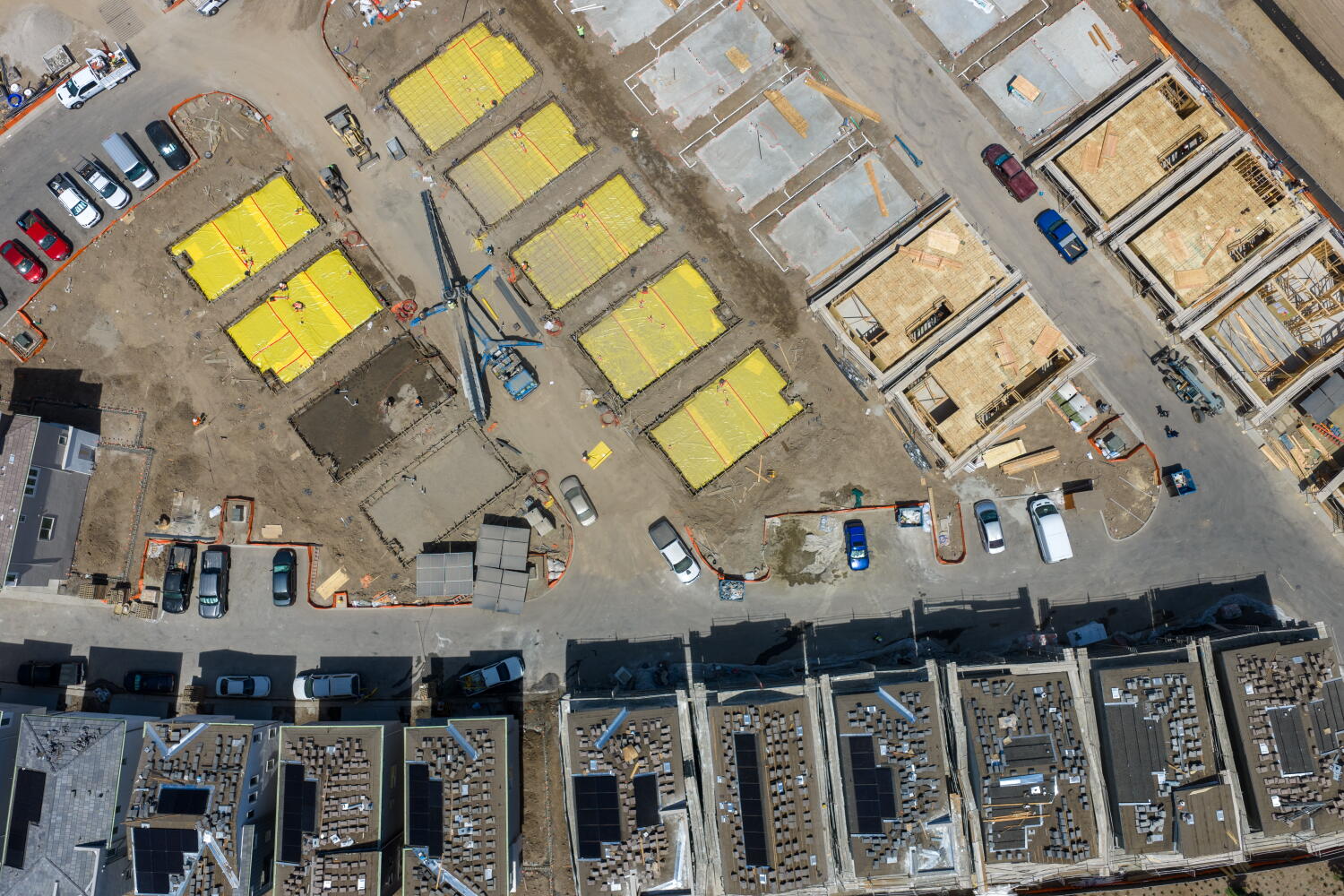
Voters rejected Proposition 45 because ballot-box price controls do not solve physical supply deficits. The defeat of this California housing measure exposes a structural flaw in state policy: policymakers and advocacy groups repeatedly attempt to regulate the price of shelter without altering the underlying production function that governs how housing is built, financed, and approved. Understanding the post-election trajectory of California real estate requires stripping away campaign rhetoric and examining the mechanical bottlenecks of land use, capital allocation, and local governance.
The Structural Mismatch Between Demand and Production
California's housing crisis is fundamentally a throughput problem. For decades, household formation and job growth in coastal metropolitan areas have outpaced residential permitting. When demand elasticity is low—people require shelter near employment centers—and supply elasticity is artificially constrained, prices rise until lower-income cohorts are priced out of the market.
Ballot measures like Proposition 45 attempt to intervene at the point of transaction rather than the point of production. By targeting price mechanisms—whether through rent stabilization expansions, vacancy taxes, or transfer levies—these initiatives treat high housing costs as an isolated pricing anomaly rather than an equilibrium outcome of scarcity. Voters instinctively recognize the friction this creates. Homeowners fear asset devaluation and administrative overreach, while institutional and small-scale landlords calculate reduced net operating income, prompting them to withhold capital from maintenance and new construction.
The Three Pillars of the Supply Bottleneck
To understand why legislative and ballot-box interventions consistently stall, we must isolate the three primary variables restricting unit delivery across California:
- Entitlement Friction and Discretionary Review: In most California municipalities, residential development is not a by-right process. Projects exceeding minimal density thresholds trigger discretionary review, subjecting builders to subjective design committees, conditional use permits, and prolonged public comment cycles. Each month of entitlement delay compounds carrying costs on land loans, forcing developers to target luxury price points simply to clear minimum hurdle rates.
- Environmental Litigation as a Competitive Weapon: The California Environmental Quality Act (CEQA) was designed to mandate disclosure of ecological impacts. In practice, its private right of action allows anonymous coalitions, competing labor unions, and neighborhood preservation groups to stall infill housing projects for years. Even when a developer prevails in court, the litigation timeline frequently outlasts the favorable interest rate environment that made the project financially viable.
- Municipal Fiscal Incentives: Following Proposition 13 in 1978, local governments lost direct control over property tax rates. Cities receive a relatively small fraction of local property taxes compared to school districts and counties, while retaining a higher share of local sales taxes and transient occupancy taxes. From a city manager's balance sheet perspective, approving high-density residential housing generates immediate infrastructure liabilities—roads, water, emergency services—without commensurate recurring tax revenue. Retail centers and hotels remain fiscally superior land uses for municipal budgets.
Why Ballot-Box Economics Fail the Electorate
The recurring battle over California housing ballot measures reflects a breakdown in representative governance. When the state legislature fails to resolve conflicts between tenant advocacy groups, building trade unions, and suburban homeowners, interest groups bypass Sacramento and take complex economic policies directly to voters.
This direct-democracy approach introduces severe operational distortions. Ballot initiatives are static instruments; once passed by voters, they cannot be easily amended by the legislature to correct unintended consequences. Voters are acutely aware of this rigidity. When presented with sweeping structural changes to property rights or rent regulation, the median California voter—who is disproportionately older and more likely to own property than the state average—defaults to the status quo.
The Capital Flight Mechanism
Real estate development relies on mobile capital. Institutional investors, pension funds, and real estate investment trusts (REITs) evaluate California projects against opportunities in states with predictable entitlement timelines and stable regulatory frameworks, such as Texas, Arizona, and North Carolina.
When ballot measures threaten to cap revenue growth through strict rent control or impose punitive transfer taxes on commercial and multifamily transactions, the risk premium required to invest in California spikes. Developers respond in three predictable ways:
- Pipeline Abandonment: Pre-development projects with thin margins are shelved immediately because debt financing becomes prohibitively expensive relative to projected cash flows.
- Asset Class Rotation: Capital shifts away from multifamily residential construction toward industrial warehousing, data centers, or single-family build-to-rent communities in exurban jurisdictions with fewer regulatory encumbrances.
- Deferred Maintenance: Existing property owners facing capped revenue growth alongside uncapped increases in insurance, property taxes, and labor costs reduce capital expenditures on building upgrades, accelerating the physical degradation of the older housing stock.
The Post-Election Legislative Battlefield
With the rejection of Proposition 45, the policy conflict shifts back to the state legislature and administrative enforcement agencies. The failure of a major ballot initiative does not diminish the political pressure generated by high rent burdens and visible homelessness; it merely redirects that pressure into narrower, incremental statutory battles.
State Preemption Versus Local Control
The defining legal struggle in California housing is the erosion of municipal home rule. Over the past several legislative sessions, Sacramento has enacted laws—such as Senate Bill 9, Senate Bill 35, and the Builder's Remedy provisions of the Housing Accountability Act—designed to strip cities of their ability to block compliant housing projects.
The Builder's Remedy illustrates the mechanics of this shift. Under state law, every municipality must submit a Housing Element to the Department of Housing and Community Development (HCD) every eight years, zoning enough land to accommodate its Regional Housing Needs Allocation (RHNA). If a city fails to adopt a compliant plan on time, it loses its zoning authority over projects where at least 20 percent of the units are designated for low-income households. Developers can bypass local height limits and density caps entirely.
Following the defeat of ballot-driven price controls, enforcement of these state preemption laws will intensify. Rather than fighting statewide campaigns that cost tens of millions of dollars in television advertising, housing advocates are increasingly deploying targeted litigation against non-compliant cities, using state courts to compel rezoning.
The Labor and Environmental Impasse
Even when state law removes local zoning barriers, internal coalition fractures within Sacramento limit actual construction output. Building trade unions and environmental organizations form the core political base of the state's legislative majority, yet their priorities frequently collide with the unit economics of housing production.
- Prevailing Wage Mandates: Legislation streamlining environmental review often includes strict labor standards requiring developers to pay union-scale prevailing wages and utilize skilled and trained workforces. While intended to protect worker compensation, these mandates increase hard construction costs by 15 to 30 percent, rendering mid-rise wood-frame construction financially unfeasible in all but the highest-rent coastal submarkets.
- Infill vs. Greenfield Tension: Environmental groups oppose greenfield development on the urban fringe to preserve open space and reduce vehicle miles traveled (VMT). However, their simultaneous use of CEQA to challenge high-density infill projects within existing urban cores creates a spatial paradox: housing can be built neither outward nor upward.
The Cost Function of California Construction
To evaluate any proposed solution to the California housing crisis, analysts must examine the underlying cost structure of building a single residential unit. Policy debates routinely ignore that the baseline cost of construction has decoupled from median household incomes.
Hard costs—lumber, concrete, steel, fixtures, and site labor—have risen substantially due to supply chain constraints, inflationary pressures, and stringent state building codes, including mandatory solar panels and electric vehicle charging infrastructure. Soft costs—architectural fees, engineering, municipal impact fees, and legal compliance—frequently account for 25 to 35 percent of total project budgets.
Municipal impact fees represent a particularly distortive hidden tax. Because cities cannot easily raise property taxes, they charge developers upfront fees per unit to fund parks, libraries, traffic mitigation, and affordable housing trust funds. In many Bay Area and Southern California jurisdictions, impact fees exceed $50,000 to $100,000 per apartment unit before a single shovel hits the ground. These fees are directly capitalized into the final rent or purchase price, functioning as a regressive tax on new residents to subsidize existing homeowners.
Limitations of Public Subsidies
A common counter-argument to market-rate deregulation is the expansion of publicly subsidized affordable housing. While vital for extremely low-income populations, government-funded construction cannot scale to resolve a statewide deficit measured in millions of units.
Subsidized developments in California routinely cost between $700,000 and $1 million per unit to build. This hyper-inflation of public construction costs stems from complex capital stacks—combining Low-Income Housing Tax Credits (LIHTC), municipal bonds, and state grants—where each funding source imposes separate compliance audits, prevailing wage rules, and architectural requirements. At nearly a million dollars per door, state bond measures can only finance a tiny fraction of annual demand, leaving the vast majority of working- and middle-class households dependent on the private market.
Operational Realities for Market Participants
The defeat of Proposition 45 clarifies the immediate operating environment for developers, property owners, and policymakers, though it leaves long-term structural risks unresolved.
- Regulatory Volatility Remains Priced In: Even when anti-development or price-control measures fail at the ballot box, the mere frequency of their qualification forces institutional capital to apply a permanent risk discount to California assets. Underwriting models must assume that similar measures will reappear every two years, compressing valuation multiples compared to adjacent Western states.
- Shift to Micro-Jurisdictional Arbitrage: Capital will concentrate in specific municipalities that have achieved certified Housing Elements and demonstrated a willingness to approve projects ministerially. Cities that resist state mandates face prolonged litigation, frozen state infrastructure grants, and chaotic Builder's Remedy filings, making them uninvestable for traditional debt providers.
- Insurance and Operating Expense Compression: Multifamily operators face an acute squeeze from non-controllable operating expenses. Commercial property insurance premiums in California have surged due to wildfire risk modeling and carrier withdrawals, while municipal utility rates continue to climb. Without the ability to adjust rents to reflect rising operating baselines, older properties face heightened default risks upon refinancing.
The Strategic Play for Housing Reform
Resolving California's housing deadlock requires abandoning demand-side price interventions and executing a coordinated overhaul of the supply pipeline. Policymakers and industry stakeholders must focus exclusively on compressing the time and capital required to convert raw or underutilized land into occupied housing.
First, the state legislature must decouple CEQA from infill residential development entirely. If a project conforms to an adopted general plan and zoning code within an urbanized area, environmental review should be strictly ministerial, eliminating private litigation rights that add years of carrying costs without producing tangible ecological benefits.
Second, Sacramento must standardize and cap municipal impact fees, transitioning infrastructure funding from upfront developer levies to broad-based municipal financing mechanisms such as Enhanced Infrastructure Financing Districts (EIFDs). Lowering the upfront equity requirement per door is the fastest lever to make middle-income housing pencil out without public subsidies.
Finally, legislative streamlining bills must be stripped of poison-pill labor mandates that price mid-tier projects out of existence. Allowing market-rate builders to utilize standard commercial labor rates for mid-rise construction will unlock private capital flows, accelerate unit delivery, and restore the supply elasticity required to stabilize rents naturally across the state.