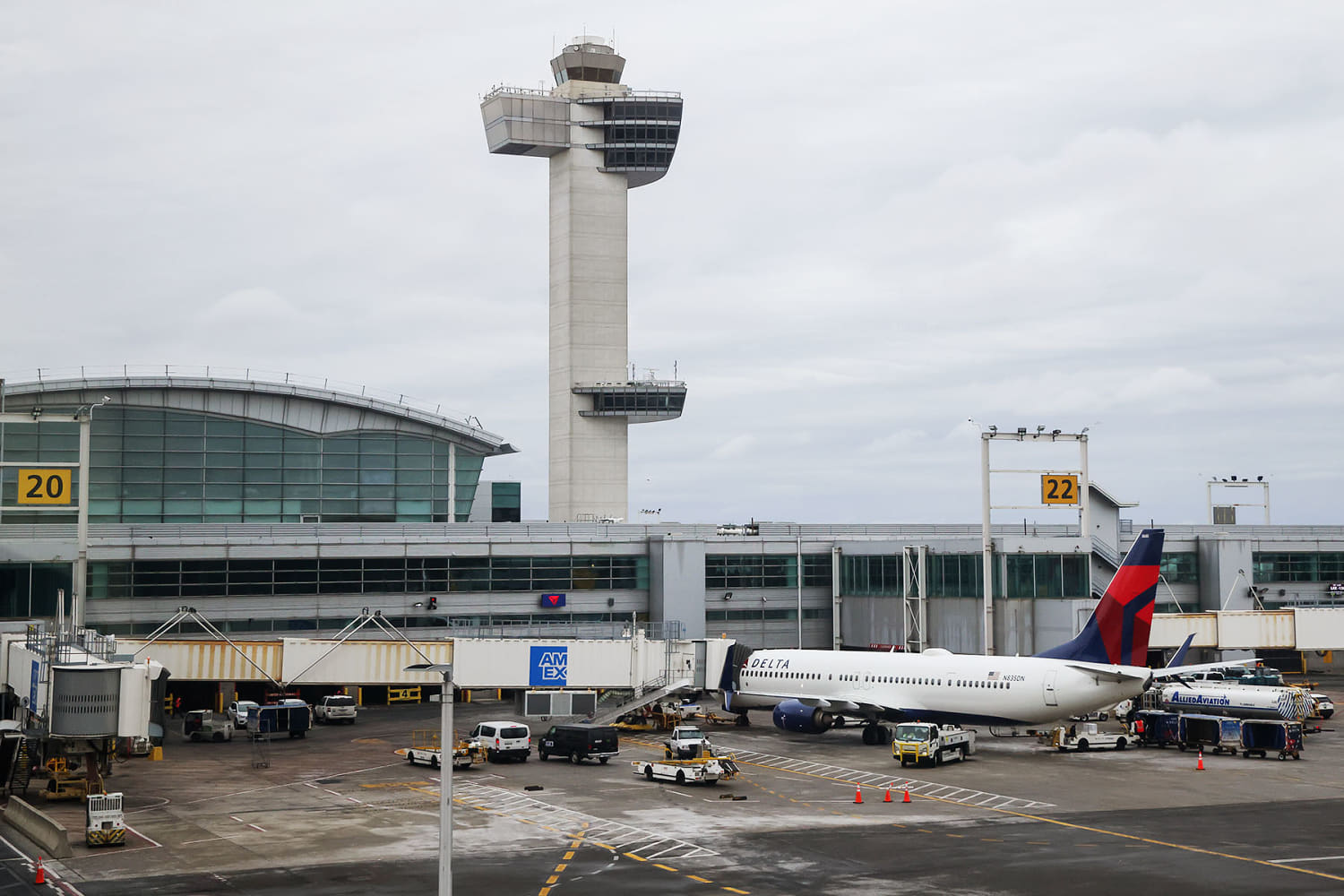
The decision by federal authorities to route and screen passengers from Ebola-affected regions at major international hubs like John F. Kennedy International Airport is a structural exercise in political risk mitigation, not an effective epidemiological containment strategy. While visually and politically reassuring, enhanced airport entry screening possesses a systemic structural flaw: it relies entirely on syndromic identification at a single point in time to intercept a pathogen characterized by a protracted, asymptomatic incubation period.
In public health economics, border interception strategies are often evaluated using an implied cost function that balances implementation expenditures against the true reduction in domestic transmission. Data from historical protocols demonstrates that the marginal utility of entry-based temperature and questionnaire screening approaches zero when managing pathogens with low baseline prevalence and high clinical latency (Quilty et al., 2020). To understand why these systems fail to prevent pathogen importation, the mechanism must be broken down into its core operational constraints.
The Mathematical Impossibility of Syndromic Capture
The biological architecture of the Ebola virus dictates the operational failure of entry screening. The pathogen features an incubation period typically spanning 2 to 21 days, during which an infected individual is entirely asymptomatic and non-infectious (CDC, 2026). Because viral replication has not yet triggered a systemic inflammatory response, the individual presents with zero clinical indicators.
The probability ($P$) of intercepting an infected traveler at an airport port of entry can be modeled through a distinct temporal function:
$$P = \frac{T_{\text{flight}}}{T_{\text{incubation}}}$$
Where $T_{\text{flight}}$ represents the duration of the transit and $T_{\text{incubation}}$ represents the total time from initial infection to symptom onset. Given that a commercial flight sequence from Central or West Africa to New York spans approximately 14 to 24 hours, the window of symptomatic manifestation during transit is remarkably narrow.
If a traveler infects themselves on Day 1 in the country of origin and boards a flight on Day 3, their probability of presenting with a fever ($>101.5^{\circ}\text{F}$ or $38.5^{\circ}\text{C}$) upon landing at JFK Airport is effectively zero (Benowitz et al., 2014). Stochastic discrete event simulations of international airport screening reveal that syndromic entry protocols miss between 46% and 78% of actively incubating travelers depending on the specific distribution of flight times and pathogen latency (Malone et al., 2009; Quilty et al., 2020).
The Three Pillars of Airport Biosecurity Infrastructure
When public health agencies like the Centers for Disease Control and Prevention (CDC) deploy enhanced screening at designated ports of entry—such as JFK, Washington Dulles, Hartsfield-Jackson Atlanta, Chicago O'Hare, and Los Angeles International—they are not deploying a filter; they are deploying an operational net designed to capture metadata rather than active cases (CDC, 2026). This infrastructure rests on three structural pillars, each with specific systemic limitations.
1. Thermal Surveillance and Symptom Evaluation
The frontline layer utilizes non-contact infrared thermometers or thermal scanners to flag febrile passengers (Addington, 2014). This creates an immediate operational bottleneck. Thermal scanning yields high rates of false positives due to non-infectious conditions (e.g., common respiratory infections, ambient cabin temperature variance, or recent physical exertion) and high rates of false negatives driven by antipyretic masking. Travelers can easily bypass this layer by consuming over-the-counter fever reducers such as acetaminophen or ibuprofen prior to descent.
2. Behavioral and Epidemiological Questionnaires
Passengers are required to self-report travel histories, specific geographic exposures, and potential contact with infected individuals. This pillar is entirely dependent on the veracity of the traveler. In a high-stakes border environment, travelers face powerful negative incentives—including the fear of forced quarantine, stigmatization, or entry denial—which systematically skew self-reported data toward false negatives.
3. Public Health Escalation and Isolation
When a traveler is flagged due to a positive thermal reading or an alarming exposure history, they are diverted to a dedicated CDC quarantine station for secondary assessment by public health officers (Addington, 2014). If clinical suspicion remains high, local emergency medical services handle transport to a designated biocontainment facility (Benowitz et al., 2014). While this chain is highly optimized, its operational throughput is irrelevant if the infected population passes through the first two pillars undetected due to subclinical status.
Entry vs. Exit Screening: The Asymmetric Leverage of Point of Origin
The structural focus on entry screening at domestic hubs ignores a fundamental principle of network topology: intervention is most efficient at the point of origin, not the destination.
Historical data from the West African Ebola outbreak demonstrates this asymmetry clearly. Across multiple international transport corridors, exit screening protocols implemented at the points of departure in affected nations evaluated tens of thousands of travelers (Brown et al., 2014). These procedures successfully denied boarding to individuals exhibiting unexplained febrile illnesses, ensuring that no international air traveler from those regions became symptomatic during transit (Brown et al., 2014).
In contrast, when the United States initiated enhanced entry screening across five major airports, evaluating thousands of incoming passengers, the yield was functionally zero. Out of 1,993 passengers screened at U.S. ports of entry during a peak observation period, zero passengers were symptomatic during travel, and subsequent medical evaluations yielded zero confirmed Ebola cases (Brown et al., 2014).
The secondary screening mechanism functions as an expensive administrative drag. Entry screening can only detect the marginal fraction of individuals whose incubation periods happen to terminate precisely during the flight window (Quilty et al., 2020).
The Hidden Value Matrix: Why the Protocol Persists
If entry screening is demonstrably ineffective at intercepting active pathogens, its deployment by federal health authorities seems irrational. However, looking at the system through an operational lens reveals a secondary, non-apparent utility framework that justifies the expenditure.
- Jurisdictional Handshake and Contact Tracing: The primary actionable output of airport screening is the collection of verified destination data. By forcing targeted travelers through a centralized bottleneck, public health agencies obtain precise logistical vectors (phone numbers, physical addresses, next-of-kin info). This data is passed directly to state and local health departments, enabling the establishment of 21-day active monitoring loops (Addington, 2014). The airport is not the firewall; it is the data acquisition terminal.
- Behavioral Deterrence: The presence of visible, highly structured federal biosecurity protocols at the border alters traveler calculus. It deters symptomatic or high-exposure individuals from attempting travel in the first place, shifting the burden of containment back onto the exit architecture of the origin country.
- System Stress Testing: Funneling specific passenger volumes through localized quarantine protocols forces continuous communication between federal agencies (CBP, CDC), local infrastructure (JFK Airport operators), and regional medical networks (NYC Department of Health and Mental Hygiene) (Addington, 2014; Benowitz et al., 2014). This keeps the local healthcare apparatus in a state of high alert, accelerating institutional readiness for when a community-vetted case eventually emerges.
Strategic Allocation of Biosecurity Resources
Border screening policies must be re-engineered to move away from the performative illusion of absolute interception. Because entry-based syndromic screening cannot overcome the biological reality of clinical latency, continuing to pour significant capital into front-end thermal detection at arrival gates represents a misallocation of finite public health resources (Khan et al., 2013).
The optimal strategic play requires a strict bifurcation of resources:
First, complete operational dependency must be shifted to outbound point-of-origin exit screening. Federal biosecurity strategies should focus on exporting technical expertise, thermal imaging equipment, and rapid diagnostic capabilities directly to the ministries of health in the affected epicenters. Suppressing the international movement of a pathogen at the source yields a mathematically superior reduction in domestic introduction risk compared to destination filtering.
Second, domestic resources must be redirected away from arrival-terminal infrastructure and funneled directly into regional healthcare integration. The true defensive line against an imported outbreak is not the customs gate, but the triage desk of the community emergency department. Ensuring that local clinicians universally execute rapid travel-history assessments and possess immediate access to local public health epidemiologists yields a more robust safety net than any airport thermal scanner can provide (Benowitz et al., 2014). Containment is achieved through community-level vigilance and rapid institutional isolation, not the performative deployment of frontline border checkpoints.
References
Addington, D. (2014). Ebola: Dallas and New York City Experiences Drive Governments to Change Practices. The Heritage Foundation.
Benowitz, I., Ackelsberg, J., Alberti, L., Armstrong, G., Balter, S., ... & Fine, A. (2014). Surveillance and Preparedness for Ebola Virus Disease — New York City, 2014. Morbidity and Mortality Weekly Report, 63(41), 936–937. Centers for Disease Control and Prevention.
Brown, C. M., Aranas, A. E., Knust, B., Selent, M., Boyyen, M., ... & Cetron, M. S. (2014). Airport Exit and Entry Screening for Ebola — August–November 10, 2014. Morbidity and Mortality Weekly Report, 63(46), 1073–1077. Centers for Disease Control and Prevention.
Centers for Disease Control and Prevention. (2026). Order Under Sections 362 & 365: Title 42 Public Health Measures. U.S. Department of Health and Human Services.
Khan, K., Eckhardt, R., Brownstein, J. S., Naqvi, R., Hu, W., ... & Cetron, M. S. (2013). Entry and exit screening of airline travellers during the A(H1N1) 2009 pandemic: a retrospective evaluation. Bulletin of the World Health Organization, 91(5), 368-376. https://doi.org/10.2471/blt.12.114777
Malone, J. D., Brigantic, R., Muller, G. A., Gadgil, A., Delp, W., ... & Mihelic, F. M. (2009). U.S. airport entry screening in response to pandemic influenza: Modeling and analysis. Travel Medicine and Infectious Disease, 7(3), 181-191. https://doi.org/10.1016/j.tmaid.2009.02.006
Quilty, B. J., Clifford, S., Flasche, S., & Eggo, R. M. (2020). Effectiveness of airport screening at detecting travellers infected with novel coronavirus (2019-nCoV). Eurosurveillance, 25(5). https://doi.org/10.2807/1560-7917.es.2020.25.5.2000080