The drone strike targeting the Barakah Nuclear Power Plant in Abu Dhabi exposes a critical vulnerability in the modern state’s critical infrastructure defense architecture: the deep cost asymmetry between offensive unmanned aerial vehicles (UAVs) and high-value fixed assets. When a single low-cost kinetic asset breaches the perimeter of a $20 billion critical energy facility, it shifts the operational calculus from standard localized air defense to complex regional deterrence. This incident is not merely an isolated border transgression. It represents a precise challenge to the security protocols underpinning the civil nuclear framework of the Arab world.
By executing a structural analysis of this engagement, analysts can map the systemic vulnerabilities exposed by the strike, evaluate the resilience of the facility’s defense-in-depth architecture, and model the cascading macroeconomic implications for the United Arab Emirates and the broader Gulf Cooperation Council (GCC).
The Tri-Vector Penetration Mechanics
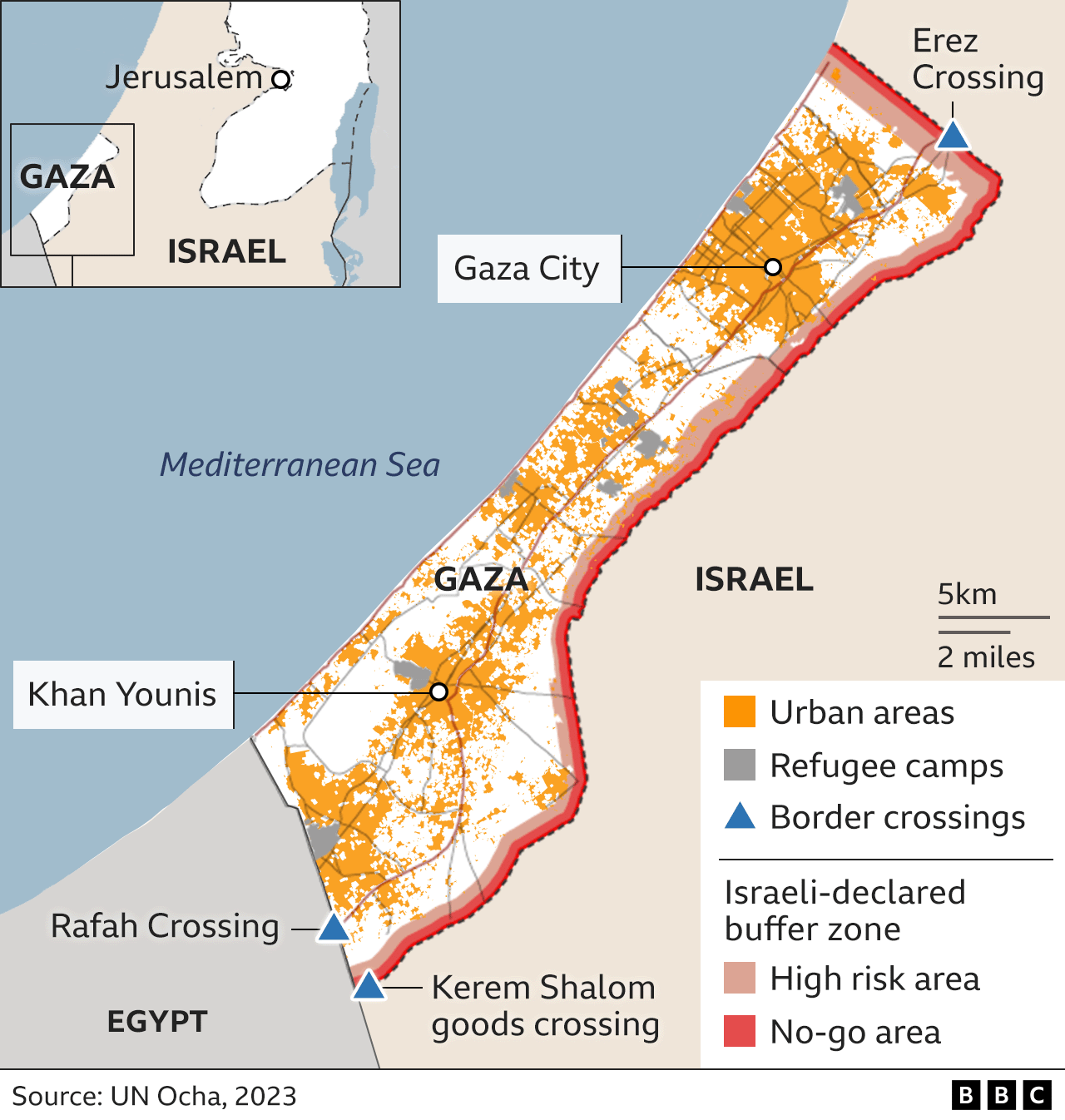
The strike profile demonstrates an intentional attempt to saturate localized air defense networks. According to data released by the UAE Ministry of Defense, three UAVs crossed the western border via Saudi Arabian airspace. Two assets were successfully neutralized by interception mechanics. The third bypassed these countermeasures to impact an ancillary electrical generator located outside the inner perimeter of the Al Dhafra facility.
Evaluating this penetration reveals three distinct operational phases:
- Vector Profiling: The flight path utilizing the western border suggests a deliberate exploitation of regional radar handoffs. By routing through or near the vast expanse of Saudi Arabia’s eastern desert, the operators minimized early-warning radar cross-sections before initiating terminal descent toward the Al Dhafra coast.
- Saturation Strategy: Launching multiple simultaneous platforms forces automated air defense systems—such as Terminal High Altitude Area Defense (THAAD) or Patriot batteries—to distribute track-and-engage resources across multiple targets. The penetration of one out of three units implies an operational saturation rate where terminal guidance outpaced local interceptor tracking loops.
- Target Selection Optimization: The physical impact did not target the reinforced containment structures of the four APR-1400 reactors. Instead, it struck the auxiliary grid connectivity infrastructure. This reflects an understanding of the facility’s vulnerabilities; targeting secondary substations bypasses heavy containment shielding while achieving significant system disruption.
The Resilience Function of Nuclear Defense in Depth
While the strike achieved physical impact, the facility’s structural containment and redundant safety systems prevented any radiological anomaly. The mechanical resilience of the Barakah plant under kinetic duress can be evaluated through a structured defense-in-depth model, moving from external defensive layers to internal emergency systems.
Layer 1: Passive Physical Separation
The electrical generator impacted was situated outside the inner perimeter. The design parameters of modern nuclear facilities dictate a wide geographic distribution of support infrastructure to ensure that a localized kinetic strike cannot compromise the primary reactor core or spent fuel storage facilities simultaneously.
Layer 2: Redundant Power Systems
The International Atomic Energy Agency (IAEA) confirmed that following the destruction of the external generator and subsequent fire, Unit 3 was decoupled from the damaged external source and transitioned to emergency diesel generators. Nuclear safety relies on continuous active cooling. The transition to internal backup generation represents the activation of engineered safety features designed to prevent core damage during a loss-of-offsite-power event.
Layer 3: Containment Shielding
The core reactor blocks, engineered by the Korea Electric Power Corporation (KEPCO), feature reinforced concrete containment buildings designed to withstand direct physical impacts far exceeding the kinetic energy carried by standard long-range explosive UAVs. The structural resilience of the primary system remained uncompromised because the threat vector lacked the penetration capabilities required to challenge heavy concrete shielding.
The Strategic Asymmetry Bottleneck
The primary vulnerability exposed by this attack is economic rather than structural. It highlights a stark imbalance in defensive asset allocation. The cost function of defending critical infrastructure via kinetic interception can be conceptualized through the following relationship:
$$\text{Total Defensive Cost} = (C_{\text{interceptor}} \times R_{\text{fire}}) + C_{\text{collateral}}$$
Where:
- $C_{\text{interceptor}}$ is the unit cost of a surface-to-air missile.
- $R_{\text{fire}}$ is the engagement rate required to guarantee a kill probability approaching 1.
- $C_{\text{collateral}}$ is the economic downside of any defensive failure.
When the offensive asset is a mass-produced, long-range drone costing between $20,000 and $50,000, the adversary achieves an asymmetric advantage. A defensive network must deploy multi-million dollar interceptor missiles to counter low-cost threats. If a single drone evades detection and damages a critical node, the resulting fire and temporary off-site power disruption can trigger extensive economic consequences. This dynamic creates a clear operational bottleneck for state defenders.
Regional Geopolitical Cascades
The geopolitical ramifications of the Barakah strike extend beyond the borders of Abu Dhabi, impacting the integrated security strategies of the wider GCC.
[Threat Vector Ingress]
       │
       ▼
[Saudi Airspace Transited] ──► [Joint Air Defense Coordination Strain]
       │
       ▼
[Barakah Plant Peripheral Hit] ──► [Regional Infrastructure Risk Premium Appends]
       │
       ▼
[Energy Diversification Interruption]
The transit of weapons through Saudi Arabian airspace prior to entering the UAE highlights vulnerabilities in joint air defense coordination. Despite substantial investments in integrated early-warning systems, the seamless tracking of low-altitude, small-radar-cross-section threats across national boundaries remains an unresolved technical challenge.
Furthermore, the timing of the attack coincides with broader regional friction, including naval blockades in the Strait of Hormuz and ongoing conflicts involving regional powers. Diplomatic statements from senior UAE officials explicitly state that targeting a civilian nuclear asset constitutes a dangerous escalation, pointing to regional proxy networks as the likely origin. This elevates the risk premium for all infrastructure projects across the Arabian Peninsula.
Macroeconomic Vulnerabilities in the Energy Transition
The Barakah facility represents a $20 billion capital investment designed to deliver 5,600 megawatts of electricity, fulfilling approximately 25% of the UAE’s domestic energy demand. The strategic rationale for this infrastructure centers on reducing domestic hydrocarbon consumption, allowing the state to maximize crude oil export volumes while advancing its net-zero carbon goals.
This centralization of generating capacity creates a significant single-point-of-failure risk within the national energy matrix. A coordinated attack that successfully disrupts power transmission from all four units simultaneously would instantly remove a quarter of the country's electrical supply. To mitigate the risk of grid collapse during such an event, the state must maintain expensive, hydrocarbon-fueled spinning reserves. This economic requirement partially undercuts the financial efficiencies gained by operating a centralized civil nuclear program.
Tactical Realignment and Countermeasures
To counter this evolving threat profile, state infrastructure security must shift from a reliance on reactive kinetic interception to an integrated approach focused on early detection and active denial.
First, air defense networks must integrate electronic warfare systems capable of severing command links or disrupting GPS guidance systems well before a threat reaches the facility's outer perimeter. Second, passive defense measures require optimization; this includes installing physical netting and anti-drone fencing around vulnerable external infrastructure like transformers, switchyards, and backup generators. Finally, regional security policies must adapt to treat peripheral power infrastructure with the same level of security priority as the primary reactor cores.
The Barakah strike demonstrates that the security of a nuclear facility is determined by its weakest external link. If a state cannot protect the auxiliary systems that support a reactor's operations, the structural integrity of the reactor core itself cannot guarantee total operational continuity. Future security strategies must focus on eliminating this asymmetry, ensuring that peripheral support networks are as resilient to modern threat profiles as the central containment structures they serve.