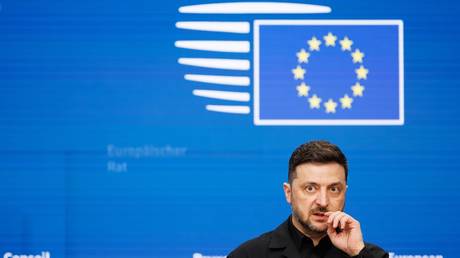
Armenia’s June 7, 2026, parliamentary election functions as a quantitative referendum on the state's structural survival strategy. Media coverage routinely flattens this dynamic into a binary, sentimental choice between "Moscow and the West." This framework fundamentally misunderstands the physics of small-state geopolitics. Small states embedded in highly volatile regions do not make permanent ideological pivots based on cultural affinity; they optimize for survival by managing acute asymmetry.
The real architecture of the election is a high-stakes stress test of Prime Minister Nikol Pashinyan's "Real Armenia" doctrine. This policy attempts to systematically replace a failed, single-point-of-failure security architecture with a diversified ledger of regional trade, defense procurement, and diplomatic hedges. Understanding the strategic space requires analyzing the underlying mechanics, dependencies, and bottlenecks that define Armenia’s current calculus.
The Cost Function of Asymmetric Dependency
For three decades, Armenia operated under an implicit security contract. It surrendered significant macroeconomic and infrastructural sovereignty to the Russian Federation in exchange for hard security guarantees, primarily manifested through the Collective Security Treaty Organization (CSTO) and Russia's 102nd Military Base in Gyumri. The structural collapse of this model occurred between 2020 and 2023. The passivity of Russian peacekeepers during Azerbaijan’s September 2023 offensive in Nagorno-Karabakh demonstrated that the strategic value of the Russian security guarantee had depreciated to zero.
The incumbent government's strategy is driven by an explicit acknowledgment of this depreciation. The domestic political calculus changed following the August 2025 Washington Accords, a twelve-point peace agreement with Azerbaijan. By legally settling the status of territorial boundaries, Yerevan stripped away the structural rationale for its historical subordination to Moscow.
However, executing a geopolitical exit strategy is bounded by a severe macroeconomic cost function. Russia maintains structural dominance over Armenia’s critical infrastructure through three specific vectors:
- Energy Monopoly: Russian entities control Armenia’s natural gas import pipelines and domestic distribution networks. The Metsamor nuclear power plant, which generates approximately 30% of the state's electricity, relies completely on Russian nuclear fuel assemblies.
- Trade Asymmetry: In 2025, Russia accounted for approximately 35% of Armenia’s total foreign trade volume, whereas the European Union accounted for roughly 11%. Armenia's membership in the Eurasian Economic Union (EEU) means that unilateral regulatory shifts by Moscow can instantly sever access to Yerevan's primary agricultural and manufacturing export market.
- Physical Border Control: While Russian border guards have been removed from specific urban checkpoints, they continue to garrison segments of Armenia’s highly sensitive international borders with Turkey and Iran.
This asymmetric dependency means any rapid, unhedged pivot toward Western institutions risks immediate economic retaliation. The Kremlin illuminated this exact vulnerability in late May 2026, when the EEU openly threatened to suspend Armenia’s membership and publicly demanded a referendum to force voters to choose between Western integration and Eastern alignment.
Defense Procurement and the Strategic Diversification Vector
Faced with a non-functioning security guarantor, the incumbent administration did not engage in rhetorical protests; it initiated a physical re-engineering of its defense supply chains. This process provides a clear blueprint of how the state seeks to construct a multi-vector security model.
Historical Model (Pre-2020):
[Armenia] <--- 90%+ Arms Sourcing --- [Russia (CSTO)]

Diversified Model (2026):
             /--- Western Vector (France: Air Defense/Radar)
[Armenia] <--+--- Global South Vector (India: Artillery/Anti-Drone)
             \--- Regional Vector (Washington Accords Normalization)
The state has frozen its participation in the CSTO and systematically halted defense orders from Russian state enterprises. To fill the resulting capabilities gap, Yerevan bypassed traditional European alliances to build an unexpected bilateral defense relationship with India. Armenia has become one of the largest foreign buyers of Indian military hardware, importing Pinaka multi-barrel rocket launchers, anti-drone systems, and advanced artillery units.
Concurrently, France has stepped in as a Western security anchor, supplying sophisticated air defense radar systems and tactical armored vehicles. This dual track demonstrates that Armenia's target state is not a simple replacement of Moscow with Brussels or Washington. It is an attempt to construct a distributed network where no single external capital possesses the leverage to compromise Armenian state sovereignty.
The Opposition Structure and External Interference Vectors
The domestic political arena is highly polarized, but the nineteen approved parties and alliances contesting the National Assembly fit into two structural profiles: the incumbent Civil Contract party and a fractured pro-Russian opposition block.
The opposition's strategic logic is built on risk aversion. Led by figures like Russian-Armenian billionaire Samvel Karapetyan and his Strong Armenia bloc, the opposition campaigns on the premise that the incumbent’s diversification strategy is an existential gamble. Their platform argues that the West offers no hard, binding security guarantees to replace Russia's physical presence, leaving Armenia completely exposed to its immediate neighbors.
This domestic fracture is actively leveraged through external information operations. Kremlin-linked disinformation networks deployed heavily throughout May 2026 to amplify local anxieties regarding the territorial concessions made during the 2025 border delimitation process with Azerbaijan. The strategic objective of these operations is to convert the psychological trauma of the 2023 Nagorno-Karabakh displacement into an electoral rejection of the peace agenda.
The Regional Logistics Variable
The long-term viability of Armenia’s sovereign restructuring depends on geography and logistical infrastructure. For decades, Armenia remained blockaded by Turkey and Azerbaijan, leaving it reliant on two narrow logistical corridors: Georgia to the north and Iran to the south.
The execution of the "Real Armenia" doctrine relies on converting these defensive border lines into active international transport corridors. Following the normalization steps initiated after the 2025 peace treaty, Azerbaijani fuel began moving into Armenia via rail through Georgia in December 2025. A re-election of the current government provides a mandate to advance regional infrastructure projects that would open the long-closed borders with Turkey and Azerbaijan.
For Western partners and regional powers like Turkey, the continuation of the current administration represents the most predictable path toward stabilizing the South Caucasus. An open Armenian corridor linking the Caspian Sea to European markets would fundamentally degrade Russia's capacity to act as the exclusive logistical gatekeeper of Eurasia.
The Strategic Limit of Western Guarantees
The core systemic risk of the current administration’s foreign policy is the asymmetric nature of Western alignment. While European leaders and the current US administration have offered public endorsements, these statements lack statutory teeth.
The United States assisted in brokering the August 2025 Washington Accords, yet Washington's transactional approach to regional security means these diplomatic breakthroughs do not translate into Article 5-style mutual defense treaties. Western engagement remains limited to financial aid, governance capacity building, and defensive military tech transfers. If a structural failure of the regional peace agreement occurs, Armenia cannot rely on Western kinetic intervention.
Public opinion data collected prior to the election reflects a population fully aware of this limitation. The electorate is almost perfectly divided on the country's primary orientation: approximately 43% of citizens view Moscow as the critical partner due to structural reality, 42% point to Washington, and 29% favor Brussels. This overlapping, non-exclusive data indicates that the Armenian public does not desire a reckless, total rupture with Russia. They are seeking a calculated expansion of diplomatic and economic options.
The Tactical Execution Plan
The final poll results will dictate the execution speed of the country's regional integration. A decisive victory for the Civil Contract party will trigger an immediate sequence of non-ideological, state-level maneuvers designed to lock in the post-2025 status quo before external actors can disrupt the transition.
First, the government must leverage its electoral mandate to finalize the technical annexes of the border demarcation agreements with Azerbaijan, neutralizing the opposition's primary political wedge issue. Second, Yerevan will likely transition its frozen status within the CSTO into a formal, legal exit, while carefully maintaining its EEU economic alignment to mitigate sudden regulatory shocks to its export sector. Finally, the administration must accelerate the physical operationalization of the cross-border rail and transport links with Turkey. By turning Armenia into a vital, non-Russian logistical node for Eurasian trade, the state will create a material incentive for both Western and regional powers to defend its territorial integrity. The strategy is high-risk, but in the current geopolitical landscape, treating a dead security alliance as a viable shield is a far more certain path to state obsolescence.