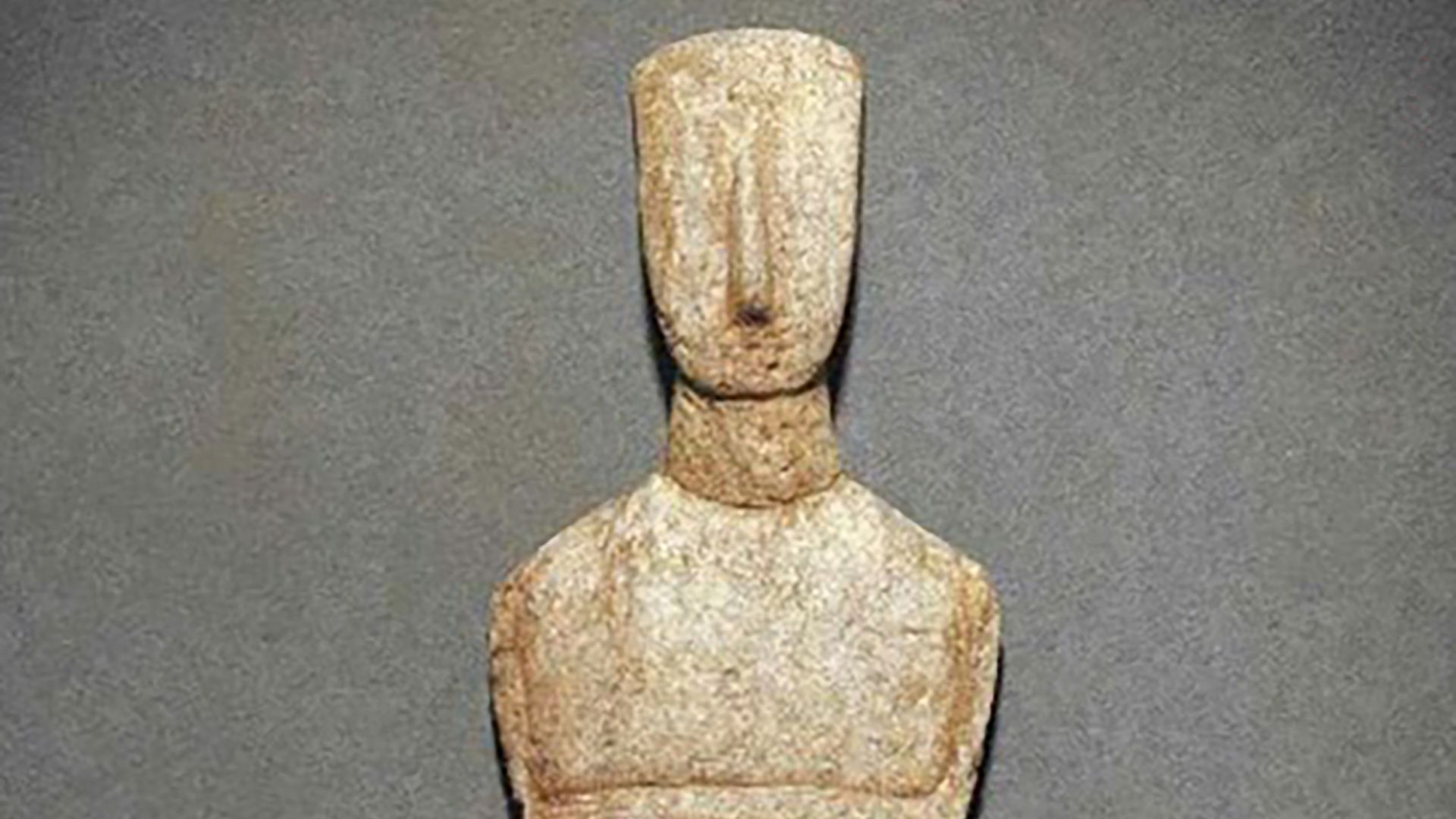
The illicit antiquities trade thrives not on the aesthetic value of forged artifacts, but on the systematic exploitation of asymmetric information. When a fraudster attempts to sell fabricated ancient statues using counterfeit documentation, the crime is rarely an isolated failure of due diligence; it is a direct exploitation of structural vulnerabilities within the art market’s valuation mechanics. In high-value asset markets lacking centralized regulation, provenance—the documented history of an object’s ownership—serves as the primary proxy for authenticity and legal title. Deconstructing a recent enforcement action involving bogus ancient statues reveals the precise operational vectors used by bad actors, the economic incentives driving the fraud, and the systemic counter-measures required to insulate institutional buyers.
The Economic Architecture of Antiquities Fraud
To understand why criminals target the ancient art market, one must analyze the cost function of illicit replication versus the risk-adjusted return of successful liquidation.
The valuation of an antiquity is governed by a three-factor matrix:
- Rarity and Historical Significance: The fixed supply of authentic artifacts from specific epochs (e.g., Classical Greek, Roman, Egyptian) creates inelastic demand curves among institutional and private collectors.
- Aesthetic Preservation: The physical condition of the object, where minimal degradation commands an exponential price premium.
- Provenance Verifiability: The definitive chain of custody establishing that the object was excavated and exported legally, specifically conforming to international frameworks like the 1970 UNESCO Convention.
A fraudster alters the economic equation by artificially fabricating all three factors. The production cost of a high-quality counterfeit statue—encompassing material sourcing (such as weathered marble or aged bronze), artisan labor, and chemical distressing—is negligible compared to the market value of an authentic counterpart. The primary barrier to market entry is not the physical fabrication of the object, but the fabrication of its history. Without verifiable provenance, an artifact possesses a market value approaching zero due to the legal risks associated with illicit looting and repatriation laws. Therefore, the fraudster’s primary operational focus is the creation of a synthetic paper trail.
Vectors of Document Forgery: Engineering Synthetic Provenance
The mechanism of synthetic provenance relies on exploiting the historical opacity of the art market. Fraudsters typically construct counterfeit documentation using three distinct strategies to bypass institutional gatekeepers.
The Legacy Collection Stratagem
Bad actors frequently attribute newly fabricated items to defunct or un-indexed private collections from the early-to-mid 20th century. By claiming an object was acquired by a deceased collector in the 1950s or 1960s, the fraudster attempts to bypass modern import-export restrictions and digital databases. The documentation generated often includes forged estate inventories, typed letters on aged letterhead, and fictitious probate records. This creates a temporal blind spot; verifying the signature of a long-deceased European collector on an un-digitized document presents a high operational hurdle for compliance teams.
Attribution Cloning
This vector involves identifying an authentic, historically documented artifact that has been lost, destroyed, or held in an inaccessible private collection, and manufacturing a physical replica to match that specific record. The fraudster steals the legitimate provenance of a real object and appends it to a counterfeit. The documentation in this scenario may include genuine archival photographs or references to academic journals from the early 1900s, but the physical link between the paper and the object being sold is entirely fraudulent.
Institutional Distressing and Forged Stamps
To pass physical inspection, counterfeit documents undergo artificial aging processes. Paper stocks are treated with chemical oxidizers or tannic acid to simulate decades of degradation. Forgers use custom-manufactured rubber stamps to replicate the insignias of obsolete customs offices, defunct galleries, or regional ministries of culture. The goal is to induce cognitive comfort in the buyer by presenting a multi-layered, visually complex administrative history.
Market Vulnerabilities and Cognitive Biases Exploited
The success of antiquities fraud is rarely a function of flawless execution; instead, it depends on systemic vulnerabilities within the purchasing ecosystem. The market operates largely on a relationship-based model, which introduces specific structural risks.
Confirmation Bias in Acquisition
Private collectors and institutional curators often operate under intense competitive pressure to acquire definitive pieces. When presented with a rare statue that perfectly fills a typological gap in a collection, the buyer's internal incentive structure shifts toward validation rather than refutation. Fraudsters exploit this eagerness by engineering a narrative where the seller is forced to liquidate an asset quickly due to financial distress or estate settlement, justifying a below-market asking price that disincentivizes prolonged due diligence.
Reliance on Consensual Due Diligence
In many transactions, the verification process is transactional rather than adversarial. If a gallery or auction house conducts a provenance check that relies solely on checking titles against a closed database (such as the Art Loss Register) without independently verifying the primary source documents at their regional origin, the check yields a false negative for theft. The database confirms the object has not been reported stolen, but it cannot confirm the object is a newly minted fabrication.
The Forensic Verification Framework
To counter sophisticated provenance fraud, institutions must deploy a dual-track verification framework that treats physical authenticity and documentary validity as independent variables.
Material and Scientific Analysis
Physical verification must precede document review. For stone and marble sculptures, stable isotope analysis can determine the exact geographic origin of the quarry, confirming whether the material matches the historical region of the stated culture. Toolmark analysis via scanning electron microscopy (SEM) reveals whether the carving was executed using modern steel alloy chisels or mechanical rotary tools, which leave distinct microscopic striations compared to ancient iron or bronze implements.
Investigative Document Audit
Verifying the paper trail requires a strict chain-of-custody audit. This involves contacting the archives of the estate or gallery mentioned in the provenance documents directly, rather than accepting the provided copies at face value. A structural analysis of the text is required: checking for chronological anachronisms, such as the use of postal codes or telephone number formats that did not exist at the stated date of the document, or font styles generated by modern digital software mimicking mechanical typewriters.
Strategic Protocol for Institutional Buyers
Mitigating the risk of catastrophic capital loss and reputational damage in the antiquities market requires a shift from trust-based transactions to a zero-trust compliance architecture.
- Implement Mandatory Forensic Baselines: No acquisition should proceed based on documentation alone. Every stone or metal antiquity must undergo independent laboratory testing (petrographic, isotopic, or thermoluminescence testing where applicable) as a non-negotiable condition of escrow.
- Execute Primary-Source Verification: All provenance documents must be cross-referenced with external, third-party historical archives. If a document purports to be a 1960 export license from a Mediterranean nation, verification must be sought from that nation's current ministry of culture or state archives.
- Structure Asymmetric Risk Contracts: Purchase agreements must include permanent, non-expiring clawback clauses. If future academic consensus, forensic advancement, or legal discovery establishes that the object is counterfeit or possesses a fraudulent provenance, the seller must be contractually obligated to return the full purchase price plus inflation and legal fees, secured by institutional indemnity insurance.
The criminal justice system's sentencing of individuals attempting to sell bogus statues demonstrates that the legal apparatus is capable of punishing overt fraud post-transaction. However, reliance on post-facto prosecution is a failed risk-management strategy for market participants. True protection lies in dismantling the information asymmetry that the fraudster relies upon, treating every unverified piece of paper not as proof, but as a hypothesis requiring rigorous falsification.