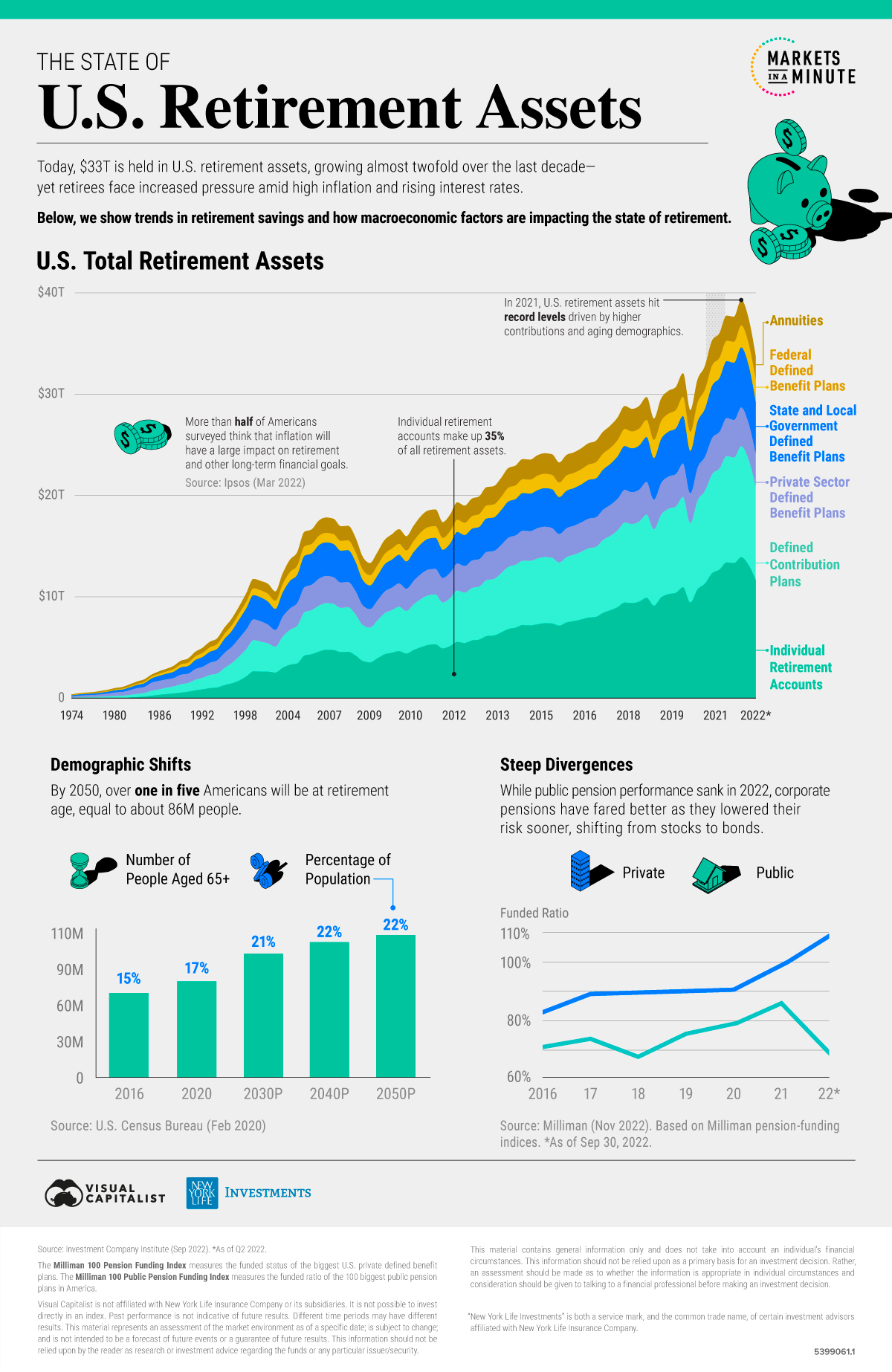
The current U.S. retirement infrastructure is bifurcated by a structural "coverage gap" that leaves approximately 56 million private-sector workers without access to employer-sponsored defined contribution plans. The proposed American Retirement Plus initiative aims to collapse this disparity by installing a federalized savings architecture modeled after the Thrift Savings Plan (TSP). By offering a $1,000 annual federal match, the policy attempts to use capital incentives to solve a systemic participation failure. However, the efficacy of this plan depends on solving three distinct friction points: account portability, the "liquidity trap" of low-income earners, and the jurisdictional limits of executive authority.
The Tri-Pillar Architecture of Federal Retirement Expansion
The proposal functions through three integrated mechanisms designed to mirror the benefits of high-tier corporate 401(k) plans for the "forgotten" workforce.
1. The TSP Benchmarking Model
The Thrift Savings Plan is widely regarded as one of the most efficient defined contribution systems globally due to its ultra-low administrative fees—often 10 to 20 times lower than retail IRA options. By modeling new accounts on the TSP, the administration seeks to maximize net compound growth by minimizing fee drag.
2. The $1,000 Federal Match Mechanism
The match functions as a 50% subsidy on the first $2,000 of individual contributions. This is not a tax "credit" in the traditional sense, which provides relief months after the expenditure; it is a direct deposit into the investment vehicle. This distinction is critical because it creates immediate equity capture for the participant, effectively guaranteeing a 50% return on investment before any market fluctuation is even considered.
3. Universal Portability
Unlike traditional 401(k) plans tied to specific employers, these accounts are designed to be "worker-owned." This eliminates the rollover friction that frequently leads to "leakage"—the tendency for workers to cash out small balances when changing jobs rather than navigating the complex process of transferring funds.
The Cost Function and Fiscal Logic
The feasibility of a $1,000 match for 56 million people introduces a massive fiscal variable. If fully utilized, the program carries a theoretical maximum price tag of $56 billion annually. However, the actual cost function is moderated by two primary factors:
- Participation Elasticity: Historical data suggests that only a fraction of eligible low-income earners can afford to divert $2,000 annually from their primary consumption.
- Income Phasing: The match is not universal; it is targeted at low-to-moderate-income brackets, likely mirroring the SECURE 2.0 Saver’s Match thresholds (phasing out for individuals earning above $35,500).
The administration's strategy relies on the SECURE 2.0 Act of 2022, which already authorized the "Saver’s Match" to begin in 2027. By rebranding and expanding this existing legislative framework, the executive branch attempts to bypass the need for a new congressional appropriation, which remains a significant legal bottleneck.
Solving the Liquidity Trap
The most significant barrier to the success of American Retirement Plus is the opportunity cost of capital for the working class. For an individual earning $25,000 per year, contributing $2,000 to a retirement account represents 8% of their gross income.
The Behavioral Hurdle
Low-income earners often prioritize short-term liquidity (emergency funds, housing, debt service) over long-term accumulation. Locking funds until age 59½ creates a perceived "penalty for saving." To counter this, the proposal suggests a Roth-style structure for contributions, allowing for the withdrawal of the principal amount in emergencies without tax penalties, while the $1,000 federal match and subsequent earnings remain locked for retirement.
Jurisdictional and Implementation Constraints
While the White House can use administrative authority to create the "infrastructure" of these accounts—setting up the investment pools and the portal for participation—it cannot unilaterally print the matching funds.
The strategy appears to be a two-stage rollout:
- Administrative Setup (2026): Leveraging the Treasury Department to build the platform and partner with private firms like Charles Schwab or Robinhood to manage the accounts.
- Legislative Triggering (2027): Utilizing the funds already earmarked by SECURE 2.0 to fulfill the $1,000 match promise.
A primary risk remains the crowd-out effect. If the federal match is too attractive, small businesses that currently offer modest 401(k) plans might be incentivized to terminate their plans and shift employees toward the federal system to reduce their own overhead and matching liabilities.
Strategic Forecast: The Market Shift
If implemented at scale, American Retirement Plus will likely trigger a massive influx of retail capital into broad-market index funds. This move shifts the retirement narrative from "saving" to "investing," as the administration explicitly aims to have low-income workers "profit from a rising stock market."
The long-term success of the program will be measured not by the number of accounts opened, but by the persistence of contributions. Without automatic enrollment—a feature often required to overcome inertia—the program risks becoming a niche tool for the financially literate rather than a universal safety net.
Identify your current eligibility based on your employer's plan status. If you are among the 56 million without access, the first tactical move is to verify your income level against the SECURE 2.0 thresholds, as these will serve as the legal foundation for the $1,000 match when it activates.
Would you like me to analyze the specific income thresholds and phase-out schedules for the Saver's Match to determine your potential benefit?