Political pundits love a simple villain. When voters across Virginia, Ohio, and Georgia used the 2026 midterm elections to punish local incumbents over hyperscale data center zoning, the mainstream press immediately crowned a new populist bogeyman. The lazy consensus claims everyday Americans have suddenly turned into anti-tech Luddites who hate artificial intelligence, despise server farms, and want to halt digital infrastructure at the county line.
That narrative is completely backwards. If you liked this post, you should read: this related article.
Having spent the last decade negotiating utility interconnects, advising municipal zoning boards, and watching hyperscalers burn tens of millions of dollars on stalled site acquisitions, I can tell you the exact moment a local community turns hostile. It never happens because voters hate cloud computing. It happens the exact week residents open their residential utility bills and realize they are subsidizing the grid upgrades for a trillion-dollar tech monopoly.
The 2026 midterm backlash was not a referendum on technology. It was a taxpayer revolt against asymmetrical risk. For another perspective on this story, check out the recent coverage from Gizmodo.
The Myth of the Anti-Tech Voter
Media coverage framing the 2026 ballot-box rebellion as a cultural rejection of data centers misses the basic economics of land use and electricity rates. Americans use more streaming video, cloud storage, and generative AI tools every single quarter. Nobody voted to slow down their own internet speeds. They voted against privatized profits and socialized infrastructure costs.
When a tech giant drops a 500-megawatt facility into a rural or suburban county, the local tax assessor sees dollar signs. County commissioners immediately point to the projected property tax windfall—often tens of millions of dollars annually—while promising that the facility requires almost zero municipal services. No new schools. No extra police patrols. Minimal traffic after construction finishes.
On paper, it looks like free money. In reality, local governments routinely hand out twenty-year tax abatements just to win the bid, gutting the very revenue they promised voters. Meanwhile, the physical strain hits the regional electric grid instantly.
To understand why voters revolted in 2026, look at PJM Interconnection, the regional transmission organization serving 65 million people across thirteen states and Washington, D.C. Capacity market prices in PJM surged dramatically heading into the election cycle, driven heavily by massive load growth projections from data centers in Northern Virginia and Ohio. When peak demand spikes, utilities must build new high-voltage transmission lines and substations. Under traditional regulated utility rate structures, those capital expenditures get rolled into the general rate base. Every homeowner and small business in the territory ends up paying higher monthly delivery charges to keep the lights on for server racks owned by companies sitting on hundred-billion-dollar cash reserves.
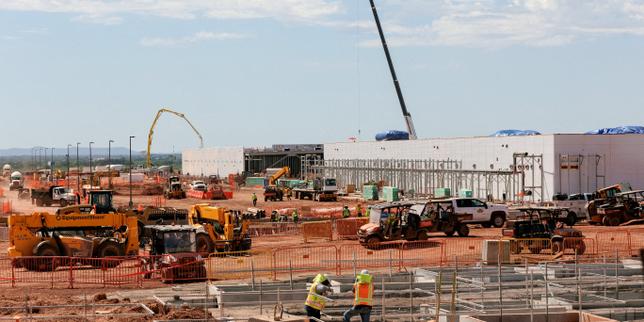
Voters did not need an energy economics degree to connect the dots. They saw massive windowless concrete bunkers going up down the road, heard diesel backup generators testing every Tuesday morning, and watched their electric bills climb twenty percent in two years. Calling that "anti-tech sentiment" is an insult to their intelligence.
Why Traditional Zoning Battles Miss the Real Bottleneck
If you ask a local activist why they oppose a proposed server farm, they will usually mention noise, water consumption, or rural aesthetics. Those are valid friction points, yet they are rarely the true dealbreakers when properly engineered.
Closed-loop liquid cooling systems have drastically reduced water draw in modern facilities compared to legacy evaporative cooling towers. Acoustic attenuation walls and low-frequency generator enclosures can quiet a perimeter fence down to ambient suburban levels. A competent civil engineering firm can solve water and noise on a spreadsheet before the first public hearing ever convenes.
You cannot engineer your way around a gigawatt-scale power deficit.
The real battleground in 2026 is baseload generation and interconnection queues. According to data tracked by the Lawrence Berkeley National Laboratory, the backlog of power generation and storage projects waiting to connect to the U.S. grid has swollen past 2,600 gigawatts—more than double the entire existing generating capacity of the United States. The grid is physically choked.
When a hyperscaler demands 300 megawatts of firm, 24/7 power by next year, the local utility cannot conjure new transmission corridors out of thin air. Permitting a high-voltage interstate power line in the United States takes seven to ten years. Instead, utilities delay the retirement of aging coal and natural gas peaker plants, stretching existing infrastructure past its design margins and passing the maintenance costs directly onto residential ratepayers.
I have watched major developers blow eight figures on land options in Loudoun County and central Ohio only to discover that the nearest substation had zero available capacity until 2031. Instead of admitting they miscalculated grid capacity, these developers leaned on state-level politicians to override local zoning authority. Voters noticed the heavy-handed lobbying, smelled a rigged game, and took their revenge at the ballot box in November.
Dismantling the Worst Arguments on Both Sides
The public debate around data centers has devolved into dishonest talking points from both boardrooms and protest lines. Let us strip away the noise and address the core questions voters and investors actually need answered.
Do Data Centers Create Long-Term Local Jobs?
No. Stop letting developers tell you otherwise.
During the eighteen-to-twenty-four-month construction phase, a hyperscale campus employs anywhere from 1,500 to 3,000 union tradespeople—electricians, pipefitters, ironworkers, and concrete finishers. That temporary economic boom is real and lucrative for local contractors.
Once the commissioning engineers hand over the keys, the parking lot empties out. A massive, million-square-foot facility typically employs between 50 and 150 full-time staffers across security, facilities maintenance, and network operations. On a per-acre basis, a mid-sized distribution warehouse or a light manufacturing plant creates vastly more permanent employment. Selling a data center to a struggling Rust Belt town as a "job engine" guarantees political blowback the day the construction trailers roll off the lot.
Can Wind and Solar Alone Power the AI Boom?
Not without massive firming capacity, and pretending otherwise borders on delusion.
Tech companies love announcing that they match 100 percent of their annual electricity consumption with renewable energy credits. That is an accounting trick, not physics. Buying a power purchase agreement from a wind farm in West Texas does nothing to keep servers running in suburban Atlanta at 8:00 PM on a windless Tuesday in August.
Data centers require five-nines reliability—99.999 percent uptime, which translates to less than five minutes of unplanned downtime per year. Solar panels produce zero watts at midnight. Battery storage currently bridges four-to-eight-hour gaps, not multi-day weather events. Until small modular nuclear reactors reach commercial scale in the 2030s or enhanced geothermal breaks out of niche geographies, every gigawatt of AI compute requires firm, dispatchable baseload power—which today means natural gas turbines or existing nuclear plants.
Will Voter Pushback Stop AI Infrastructure Growth?
Not a chance. It will simply relocate it—and punish lazy developers in the process.
Compute demand is dictated by global capital markets and enterprise software adoption, not county zoning boards. If Northern Virginia or suburban Phoenix shuts the door, capital flows immediately to West Texas, rural Pennsylvania, North Dakota, or Quebec—places with stranded natural gas, abundant hydro, or transmission capacity desperate for an anchor customer.
The Contrarian Playbook for Surviving the Backlash
The old development model—secretly locking up farmland under non-disclosure agreements, extracting massive tax breaks from dazzled county officials, and dumping grid upgrade costs onto residential ratepayers—is dead. The 2026 midterms buried it.
If developers, utilities, and policymakers want to build critical digital infrastructure without triggering populist revolts, they have to flip the financial model upside down.
Mandate Behind-the-Meter Generation
Stop treating the public utility grid like an infinite battery. State regulators should require any new facility exceeding 100 megawatts to fund and co-locate its own dedicated power generation—whether that means on-site natural gas turbines with carbon capture, dedicated solar-plus-storage microgrids, or direct behind-the-meter nuclear co-location like the Talen Energy and Amazon Web Services deal at the Susquehanna nuclear plant. If you bring your own electrons, you do not spike your neighbor's electric bill.Enforce Ring-Fenced Rate Structures
State public utility commissions must outlaw the socialization of transmission upgrades built specifically for large-load customers. Follow the lead of regulators in states like Ohio and Indiana who have begun pushing special tariff structures requiring data centers to pay minimum demand charges for ten to fifteen years, regardless of how much power they actually draw. If a tech company orders a dedicated substation and then abandons the project, shareholders—not retirees on fixed incomes—must eat the stranded asset cost.Kill the Tax Abatements
Hyperscalers do not choose locations based on a two-percent discount on local property taxes. They choose locations based on fiber latency, power availability, and land topology. State legislatures handing out blank-check sales and property tax exemptions to the richest corporations in human history are lighting public money on fire. Collect full freight on property taxes and dedicate a fixed percentage directly to residential utility bill rebates in the host county. Watch how fast local opposition evaporates when every homeowner gets a fifty-dollar monthly credit funded by the server farm down the street.
The Brutal Reality of the Trade-Offs
Taking this approach carries undeniable downsides, and anyone pretending otherwise is selling something.
Forcing behind-the-meter generation and ring-fenced tariffs will slow down project timelines by twelve to twenty-four months. It will drive up capital expenditures for cloud providers, squeezing margins on AI training clusters and pushing smaller colocation operators out of tier-one markets entirely. Higher power costs in the United States will also hand a temporary speed advantage to sovereign compute projects in the Middle East and state-subsidized grids in China, where central planners do not worry about midterm elections or county zoning hearings.
Those are real strategic costs. Yet they are far cheaper than the alternative: an unregulated land grab that fractures the American electric grid, bankrupts working-class ratepayers, and turns the entire technology sector into a toxic political liability every two years.
Politicians in Washington and Paris can keep writing breathless post-mortems claiming Americans have turned against the future. Meanwhile, the people actually running power plants and zoning boards know the truth. Voters do not hate the cloud. They just refuse to pay the electric bill for someone else's gold rush.


