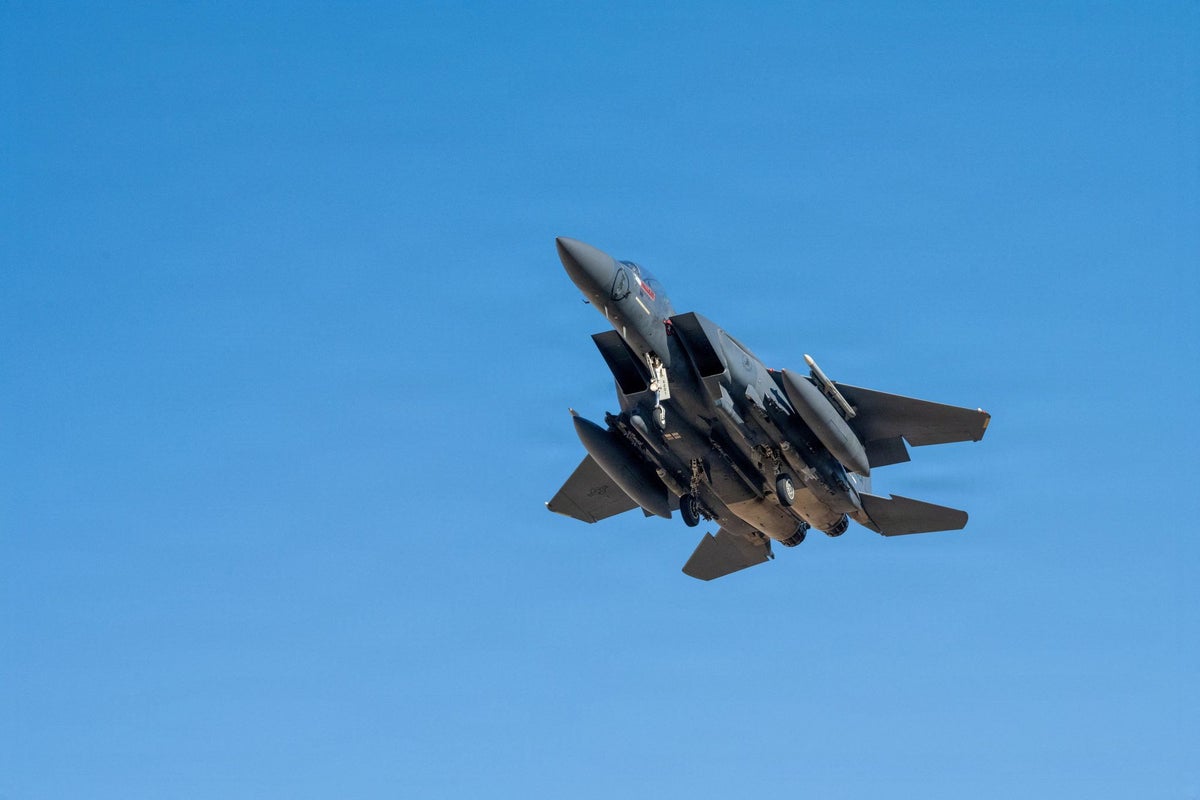
War stories rarely capture the sheer, unfiltered panic of a freefall into enemy territory with a spine broken in two places. We see the sleek hardware on the evening news, the multimillion-dollar jets streaks across desert skies, and the sterile jargon of military briefings. What gets lost in the noise is the raw, quiet agony of an ejection seat firing at Mach speed, the sudden silence of a parachute opening over hostile ground, and the immediate realization that help is not coming anytime soon.
When an Iranian missile struck an American fighter jet, the pilot didn't get a hero's cinematic exit. He got a violent compression fracture in his spine and a brutal two-day fight for survival in a landscape designed to kill him. This isn't just a story about military hardware getting knocked out of the sky. It's a masterclass in human stubbornness, tactical evasion, and the terrifying reality of what happens when ejection protocols meet the harsh geography of modern conflict. Recently making headlines in this space: Why London Bringing the Ganga Aarti to the Thames Matters So Much.
The Split Second Everything Broke
Ejection seats save lives, but they exact a heavy physical toll. When the pilot pulled the handles, the explosive charge rocketed him out of the cockpit with a force of roughly twelve to twenty Gs. For context, a roller coaster hits about four or five. That sudden spike crushes vertebrae.
The jet was obliterated by an Iranian air defense system, turning a multi-million-dollar machine into a burning trail of debris across the desert. But long before the canopy hit the dirt, the damage was already done. The pilot landed hard, tangled in nylon rigging, gasping for air against a crippling wave of agony in his lower back. Further insights regarding the matter are covered by NBC News.
Most people don't realize that survival training doesn't account for being physically broken from minute one. You're supposed to march, hide, build shelters, and evade patrols. Try doing that when your vertebrae are fracturing under your own body weight.
Two Days in the Shadow of the Enemy
Hiding behind enemy lines is an exercise in paranoia. Every sound is a patrol truck, every shadow is a spotter, and every breath feels too loud. For forty-eight hours, this pilot lived on pure adrenaline and whatever painkillers were crammed into his survival vest.
Moving meant agony. Staying still meant capture.
He crawled into a shallow rocky crevice, pulled his parachute shroud over himself to break the thermal signature, and waited. Iranian ground forces immediately launched search parties, sweeping the area where the radar blips vanished. Helicopters thumped overhead, their searchlights slicing through the dark.
The military teaches evasion, resistance, and escape, known as SERE school. It's notoriously brutal. But instructors can't simulate the psychological weight of lying in the dirt, completely alone, knowing that if a local shepherd or a border patrol spots your boots, you're facing interrogation or worse. The pilot utilized every trick in the manual: hiding footprints, minimizing water consumption, and keeping the radio silent until the absolute last window of opportunity opened for extraction.
The Rescue Operation That Had to Be Perfect
Extraction behind enemy lines leaves zero margin for error. If the rescue forces rush in too early, they walk into an ambush. If they wait too long, hypothermia, infection, or enemy patrols finish the job.
Combat search and rescue teams operate on a razor's edge. When the signal finally went out through the encrypted emergency beacon, a quick-reaction force mobilized. These missions are inherently chaotic. Night-vision goggles wash the world in eerie green, rotor wash kicks up blinding dust, and security forces have to secure a landing zone while scanning every ridge for hostile muzzle flashes.
When the chopper finally touched down, the pilot had to pull himself across the dirt, dragging a broken back, to reach the ramp. It was fast, violent, and messy. There were no dramatic speeches. Just heavy gear clacking, straps cinching tight, and the sudden, deafening roar of twin turbines lifting off the ground and tearing back toward friendly airspace.
What This Tells Us About Modern Air Warfare
We spend billions on stealth technology, electronic countermeasures, and beyond-visual-range missiles, acting like air superiority is an absolute guarantee. It isn't. The moment a pilot punches out over hostile soil, the high-tech war instantly devolves into a primitive, brutal struggle for biological survival.
Technology fails. Missiles hit targets. Jets get shot down. What keeps pilots alive isn't just the radar-evading paint on the fuselage or the helmet-mounted cueing system. It's the stubborn refusal to quit when your bones are broken and the entire landscape wants you dead.
The next time you read about geopolitical tensions or aerial skirmishes, look past the hardware stats. Remember the human element strapped into the ejection seat, gambling everything on a two-day crawl through the dirt.